Horizon Aircraft signs $600M LOI for up to 100 eVTOLs

scanx
Reviewed by
Ashish TScanX News Team
Key Highlights

Horizon Aircraft signed a non-binding LOI with V-Star for up to 100 hybrid eVTOLs valued at $600 million, including a deposit for five units. The company holds $78.3 million in cash to support the Cavorite X7 program, targeting a 2027 demonstrator completion and 2030 certification.

powered bylight_fuzz_icon
45747727

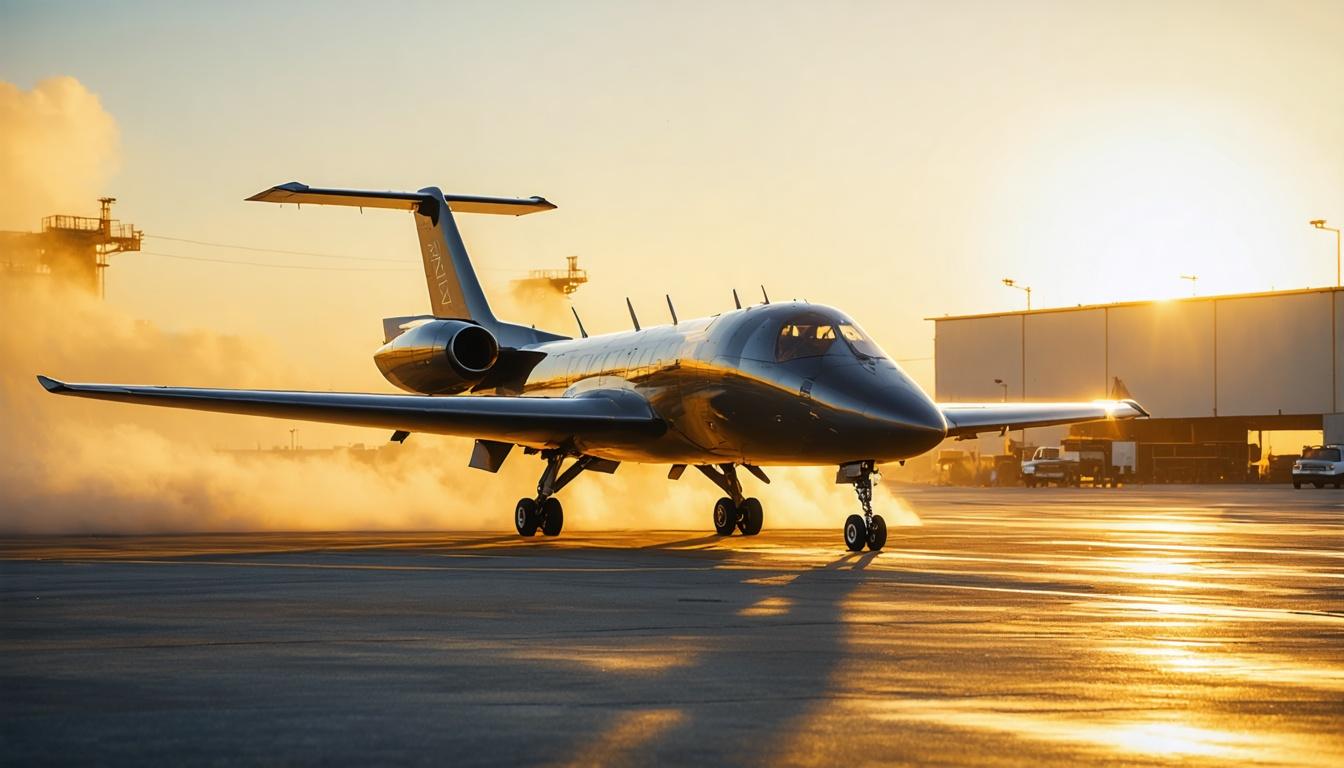
*this image is generated using AI for illustrative purposes only.

Horizon Aircraft has entered into a non-binding Letter of Intent (LOI) with V-Star for the purchase of up to 100 hybrid-electric vertical takeoff and landing (eVTOL) aircraft, with a potential transaction value of $600 million. The agreement outlines a planned initial deposit for five units, signaling commercial demand for the manufacturer's Cavorite X7. This development comes as the company reported a strengthened financial position with $78.3 million in cash as of May 31, 2026, providing capital for assembly and certification efforts.

Financial Position

The company's liquidity increased significantly from $7.5 million in the prior year, supported by financing activities that generated more than $88 million. This included gross proceeds of $45 million from registered direct offerings. Research and development costs rose to $13.2 million from $3.7 million, reflecting investments in engineering and materials. General and administrative costs remained stable at $10.2 million, while cash used in operating activities totaled $16 million.

Metric Value
Cash Balance $78.3 million
Prior Year Cash $7.5 million
R&D Costs $13.2 million
G&A Costs $10.2 million
Cash Used in Ops $16 million

Operational Progress

Horizon Aircraft is advancing the Cavorite X7, a 7-person hybrid VTOL aircraft targeting a maximum speed of 250 mph and a range of 500 miles. The company has moved from technology validation to full-scale aircraft construction, expecting to complete the full-scale demonstrator by spring 2027. Strategic partnerships with Beta Technologies, RAMPF Composite Solutions, and North Aircraft Industries are supporting systems integration. Beta Technologies will supply flight control computers for the fly-by-wire platform.

The leadership team expanded with the appointment of Richard Alexander as Chief of Certified Programs. Headcount is projected to grow from over 55 employees to more than 100 by the end of fiscal 2027. The company is collaborating with Transport Canada on type certification, targeted by 2030.

Disclaimer: This article is AI-generated using data from ViewTrade. ScanX is not liable for any inaccuracies.

What specific milestones must Horizon Aircraft achieve to convert the non-binding LOI with V-Star into a firm purchase agreement?

How will the company manage its burn rate as headcount doubles and R&D costs escalate leading up to the 2027 demonstrator launch?

What are the contingency plans if Transport Canada's type certification process faces delays beyond the 2030 target?

like16
dislike

Horizon Aircraft selects BETA flight controls for Cavorite X7

scanx
Reviewed by
Jubin VScanX News Team
Key Highlights

Horizon Aircraft has selected BETA Technologies to supply advanced flight control computers and software for its Cavorite X7 hybrid-electric VTOL aircraft. The integration of BETA's fly-by-wire platform aims to enhance safety, stability, and certification pathways for the Cavorite X7.

powered bylight_fuzz_icon
45149448

*this image is generated using AI for illustrative purposes only.

New Horizon Aircraft Ltd. has selected BETA Technologies, Inc. to supply advanced flight control computers and customized software for its Cavorite X7 hybrid-electric VTOL aircraft. The partnership aims to integrate BETA's fly-by-wire (FBW) platform to enhance precision, stability, and safety as Horizon advances the development, testing, and certification of the Cavorite X7.

BETA's FBW platform incorporates safety-critical software, system redundancy, and a flexible architecture designed specifically for modern VTOL aircraft. The flight control computer (FCC) supports certification pathways for FAA Part 21.17(b) powered-lift, Part 23, and Part 25 applications, as well as future international regulatory frameworks including Transport Canada and EASA requirements.

Strategic Integration and Benefits

By utilizing the same FCC hardware as BETA's own fleet, both companies expect to benefit from shared economies of scale, which will reduce component costs and strengthen manufacturing efficiency. The compact system is designed to meet the stringent environmental and lightning protection requirements for eVTOL operations in both FAA and international airspace.

Leadership Perspectives

Kyle Clark, Founder and Chief Executive Officer of BETA Technologies, emphasized the rigor of the technology, stating that the flight control computers were built to meet the most rigorous standards in the industry. He noted that the systems are compact, purpose-built for powered-lift, and designed with the certification discipline that DAL-A software and hardware development demands.

Tom Brassington, Chief Technology Officer of Horizon Aircraft, described the selection process as methodical. He cited BETA's sophisticated VTOL-specific FBW platform, a shared engineering philosophy, and the ability to support rigorous long-term program requirements as key factors in the decision.

Technical Specifications

BETA's FCCs were developed in-house to provide the capability, speed, and reliability demands of modern powered-lift aircraft. The architecture allows for the seamless integration of mission controls for autonomous aircraft operations in the future. As a merchant supplier of safety-critical components, BETA has the in-house capability to develop hardware and software up to Development Assurance Level A (DAL-A), the highest level of rigor recognized by the FAA and international regulators.

Feature Description
Platform Fly-by-wire (FBW) flight control hardware and software
Certification Support FAA Part 21.17(b), Part 23, Part 25; Transport Canada; EASA
Development Level DAL-A (Development Assurance Level A)
Key Attributes Safety-critical software, system redundancy, flexible architecture
Disclaimer: This article is AI-generated using data from ViewTrade. ScanX is not liable for any inaccuracies.

How will this partnership influence the certification timeline for the Cavorite X7 under FAA Part 21.17(b)?

Could the shared economies of scale from this agreement lead to similar supply deals with other eVTOL manufacturers?

What are the potential implications for BETA Technologies as it transitions from a pure manufacturer to a merchant supplier?

like17
dislike