

Kodiak AI partners with AMD to power seventh-gen autonomous trucks


- Kodiak AI partners with AMD to use EPYC processors in seventh-gen autonomous trucks
- First deployment of these CPUs in a driverless trucking hardware platform
- Processors handle latency-sensitive sensor data aggregation and path planning
- Higher clock speeds and lower power consumption enhance AI workload support
- Fleet expansion continues in Permian Basin with plans for public highway launch

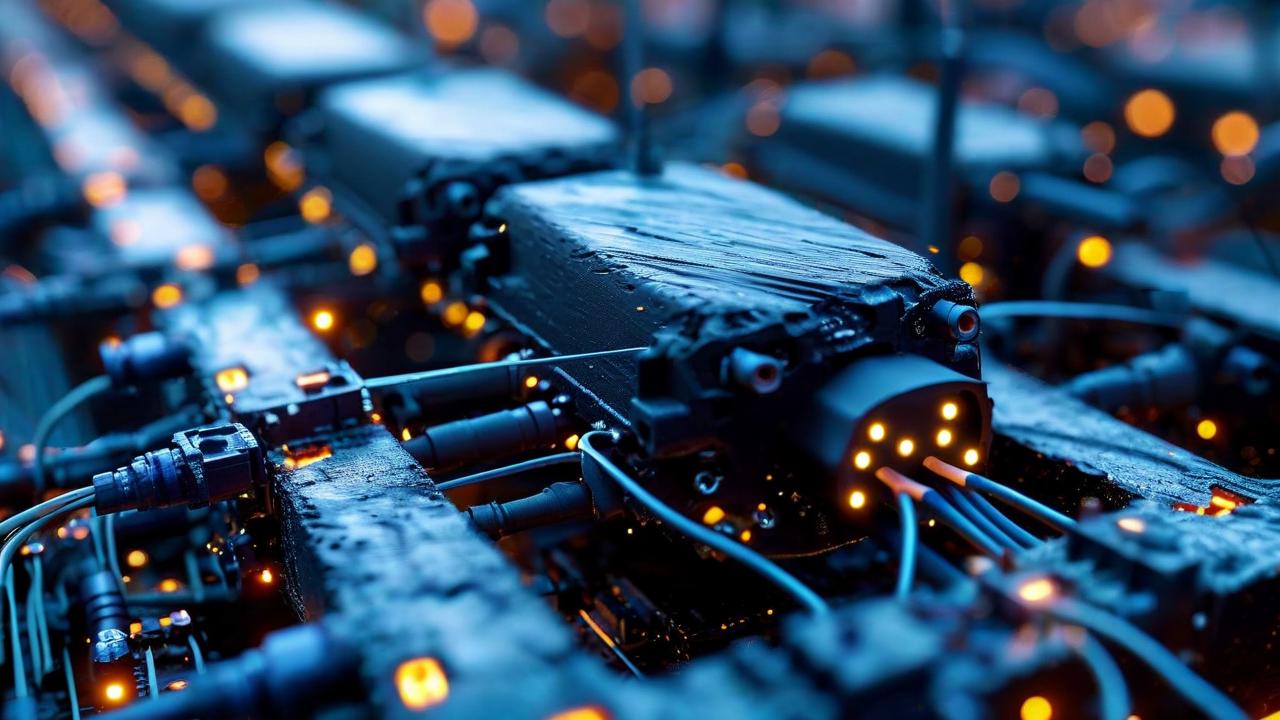

*this image is generated using AI for illustrative purposes only.
Kodiak AI, Inc. (NASDAQ: KDK) has announced a collaboration with AMD to implement AMD EPYC Series processors in its seventh-generation autonomous truck platform. This partnership marks the first deployment of these advanced CPUs in a hardware platform designed for driverless trucking.
Strategic Hardware Integration
The collaboration leverages the high-performance capabilities of AMD EPYC Series CPUs to support the computational demands of Kodiak’s autonomous driving system. The processors are tasked with quickly and reliably aggregating and preprocessing massive volumes of sensor data.
This data processing is critical for the safe operation of the Kodiak Driver, the company’s proprietary autonomous driving technology. By integrating this specific hardware, Kodiak aims to enhance the reliability and speed of its sensor data handling.
Technical Advantages and Executive Commentary
Within the seventh-generation Kodiak Driver, AMD EPYC CPUs aggregate sensor data, preprocess information collected by LiDARs, cameras and radars, and support the path-planning processes that determine how the vehicle safely and efficiently navigates complex environments. Key CPU workloads in autonomous driving, including sensor processing, localization, and path planning, are latency-sensitive and cannot easily be parallelized.
The AMD EPYC CPU provides a meaningful performance upgrade, including significantly higher clock speeds than the previous generation device. Faster clock speeds at lower power consumption enable the Kodiak Driver to process critical data more quickly and support increasingly sophisticated AI workloads.
Wayne Lyons, senior director, Automotive Market at AMD, stated that physical AI is pushing computing into complex environments. He noted that Kodiak demonstrates what is possible when advanced autonomous driving software is paired with high-performance AMD compute, providing processing capabilities needed to move driverless trucking from innovation to significant scale.
Don Burnette, Founder and CEO of Kodiak, emphasized that physical AI requires compute capabilities to rapidly handle enormous amounts of sensor data. He added that AMD delivers best-in-class CPU technology with the performance, scalability and efficiency required for advanced autonomous driving applications.
Operational Context
Using leading, commercially available hardware from AMD allows Kodiak to focus its resources on quickly building scalable, production-ready autonomous trucks. This approach is increasingly important as Kodiak grows its driverless fleet in the Permian Basin, which already operates with no humans in the cab today. Kodiak is working toward launching driverless trucks on public highways later this year.
What the Numbers Show
While no financial figures were disclosed in the announcement, the strategic shift highlights a dependency on high-end compute infrastructure. The move signals that processing power for sensor aggregation is now a primary differentiator in the autonomous trucking sector, moving beyond software algorithms to hardware-specific optimizations. The focus on latency-sensitive tasks that cannot be parallelized underscores the critical role of CPU clock speed and efficiency in scaling autonomous operations.

How might Kodiak's reliance on AMD EPYC processors impact its supply chain resilience and cost structure compared to competitors using custom silicon or alternative CPU providers?
What are the projected timelines and regulatory hurdles for Kodiak to transition its driverless fleet from the controlled Permian Basin environment to public highways later this year?
Could this hardware partnership signal a broader industry shift toward standardized commercial CPUs for autonomous driving, potentially reducing the competitive advantage of proprietary hardware solutions?
 15
15




 Access 50+ Readymade Screeners
  Use 200+ Custom Filters
  Get Full Market Insights





