

InTest raises FY26 sales guidance to $135-140M vs $133.9M estimate


InTest Corporation raised its full-year 2026 revenue guidance to $135-140 million, exceeding the $133.911 million estimate, driven by strong Q2 revenue of $35 million. Despite the top-line beat, gross margins missed expectations at ~40% due to operational issues at Alfamation and supply chain disruptions, leading to a revised full-year margin outlook of ~43%.

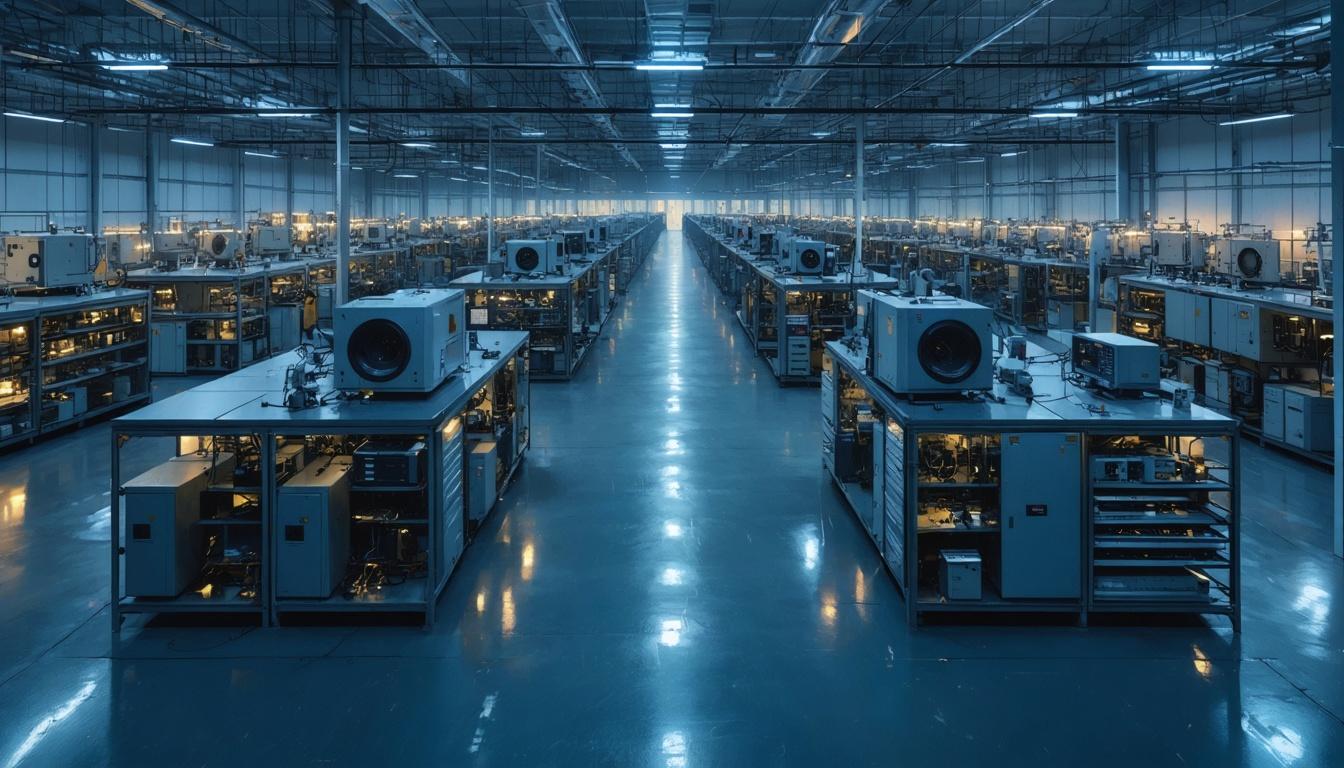

*this image is generated using AI for illustrative purposes only.
InTest Corporation (NYSE: INTT) raised its full-year 2026 revenue guidance to a range of $135 million to $140 million, surpassing the market estimate of $133.911 million. The upward revision follows a strong second quarter where preliminary revenue reached approximately $35 million, beating the prior guidance range of $32 million to $34 million. This top-line performance was driven by strengthening demand across key end markets including Semiconductor, Automotive/EV, and Defense/Aerospace. Despite the revenue beat, gross margin fell short at approximately 40%, missing the guided ~45% target due to operational headwinds at its Alfamation subsidiary.
The margin shortfall of approximately 500 basis points was attributed to two primary factors. First, lower-than-expected delivered gross margin on projects shipped by Alfamation accounted for approximately 340 basis points of the miss, driven by an unfavorable project mix. Second, a supply chain disruption delayed the shipping of approximately $2 million of ITS revenue into the third quarter, negatively impacting volume for the Environmental Technologies segment and accounting for the remaining 160 basis points. Operating expenses were estimated at $13.9 million, within the guided range of $13.8 million to $14.2 million.
Revision of First Quarter Financial Statements
InTest announced it will revise its first quarter 2026 financial results to correct an overstatement of gross margin caused by implementation issues with a new ERP system at Alfamation. Management determined that first quarter total consolidated gross profit was overstated by approximately $750,000, equating to a 220-basis point downward revision to previously reported Q1 gross margin. While the company stated this accounting error was not material for the quarter ended March 31, 2026, correcting the cumulative effect is material to current-period results. Consequently, InTest expects to report a material weakness in its internal control over financial reporting, though management believes the weakness has been remediated.
Revised Full Year Outlook
Reflecting year-to-date performance and anticipated order activity, InTest raised its full-year 2026 revenue guidance from $130 million to $135 million to the new range of $135 million to $140 million. However, full-year gross margin guidance was lowered to approximately 43%, down from 45%, due to reductions in Alfamation’s margins for the first half partially offset by an expected improved mix in the second half. Other full-year metrics remain unchanged: operating expenses are guided at $55 million to $57 million, amortization expense at $2.6 million, interest expense at $0.3 million, and capital expenditures at approximately 1% to 2% of revenue. The effective tax rate is expected to remain at approximately 18%.
What the Numbers Show
The data reveals a clear bifurcation between top-line momentum and bottom-line execution. While demand strength allowed InTest to exceed revenue targets and beat analyst estimates, the inability to capture expected margins at Alfamation suggests that volume growth alone does not guarantee profitability improvement. The ERP-related accounting error further underscores operational risks in integrating acquired entities, as evidenced by the need for a material weakness disclosure. Investors should monitor whether the projected "improved mix" in H2 can sufficiently offset the H1 margin drag to achieve the revised 43% annual target.
| Metric | Q2 2026 Preliminary | Q2 2026 Guidance | Variance |
|---|---|---|---|
| Revenue | $35 million | $32 million - $34 million | Above Range |
| Gross Margin | ~40% | ~45% | -500 bps |
| Operating Expenses | $13.9 million | $13.8 million - $14.2 million | Within Range |
Management will discuss these results and corporate strategy on a conference call scheduled for Monday, August 10, 2026, at 8:30 a.m. ET. Duncan Gilmour, Chief Financial Officer, noted disappointment regarding the delayed realization of the Alfamation margin overstatement, while President and CEO Rich Rogoff emphasized that instilling operational discipline remains his top priority.

What specific operational changes is InTest implementing at Alfamation to ensure the projected H2 margin improvement materializes?
How will the disclosed material weakness in internal controls impact InTest's audit processes and investor confidence in future financial reporting?
Is the supply chain disruption affecting ITS revenue a temporary logistical issue or indicative of broader structural vulnerabilities in the Environmental Technologies segment?
 16
16






 Create Custom Screeners
  Access 200+ Pre-built Filters
  Use 50+ Readymade Screener





