

Gokul Agro Resources submits FY26 BRSR report to exchanges


- Gokul Agro Resources submitted its FY26 BRSR report on August 27, 2026
- Total revenue from operations stood at ₹22,121.49 crore for the fiscal year
- Total energy consumption rose to 42,61,348.03 Gigajoules from 31,02,923.60 Gigajoules
- Scope 1 GHG emissions increased to 3,62,485.23 metric tonnes of CO2 equivalent
- Workforce comprised 674 employees and 656 workers with zero reported fatalities

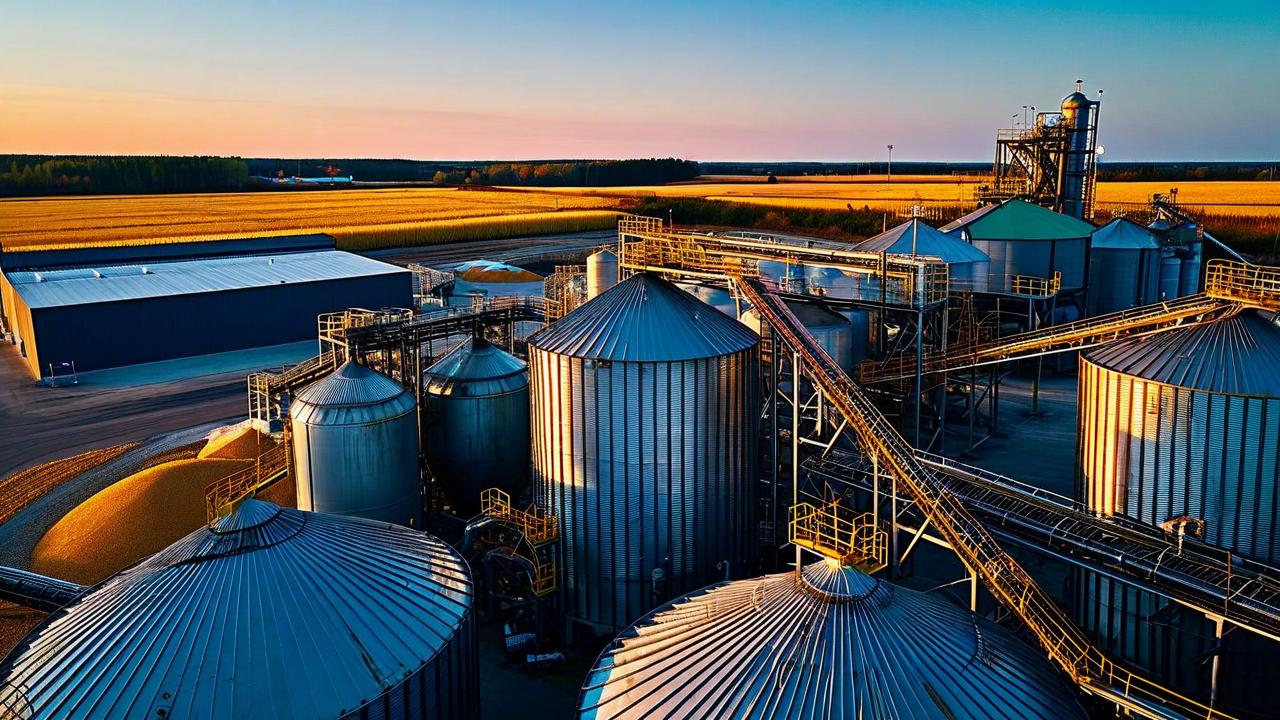

*this image is generated using AI for illustrative purposes only.
Gokul Agro Resources has submitted its Business Responsibility and Sustainability Report (BRSR) for FY26 to the Bombay Stock Exchange and National Stock Exchange. The filing, dated August 27, 2026, discloses environmental, social, and governance metrics for the financial year ended March 31, 2026.
The company reported total revenue from operations of ₹22,121.49 crore in FY26. This disclosure is made on a standalone basis.
Environmental Metrics
The report highlights significant changes in energy consumption patterns. Total energy consumed rose to 42,61,348.03 Gigajoules in FY26, up from 31,02,923.60 Gigajoules in FY25. Non-renewable sources accounted for the vast majority of this intake, with consumption reaching 41,34,210.86 Gigajoules compared to 27,01,552.46 Gigajoules in the prior year. Renewable energy consumption stood at 1,27,137.17 Gigajoules, down sharply from 4,01,371.14 Gigajoules in FY25.
Greenhouse gas emissions also increased. Total Scope 1 emissions reached 3,62,485.23 metric tonnes of CO2 equivalent, while Scope 2 emissions were 49,084.04 metric tonnes of CO2 equivalent. The combined emission intensity per rupee of turnover was 18.60 metric tonnes of CO2e per crore rupees.
Water withdrawal totaled 6,01,405.91 kilolitres, with groundwater and third-party sources comprising the bulk of intake. The company disclosed that it implemented Zero Liquid Discharge systems at its Krishnapatnam facility.
Workforce and Social Data
Gokul Agro Resources employed 674 permanent employees and engaged 656 workers as of the end of FY26. The workforce was predominantly male, with women constituting 4.60% of employees and 0.15% of workers.
The turnover rate for permanent employees was 26.62%, while permanent workers saw a higher churn rate of 39.78%. The company reported no fatalities or high-consequence work-related injuries during the period. All permanent employees received health and accident insurance coverage.
Governance and Compliance
The filing confirms compliance with all applicable environmental laws, with no fines or penalties imposed by regulatory authorities. The company maintains an anti-bribery policy and reported zero complaints regarding conflict of interest or sexual harassment. Customer complaints numbered 55 in FY26, all of which were resolved within the reporting year.
Historical Stock Returns for Gokul Agro Resources
| 1 Day | 5 Days | 1 Month | 6 Months | 1 Year | 5 Years |
|---|---|---|---|---|---|
| +0.58% | -1.60% | -11.33% | +4.07% | +7.26% | +866.98% |

What specific strategic initiatives is Gokul Agro Resources planning to implement to reverse the sharp decline in renewable energy consumption observed in FY26?
How might the significant increase in Scope 1 and Scope 2 emissions impact the company's valuation or access to green financing in upcoming fiscal years?
Given the high employee turnover rates, what retention strategies or compensation adjustments does management intend to introduce to stabilize its workforce?
 16
16





 Access 50+ Readymade Screeners
  Use 200+ Custom Filters
  Get Full Market Insights





