

GM in talks with Lockheed Martin to build weapon parts


General Motors Co. is in talks with Lockheed Martin Corporation to manufacture weapons parts, aiming to address Pentagon shortages driven by conflicts in Ukraine and Iran. CEO Mary Barra has discussed a larger military role with Trump administration officials, while Ford Motor Company is also exploring military projects. The partnership reflects a trend of automakers entering defense amid declining global car sales. Lockheed Martin is expanding its manufacturing capacity, including a new facility in Alabama, and recently secured a $514 million U.S. Space Force contract for GPS satellites.

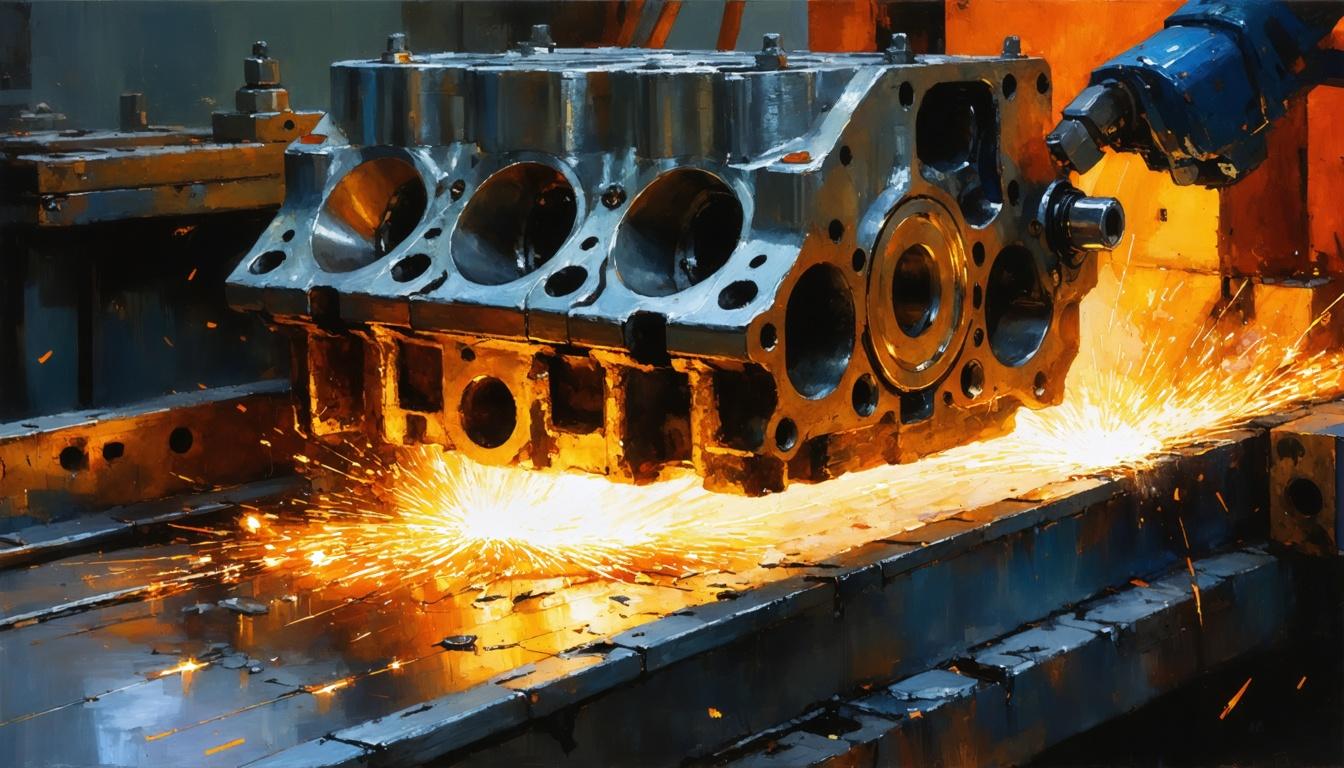

*this image is generated using AI for illustrative purposes only.
General Motors Co. is in negotiations with Lockheed Martin Corporation to manufacture parts for the defense contractor’s weaponry, according to a report published on Monday. The discussions signal a strategic move by the automaker to leverage its manufacturing base for the defense sector, driven by Pentagon concerns over domestic weapons manufacturing capacity. GM may produce widely used components to help Lockheed boost munitions production, though the exact parts are still being determined.
GM’s CEO, Mary Barra, has engaged in discussions with Trump administration officials about a larger military role for the automaker. GM, which re-entered the defense business nearly a decade ago with its GM Defense subsidiary, is exploring opportunities to expand its defense business and identify new revenue sources. Ford Motor Company CEO Jim Farley has also stated that his company is in discussions with the U.S. government about military-related projects, as per the report.
Defense Shortages Drive GM Move
The ongoing discussions come in the wake of the Pentagon’s concerns about the capacity of domestic weapons manufacturing. Due to ongoing conflicts in Ukraine and Iran, there has been a significant decrease in the stocks of missiles and other crucial weaponry. The Trump administration and Pentagon officials have encouraged weapons manufacturers to accelerate production and have sought the participation of other manufacturers, including GM.
A GM–Lockheed partnership would mark a growing trend of automakers like Volkswagen AG and Mercedes-Benz Group AG entering the defense sector as declining global car sales leave manufacturing capacity underused. The move could also help the Pentagon tap into additional U.S. production capability for select programs.
Lockheed Expands Defense Production
Lockheed Martin, the supplier of Thaad missiles, F-35 jet fighters, and Black Hawk helicopters, has been working to expand its defense manufacturing capacity, as evidenced by its new facility in Troy, Alabama. This expansion is expected to nearly double the facility’s production space and create a significant number of new jobs, reflecting Lockheed Martin’s commitment to meeting the demand for munitions supporting America’s arsenal.
On Monday, Lockheed announced a $514 million contract from the U.S. Space Force to build GPS IIIF Space Vehicles 23 and 24, expanding its total commitment under the program to 14 satellites.

What specific components is GM likely to manufacture for Lockheed, and how will this impact existing supply chains?
How might GM's involvement in defense production affect its automotive manufacturing capacity and priorities?
Could this partnership lead to long-term contracts for GM, or is it a temporary measure to address immediate shortages?
 16
16







 Access Market Heat-map & Insights
  Create, Save & Share your Screener
  Use 200+ Screening Filters





