

Constellation Energy Q2FY26 Results: Adjusted EPS hits $2.55, guidance raised


- Adjusted operating earnings reached $2.55 per share, up $0.64 YoY
- Full-year guidance raised to $11.50-$12.50 per share from $11.00-$12.00
- Approximately $2.2 billion deployed in share repurchases year-to-date
- Nuclear fleet achieved >99% capacity factor during July heat wave



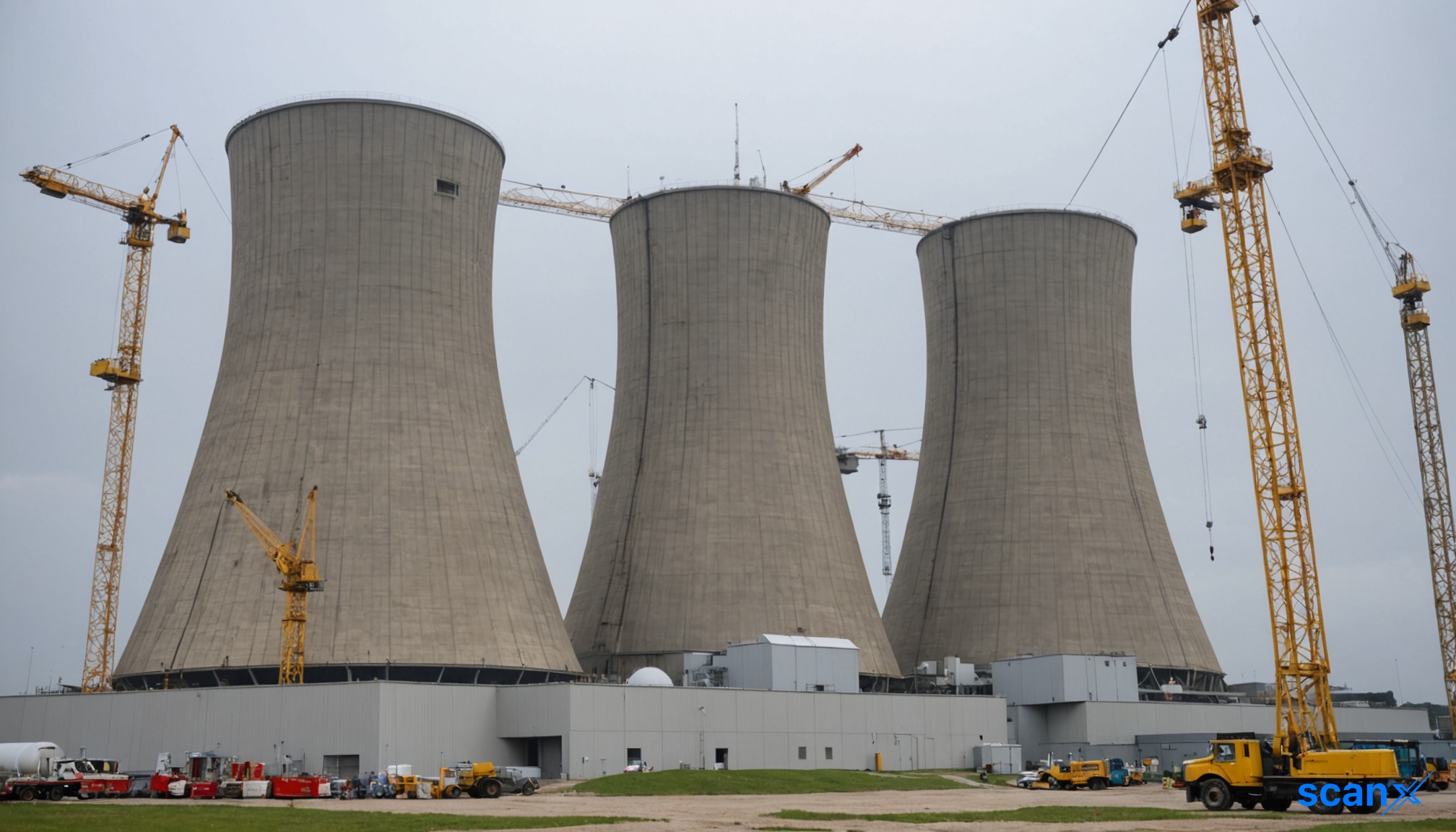
*this image is generated using AI for illustrative purposes only.
Constellation Energy Corporation reported adjusted operating earnings of $2.55 per share for the second quarter, a $0.64 increase year over year, driven by Calpine accretion and higher PJM capacity prices. The company subsequently raised its full-year adjusted operating earnings guidance range to $11.50 to $12.50 per share, up from the prior range of $11.00 to $12.00.
The company’s GAAP earnings stood at $1.42 per share. Management attributed the strong quarterly performance to robust commercial execution, portfolio optimization during market volatility, and the integration benefits from the Calpine acquisition. These factors were partially offset by higher planned nuclear refueling outage days and timing differences in Illinois Zero Emission Credit (ZEC) revenue recognition.
Operational and Strategic Highlights
Constellation’s nuclear fleet maintained high reliability, achieving a capacity factor above 99% during the Mid-Atlantic heat wave in July. For the quarter overall, the nuclear fleet delivered a 93% capacity factor, generating 40 terawatt hours of low-carbon electricity while completing six planned refueling outages. Despite the elevated outage activity, the team outperformed the industry average duration by 40%.
Strategic progress was notable in both contracting and asset management:
- Signed approximately 920 megawatts of long-term nuclear power purchase agreements (PPAs) with investment-grade customers, averaging an 18.5-year duration.
- Executed approximately $2.2 billion in share repurchases year-to-date, with management noting immediate accretion to earnings.
- Announced an agreement to sell the Brazos Valley Energy Center for $860 million ($1,420 per kilowatt), satisfying final DOJ requirements for the Calpine acquisition.
- Received NRC approval for the Crane facility new fuel licensing amendment, keeping the restart on track for the second half of 2027.
Financial Performance Snapshot
| Metric | Q2FY26 | Prior Year Comparison | Notes |
|---|---|---|---|
| Adjusted Operating EPS | $2.55 | +$0.64 YoY | Driven by Calpine and PJM prices |
| GAAP EPS | $1.42 | N/A | |
| Nuclear Capacity Factor | 93% | -1.8% YoY | Due to planned outages |
| Share Repurchases YTD | ~$2.2 billion | N/A | Opportunistic and accretive |
| FY Guidance Range | $11.50 - $12.50 | Raised from $11.00 - $12.00 | Midpoint increased by $0.50 |
What the Numbers Show
A divergence exists between the reported GAAP EPS of $1.42 and the adjusted operating EPS of $2.55. The $1.13 gap is primarily explained by non-cash items and specific revenue timing adjustments, notably the recognition of only $85 million in banked Illinois ZEC credits compared to $200 million in the prior year period. This timing variance was already embedded in the annual guidance and does not impact full-year results. Furthermore, the $2.2 billion in share repurchases has already begun to lift per-share metrics, as evidenced by the CFO’s comment that buybacks are contributing to upside in earnings, effectively raising the floor for future capital allocation sensitivities to $0.20 per share.
Regulatory and Market Context
Management highlighted unprecedented speed in regulatory clarity within PJM, prompted by FERC oversight. This environment has accelerated customer confidence, leading to the signing of new long-term contracts. Additionally, the sale of the Brazos Valley Energy Center at $1,420 per kilowatt signals strong valuation for efficient gas assets even in a soft ERCOT market, contrasting with the lower implied purchase price of the Calpine assets at $960 per kilowatt. This arbitrage suggests Constellation is effectively optimizing its portfolio value ahead of the Calpine integration completion.

How will the accelerated PJM capacity price environment influence Constellation's strategy for signing additional long-term nuclear PPAs in the next fiscal year?
What are the projected earnings accretion impacts from completing the Calpine integration, specifically regarding synergies beyond the initial Calpine accretion noted in Q2?
Given the $1,420/kW valuation for Brazos Valley versus the $960/kW implied cost of Calpine assets, does this arbitrage signal further potential divestitures of underperforming gas assets?













 Access Market Heat-map & Insights
  Create, Save & Share your Screener
  Use 200+ Screening Filters





