

Chennai Petroleum targets net-zero emissions by 2046 in FY26 sustainability report


Chennai Petroleum Corporation Limited filed its FY 2025-26 BRSR, targeting net-zero operational emissions by 2046. The report details a turnover of ₹78,610.66 crore, zero safety incidents, and significant CSR spending of ₹1,079 crore in Ramanathapuram. The company faces pending environmental compensation cases before the NGT.

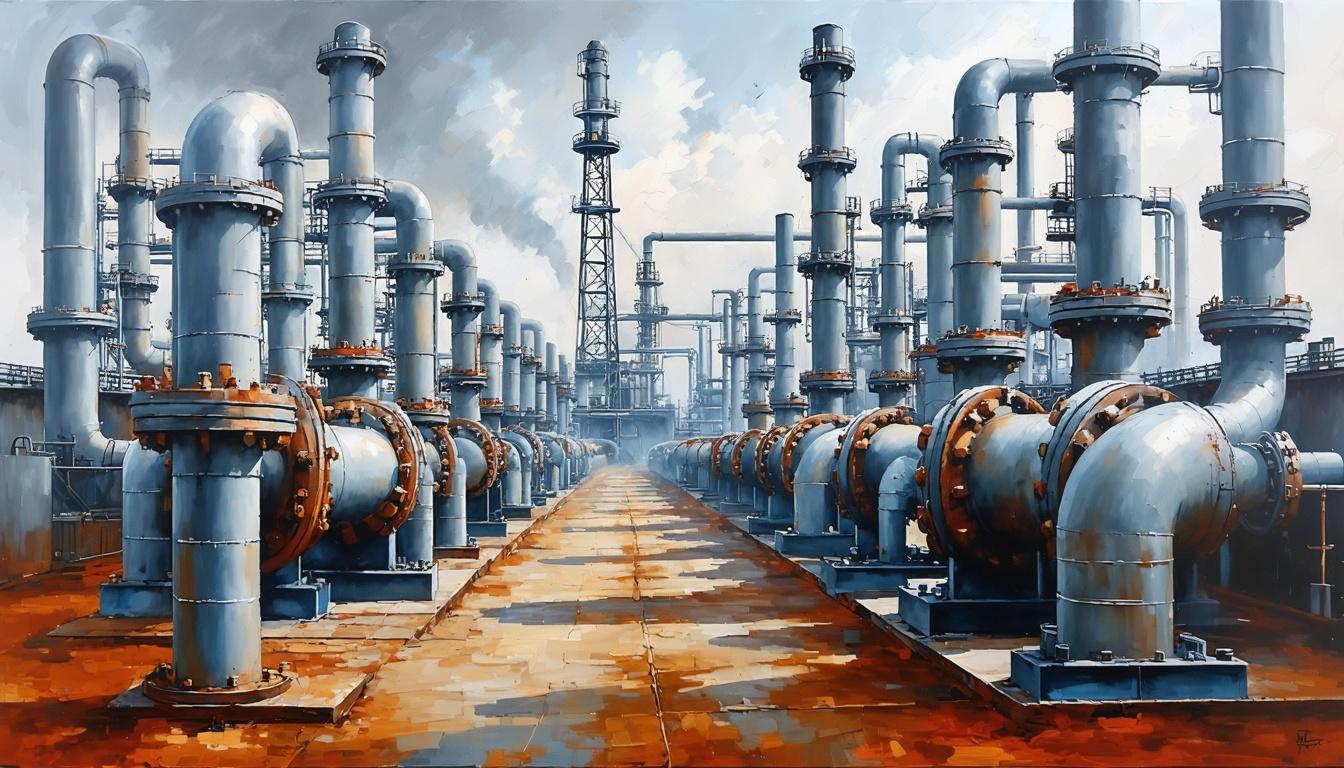

*this image is generated using AI for illustrative purposes only.
Chennai Petroleum Corporation has filed its Business Responsibility and Sustainability Report (BRSR) for FY 2025-26, revealing a long-term strategy to achieve net-zero operational emissions by 2046. The filing, submitted to stock exchanges on August 1, 2026, under Regulation 34(2)(f) of the SEBI (Listing Obligations & Disclosure Requirements) Regulations 2015, outlines the company’s environmental, social, and governance performance. The report was assured by Bureau Veritas (India) Private Limited, which provided reasonable assurance on the disclosed data. This disclosure is material for investors tracking the company’s transition risks and capital allocation towards decarbonization amidst evolving regulatory landscapes.
The company reported a turnover of ₹78,610.66 crore and a net worth of ₹10,800.02 crore for the financial year. Operations remain concentrated in the domestic market, with no direct international sales, although CPCL supports exports through Indian Oil Corporation. The refinery processes crude oil into refined petroleum products, with High Speed Diesel (HSD) contributing 49.17% of turnover, followed by Motor Spirit (MS) at 12.64%, Naphtha at 11.45%, and Aviation Turbine Fuel (ATF) at 10.10%.
Environmental Performance and Climate Strategy
CPCL identified climate change as a primary risk and opportunity, aiming to mitigate physical and transition risks through operational resilience. The company achieved an actual Modified Benchmark Norm (MBN) of 75.2 against a PAT Cycle VI target of 76.85 for FY 2022-23, making it eligible for 18,162 Energy Saving Certificates (ESCerts). To reduce greenhouse gas emissions, CPCL utilized Re-Gasified Liquefied Natural Gas (RLNG), generating a CO₂ reduction of 475,745 metric tons. Other initiatives included wind power generation of 31.4 million units and solar power generation of 2.62 million units.
| Initiative | Impact |
|---|---|
| RLNG Utilization | 475,745 MT CO₂ reduction |
| Wind Power Generation | 22,281 MT CO₂ reduction |
| Solar Power Generation | 1,861 MT CO₂ reduction |
| Afforestation | 1,008 MT CO₂ reduction |
| Energy Conservation Schemes | 130,954 MT CO₂ reduction |
The company faces ongoing environmental litigation regarding compensation levied by the Tamil Nadu Pollution Control Board (TNPCB). An interim stay was granted by the National Green Tribunal (NGT) in March 2025 on a ₹73.68 crore levy related to the Michaung cyclone oil spill, conditional on a bank guarantee of ₹19.12 crore, which was submitted in April 2025. A separate demand of ₹6.24 crore is also under trial before the NGT.
Social Governance and Stakeholder Engagement
CPCL employs 739 permanent employees and 664 permanent workers. The workforce includes 20 differently abled employees and 18 differently abled workers. The company reported zero fatalities and zero reportable safety incidents over the past four years. Training coverage reached 100% for Board of Directors and Key Managerial Personnel on human rights and sustainability principles.
Corporate Social Responsibility (CSR) spending focused on health, education, and infrastructure in aspirational districts. Notably, ₹1,079 crore was allocated to projects in Ramanathapuram, Tamil Nadu. The company also undertook rehabilitation and resettlement for 2,163 families affected by the New Grassroot Refinery cum-Petrochemical Project (CBRPL), disbursing ₹122.29 crore during the year.
What the Numbers Show
The data indicates a strong reliance on process optimization for emission reductions rather than new large-scale capital projects, as evidenced by the significant CO₂ reduction from RLNG utilization and energy conservation schemes compared to renewable energy generation. While the company maintains a zero-incident safety record, the pending environmental compensation cases highlight residual regulatory risks associated with legacy incidents. The substantial CSR outlay in Ramanathapuram suggests a strategic focus on social license to operate beyond its immediate operational footprint in Chennai.
Historical Stock Returns for Chennai Petroleum Corporation
| 1 Day | 5 Days | 1 Month | 6 Months | 1 Year | 5 Years |
|---|---|---|---|---|---|
| -2.83% | +10.49% | +2.05% | +50.30% | +85.14% | +1,005.27% |

How will CPCL's reliance on RLNG and process optimization rather than large-scale renewable infrastructure impact its ability to meet the aggressive 2046 net-zero target amidst rising global carbon pricing?
What are the potential financial implications for CPCL if the National Green Tribunal overturns the interim stay on the ₹73.68 crore compensation levy related to the Michaung cyclone oil spill?
Given that HSD contributes nearly half of the turnover, how exposed is CPCL to long-term demand destruction from India's accelerating electric vehicle adoption and shifting fuel standards?
 16
16





 Access 50+ Readymade Screeners
  Use 200+ Custom Filters
  Get Full Market Insights





