Century Plyboards to invest ₹870 crore in Odisha unit

1 min read     Updated on 23 May 2026, 08:04 AM
scanx
Reviewed by
Shriram SScanX News Team
AI Summary

Century Plyboards (India) Ltd approved a proposal to establish a new manufacturing facility in Odisha for Plywood and Particle Board. The total investment for the project is estimated at approximately ₹870 crore.

powered bylight_fuzz_icon
40999406

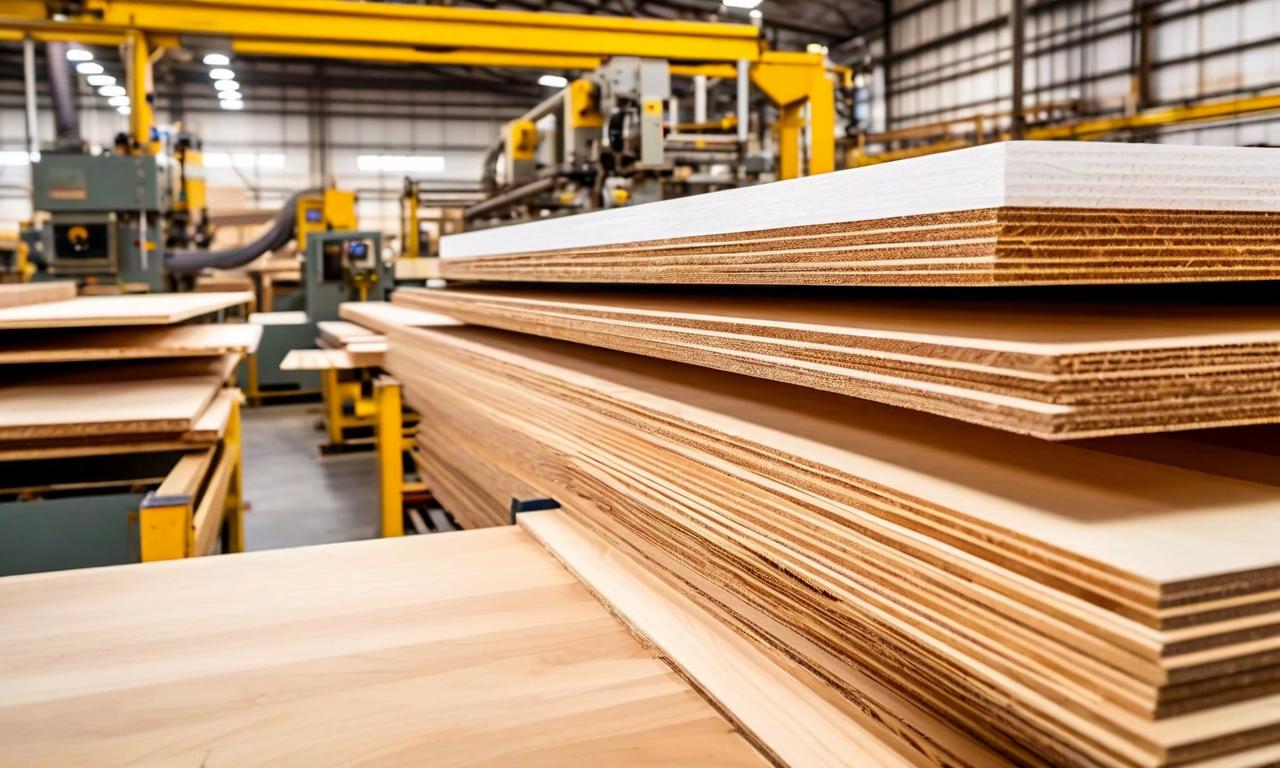
*this image is generated using AI for illustrative purposes only.

Century Plyboards (India) Ltd has approved a proposal to establish a new manufacturing facility in Odisha for Plywood and Particle Board. The decision was taken during its Board Meeting held on May 22, 2026. The company plans to finance the project through a combination of debt and equity.

The proposed expansion involves a phased increase in capacity for both product lines. For Plywood, the company will add 60,000 CBM per year in Phase-1 and another 60,000 CBM per year in Phase-2. The Particle Board capacity will be augmented by 240,000 CBM per year. The total investment for the project is estimated at approximately ₹870 crore.

Investment and Capacity Details

The investment is distributed across two phases for the Plywood unit and a single phase for the Particle Board unit. The first phase of the Plywood unit requires an investment of approximately ₹230 crore, while the second phase is estimated at ₹140 crore. The Particle Board unit requires an investment of approximately ₹500 crore.

Particulars Plywood Particle Board
Existing Capacity (CBM/year) 406800 240000
Capacity Utilization (FY 25-26) 94% 67%
Proposed Addition (CBM/year) Phase-1: 60000
Phase-2: 60000
240000
Timeline for Addition Phase-1: Q1- FY 2029-30
Phase-2: Q1- FY 2030-31
Q1- FY 2031-32
Investment Required Phase-1: Approx. ₹230 Crores
Phase-2: Approx. ₹140 Crores
Approx. ₹500 Crores

Strategic Rationale

The company cited several reasons for the expansion, including increasing demand for its products. Other factors driving the decision include proximity to the principal source of raw materials, the availability of manpower, and closeness to a large customer base.

The implementation of the new capacity is scheduled over the coming years. The first phase of the Plywood expansion is expected to be completed by Q1 of FY 2029-30, with the second phase following in Q1 of FY 2030-31. The Particle Board capacity is slated for addition by Q1 of FY 2031-32. The company noted that the proposed Particle Board manufacturing may be partially changed to MDF depending on business exigencies and strategic priorities.

Historical Stock Returns for Century Plyboards

1 Day5 Days1 Month6 Months1 Year5 Years
+0.02%-0.18%-0.45%+2.15%+2.70%+90.97%

How will Century Plyboards' ₹870 crore Odisha expansion impact its debt-to-equity ratio, and what is the company's target leverage profile upon project completion?

Given the flexibility to shift Particle Board capacity to MDF, what market conditions or demand signals would trigger Century Plyboards to make that strategic pivot?

How might competitors like Greenply Industries or Greenpanel respond to Century Plyboards' significant capacity addition in Odisha, potentially reshaping market share dynamics by FY 2031-32?

Century Plyboards Assigned ESG Score of 60 for FY2025 by NSE Sustainability Ratings and Analytics

4 min read     Updated on 08 May 2026, 05:24 AM
scanx
Reviewed by
Riya DScanX News Team
AI Summary

Century Plyboards (India) Limited has been assigned an ESG score of 60 (Adequate) for FY2025 by NSE Sustainability Ratings and Analytics Limited, improving from 55 in FY2024. The pillar-wise scores are Environment: 45, Social: 63, and Governance: 76, with the Core ESG Rating at 51, comprising Environment: 46, Social: 64, and Governance: 45.

powered bylight_fuzz_icon
39715522

*this image is generated using AI for illustrative purposes only.

Century Plyboards (India) Limited has received an ESG score of 60, categorised as 'Adequate', for FY2025 from NSE Sustainability Ratings and Analytics Limited (NSRAL), a SEBI-registered ESG Rating Provider. The rating was voluntarily assigned by NSRAL based on publicly disclosed information and was intimated to the stock exchanges on 7th May 2026 under Regulation 30 of the SEBI (Listing Obligations and Disclosure Requirements) Regulations, 2015. The company has clarified that it did not engage NSRAL for this assessment, and the rating has been independently assigned based on information available in the public domain.

Overall ESG Rating and Year-on-Year Comparison

The FY2025 ESG rating of 60 reflects an improvement over the FY2024 rating of 55, indicating a positive trajectory in the company's ESG performance. The 'Adequate' rating category, as defined by NSRAL, indicates that the company maintains adequate ESG credentials with modest but positive ESG efforts. The rating is normalized on a scale of 0 to 100, enabling cross-company and cross-industry comparisons.

Metric: FY2025 FY2024
Overall ESG Rating: 60 55
Rating Category: Adequate

Pillar-wise ESG Score Breakdown

The overall ESG score is derived from assessments across three pillars — Environment, Social, and Governance — each assigned a specific weightage based on materiality. The following table summarises the pillar-wise scores and weightages for FY2025:

Pillar: Score Weightage
Environment: 45 41%
Social: 63 29%
Governance: 76 30%
Overall ESG Rating: 60

Environment Pillar — Score: 45

The Environment pillar, carrying a weightage of 41%, received a score of 45. Key drivers of this score include:

  • Greenhouse gas emissions from direct operations and energy consumption exceed industry averages; a decrease of 7% compared to the previous year was observed
  • No information is provided on scope 3 emissions intensity
  • Water usage is high; a decrease of 7% compared to the previous year was observed
  • Energy intensity of operations is above benchmarks
  • Renewable energy usage surpasses industry averages
  • Waste generation per unit of production is high; a decrease of 16% compared to the previous year was observed
  • Waste recycling and recovery are high when compared with peers

Social Pillar — Score: 63

The Social pillar, with a weightage of 29%, scored 63. Key drivers include:

  • Lost time incident rate for workers is high compared to peers; a decrease of 53% compared to the previous year was observed
  • Zero fatalities were reported for workers in the assessment year
  • Permanent employees' health insurance coverage is at par with industry norms; an increase of 45% compared to the previous year was observed
  • Adequate accident insurance is being provided to permanent workers; an increase of 6% compared to the previous year was observed
  • Women are underrepresented compared to industry standards; an increase of 11% compared to the previous year was observed
  • High number of grievances received from employees and workers; a decrease of 46% compared to the previous year was observed
  • Higher-than-average turnover among permanent employees; an increase of 79% compared to the previous year was observed
  • Frequency of customer complaints is higher than benchmarks; an increase of 10% compared to the previous year was observed
  • Domestic procurement rate is lower than industry standards; a decrease of 10% compared to the previous year was observed

Governance Pillar — Score: 76

The Governance pillar, carrying a weightage of 30%, achieved the highest score of 76 among the three pillars. Key drivers include:

  • Board composition shows a stronger presence of independent directors than the minimum required by regulations
  • The company has fulfilled the regulatory requirement for having a sufficient number of women on its board
  • Percentage of independent directors in the Nomination and Remuneration Committee is better than compliance requirements
  • Audit Committee's independent director representation exceeds statutory guidelines
  • Risk Management Committee composition meets the required threshold of independent directors
  • Percentage of independent directors in the CSR Committee is better than regulatory requirements

Core ESG Rating for FY2025

In addition to the overall ESG rating, NSRAL has also published a Core ESG Rating for Century Plyboards, which is grounded in third-party assured or audited data derived from BRSR Core disclosures. The Core ESG Rating provides a focused evaluation based on verified data, ensuring consistency and comparability.

Core ESG Metric: FY2025 Score
Core ESG Rating: 51
Environment Score: 46
Social Score: 64
Governance Score: 45

The disclosure was made in compliance with Regulation 30 of the Listing Regulations, read with the SEBI Master Circular dated 11th July 2023 (last updated on 30th January 2026) and SEBI Circular dated 31st December 2024. The rating was reviewed and last updated on 7th May 2026.

Historical Stock Returns for Century Plyboards

1 Day5 Days1 Month6 Months1 Year5 Years
+0.02%-0.18%-0.45%+2.15%+2.70%+90.97%

What specific capital investments or operational changes is Century Plyboards planning to address its below-benchmark Environment score of 45, particularly around Scope 3 emissions and energy intensity?

Given the 79% increase in permanent employee turnover, what workforce retention strategies might Century Plyboards need to implement to prevent further deterioration of its Social pillar score in FY2026?

How might Century Plyboards' 'Adequate' ESG rating of 60 impact its ability to attract ESG-focused institutional investors or access green financing compared to peers with higher ratings?

More News on Century Plyboards

1 Year Returns:+2.70%