

AWHCL recovers 1.77 lakh tonnes RDF, avoids 1.63 lakh tCO2e


Antony Waste Handling Cell Limited reported robust resource recovery metrics for FY26, including 15,500 tonnes of compost and 1.77 lakh tonnes of RDF supplied. These efforts avoided 1.63 lakh tCO2e emissions. The company also generated 69.3 million units of green electricity at its PCMC facility and achieved a 96% recycling rate for C&D waste.


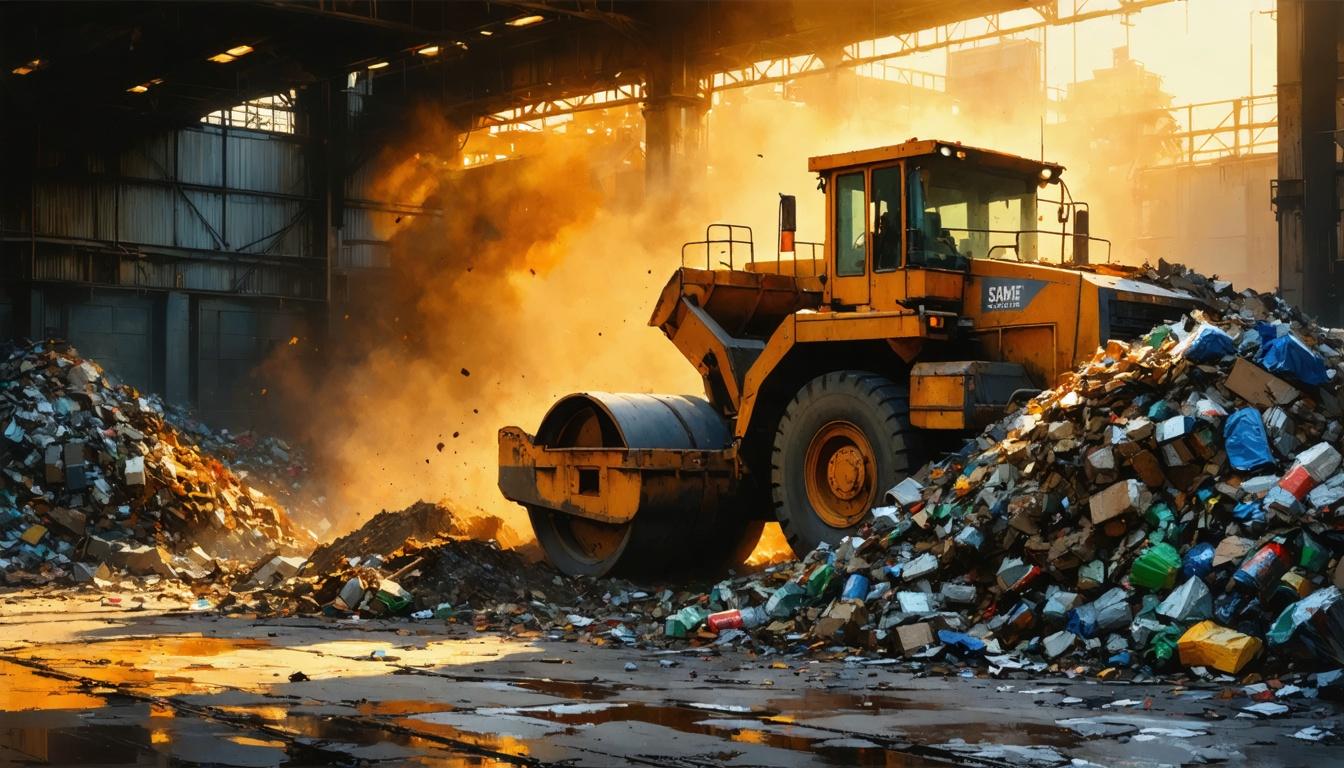
*this image is generated using AI for illustrative purposes only.
Antony Waste Handling Cell Limited has reported significant progress in its circular economy operations for FY26, driven by high volumes of resource recovery and renewable energy generation. The waste management firm commercialized over 15,500 tonnes of high-quality compost derived from organic waste and supplied more than 1.77 lakh tonnes of Refuse Derived Fuel (RDF) to sectors including cement, textiles, and paper. These activities collectively enabled the avoidance of over 1.63 lakh tCO2e of greenhouse gas emissions, reinforcing the company’s transition toward sustainable urban development.
The disclosure was made under Regulation 34(2)(f) of SEBI (Listing Obligations and Disclosure Requirements) Regulations, as part of the company’s Business Responsibility and Sustainability Reporting (BRSR) for the financial year ended March 31, 2026. Shiju Antony Kallarakal, Director & Chief Sustainability Officer, highlighted that sustainability is a catalyst for long-term value creation, with ESG principles integrated into core strategy and decision-making processes.
Operational Highlights and Resource Recovery
The company’s operational footprint expanded through efficient processing across its national network, which includes five plants and 41 offices. A key achievement was recorded at the Construction and Demolition (C&D) waste processing facility, which achieved a recycling rate of 96% through the recovery of manufactured sand and aggregates. Additionally, the bio-mining of 300,000 MT of legacy waste at the CIDCO site facilitated land reclamation and mitigated environmental risks associated with leachate contamination.
Water stewardship practices were strengthened during the period. The Kanjur facility harvested 8,279.6 kilolitres of rainwater, while the PCMC facility utilized 76,460 kilolitres of treated water from the Sewage Treatment Plant. This reduced dependence on freshwater resources and supported circular water management protocols.
Energy Generation and Emission Reduction
Antony Waste Handling Cell Limited continued to leverage waste-to-energy technologies to reduce its carbon footprint. The PCMC Waste-to-Energy (WtE) facility processed approximately 1,000 tonnes of Municipal Solid Waste (MSW) per day, generating nearly 14 MW of green power, with 11.9 MW exported to the grid. During FY26, the plant generated approximately 69.3 million units of green electricity, bringing cumulative generation since inception to around 203 million units.
At the Kanjurmarg facility, landfill gas capture generated 3.88 million units of renewable electricity, utilized for captive consumption. The company avoided approximately 10,071 tCO2e emissions through renewable energy deployment at these facilities and aerobic composting initiatives. Total Scope 1 emissions stood at 26,705 metric tonnes of CO2 equivalent, while Scope 2 emissions were 3,630 metric tonnes of CO2 equivalent.
| Metric | FY26 Value | Unit |
|---|---|---|
| Compost Commercialized | 15,500+ | Tonnes |
| RDF Supplied | 1.77 Lakh+ | Tonnes |
| GHG Emissions Avoided | 1.63 Lakh+ | tCO2e |
| Renewable Electricity Generated (PCMC) | ~69.3 Million | Units |
| C&D Waste Recycling Rate | 96% | Percentage |
What the Numbers Show
The data reveals a strategic pivot toward high-value resource recovery rather than mere disposal. The avoidance of 1.63 lakh tCO2e is directly linked to the diversion of waste from landfills to RDF production and composting, indicating that the company’s revenue model is increasingly aligned with carbon reduction outcomes. Furthermore, the utilization of 76,460 kilolitres of treated sewage water at the PCMC facility demonstrates a closed-loop approach to water management, reducing operational dependency on municipal freshwater supplies while lowering environmental discharge liabilities.
Historical Stock Returns for Antony Waste Handling Cell
| 1 Day | 5 Days | 1 Month | 6 Months | 1 Year | 5 Years |
|---|---|---|---|---|---|
| -4.75% | -6.96% | -15.59% | -40.36% | -40.47% | -5.78% |

How might the increasing demand for Refuse Derived Fuel (RDF) from cement and textile sectors impact Antony Waste's pricing power and revenue stability in FY27?
What are the company's plans for scaling its Waste-to-Energy capacity beyond the current PCMC and Kanjurmarg facilities to meet rising green power demand?
Could the high recycling rate of Construction and Demolition waste position Antony Waste to secure long-term contracts with major real estate developers or government infrastructure projects?
 18
18







 Create Custom Screeners
  Access 200+ Pre-built Filters
  Use 50+ Readymade Screener





