

Archer Aviation stock falls 6.77% as investors digest Boeing acquisition details


Archer Aviation shares fell 6.77% to $6.33 on Wednesday following the announcement of its all-stock acquisition of Boeing's Wisk Aero, Insitu, and SkyGrid. While the deal leverages Insitu's $200 million annual revenue to fund Archer's eVTOL development, the stock trades below its 200-day SMA, indicating technical resistance despite positive momentum indicators and a Q2 revenue beat.


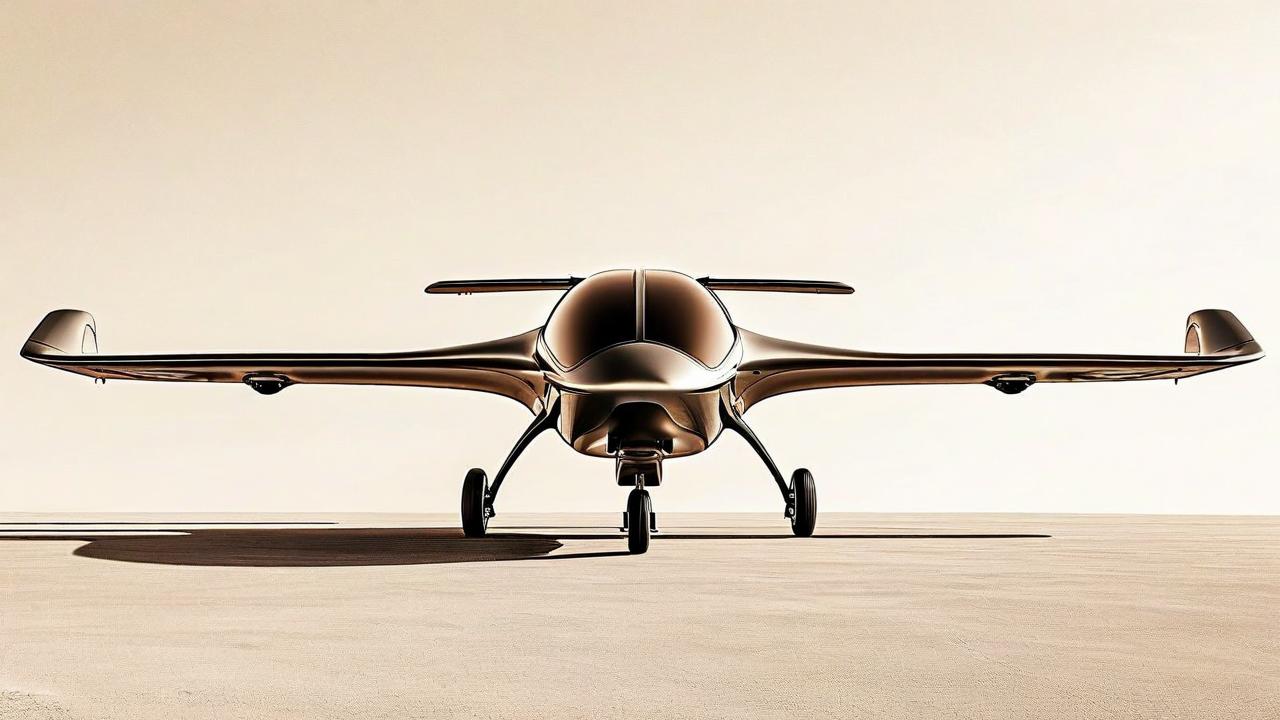
*this image is generated using AI for illustrative purposes only.
Archer Aviation Inc. (NYSE: ACHR) stock traded lower on Wednesday, falling 6.77% to $6.33, as market participants digested news surrounding its agreement with Boeing Co. (NYSE: BA). The decline occurred despite the company’s recent strategic pivot toward defense contracts to fund its commercial air taxi ambitions, highlighting investor caution regarding the execution risks of the all-stock acquisition.
On Monday, Boeing and Archer Aviation signed agreements for Archer to acquire Wisk Aero, an autonomous eVTOL maker; Insitu, an unmanned aircraft systems manufacturer; and SkyGrid, an airspace intelligence provider. Archer executives stated that this transaction will "significantly change" the company’s profile. During the second-quarter earnings call on August 11, 2026, CEO Adam Goldstein emphasized that defense contracts provide a faster path to revenue than the commercial air taxi market, positioning defense as a critical financial bridge.
Strategic Impact of Acquisitions
Priya Gupta, Chief Financial Officer, emphasized that Insitu is currently a profitable business generating more than $200 million in annual revenue. She noted that Insitu is expected to contribute positive free cash flow, allowing it to operate on a "self-funding basis" and potentially offset spending in other areas. Goldstein added that while the existing product portfolio will generate near-term cash flow, the new acquisitions enable the creation of a "whole new suite of products" capable of generating significantly higher revenue.
Boeing will receive newly issued shares equal to nearly 20% of Archer’s pre-deal share count, resulting in a stake of roughly 16%. The transaction remains subject to certain closing conditions and establishes an ongoing collaboration and technology-sharing arrangement between the two aerospace giants.
Technical Levels and Market Structure
Despite the strategic rationale, Archer’s stock faces technical headwinds. ACHR is trading 6.4% below its 200-day simple moving average (SMA) of $6.74, a common decision zone where rallies can stall and volatility picks up. Although the stock holds a strong short-term trend—trading 21.7% above its 20-day SMA ($5.19) and 20.9% above its 50-day SMA ($5.22)—the longer-term structure remains pressured by a death cross from December 2025, where the 50-day SMA fell below the 200-day SMA.
The MACD indicator shows improving momentum versus the prior downswing, sitting above its signal line with a positive histogram. However, bulls typically need sustained closes above the 200-day area to shift the longer-term narrative.
ETF Exposure and Fund Flows
Archer Aviation carries significant weight in several thematic exchange-traded funds, meaning any significant inflows or outflows for these ETFs will likely force automatic buying or selling of the stock:
- Defiance Drone and Modern Warfare ETF (NYSE: JEDI): 4.98% weight
- Tradr 2X Long ACHR Daily ETF (NASDAQ: ARCX): 184.35% weight
- Corgi Drones & Urban Air Mobility ETF (NASDAQ: BZZ): 4.08% weight
Financial Context
The financial results for the quarter ended June 30, 2026, showed total revenue of $5.0 million, surpassing analyst estimates of approximately $1.96 million. Despite the top-line beat, Archer reported a net loss of $263.2 million and an adjusted EBITDA loss of $177.1 million, which fell within the company’s guidance range of $170 million to $200 million. Operating expenses reached $284.2 million, driven by investments in flight testing, certification, and the development of the ZEE AI foundation model. Archer ended the quarter with $1,560.6 million in cash, cash equivalents, and short-term investments.
| Metric | Reported Value | Estimate / Prior | Variance |
|---|---|---|---|
| Revenue | $5.0 million | ~$1.96 million | +154.62% vs Estimate |
| Net Loss | $(263.2) million | N/A | N/A |
| EPS Loss | $(0.34) per share | In line with estimates | N/A |
| Operating Expenses | $284.2 million | $256.2 million (Q1) | +$28.0 million QoQ |
| Adjusted EBITDA Loss | $(177.1) million | $170-200 million (Guidance) | Within Guidance |
| Cash Position | $1,560.6 million | $1,775.9 million (Q1) | -$215.3 million QoQ |
What the Numbers Show
The integration of Insitu marks a critical shift from a pure-play eVTOL developer to a diversified aerospace technology platform. With Insitu contributing over $200 million in annual revenue and positive free cash flow, Archer gains a stable financial base to support its capital-intensive R&D efforts. Goldstein described this as a mechanism to reduce burn across civil businesses while maintaining focus on the Midnight air taxi platform. The market responded positively earlier in the week, with shares rising 11.99% to $6.26 on Monday, reflecting initial investor confidence in the expanded multi-platform strategy before the Wednesday pullback.

How might the 16% equity stake taken by Boeing influence Archer's future corporate governance and strategic decision-making autonomy?
What specific regulatory hurdles could delay the integration of Wisk Aero's autonomous technology into Archer's existing certification roadmap?
Could the influx of cash from Insitu's profitability significantly reduce Archer's reliance on dilutive capital raises before achieving commercial air taxi revenue?
 19
19







 Create Custom Screeners
  Access 200+ Pre-built Filters
  Use 50+ Readymade Screener





