

Air Canada reaches tentative agreement with IAMAW on new contract


Air Canada has reached a tentative agreement with the IAMAW covering over 11,000 employees in maintenance, cabin services, airport airside operations, cargo, finance, and clerical roles. Ratification is expected in the coming weeks, followed by Board approval. The agreement terms remain confidential until finalized.

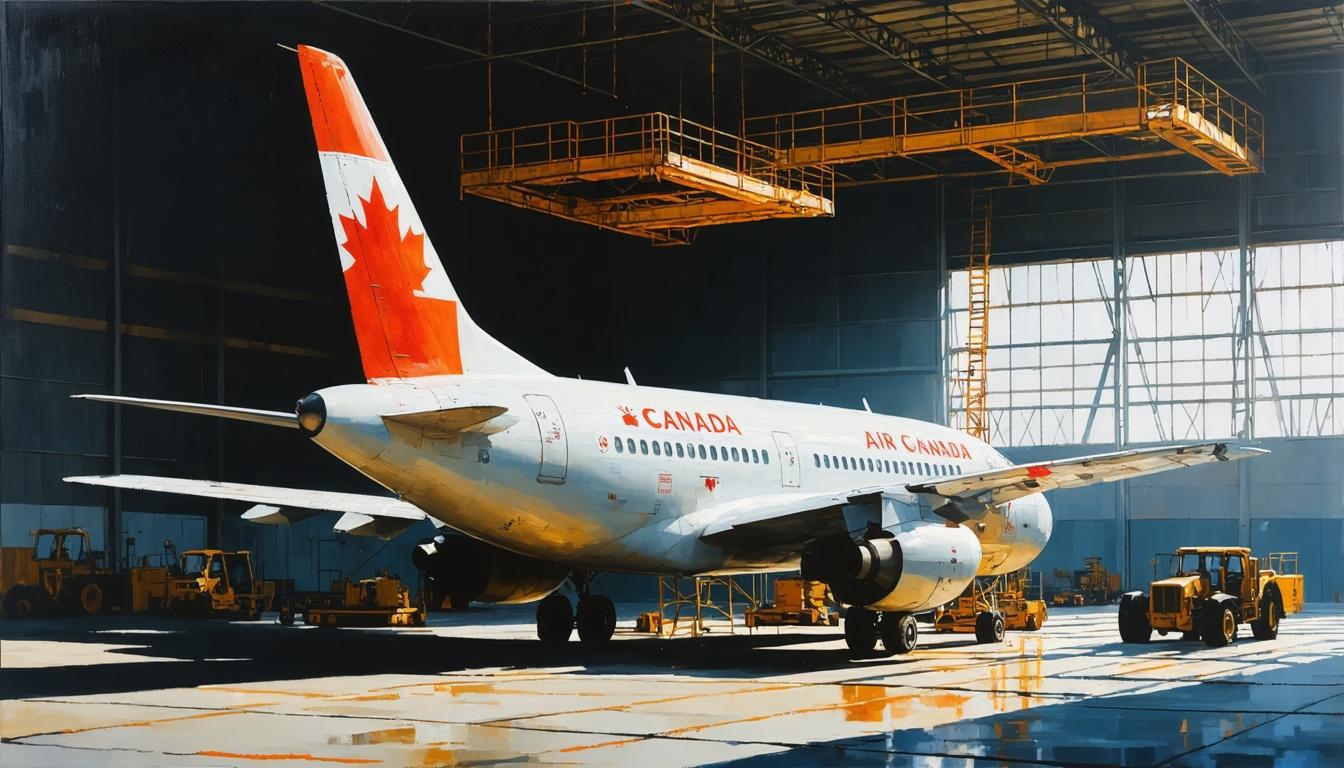

*this image is generated using AI for illustrative purposes only.
Air Canada has reached a tentative collective agreement with the International Association of Machinists and Aerospace Workers (IAMAW), covering more than 11,000 employees in Maintenance, Cabin Services, Airport Airside Operations, Cargo, Finance, and Clerical. The agreement recognizes the contributions and skills of Air Canada's operations and administrative employees, though specific terms remain confidential pending ratification.
Ratification Process
The agreement is subject to ratification by the union membership, a process expected to be completed over the next few weeks. Following union approval, the agreement must also be approved by the Air Canada Board of Directors. The timeline for final implementation depends on the successful completion of these procedural steps.
Employee Coverage
The tentative agreement impacts a significant portion of Air Canada's workforce across various operational and administrative functions. The following table outlines the key employee groups covered under the new contract:
| Employee Group | Description |
|---|---|
| Maintenance | Technical and maintenance staff |
| Cabin Services | In-flight service personnel |
| Airport Airside Operations | Ground handling and airside staff |
| Cargo | Freight and logistics personnel |
| Finance and Clerical | Administrative and financial support staff |
Company Background
Air Canada is Canada's largest airline and flag carrier, headquartered in Montréal. As a founding member of Star Alliance, the airline provides scheduled service to more than 180 airports across six continents. The company's shares are publicly traded on the TSX under the symbol AC.

How will the wage increases in this tentative agreement impact Air Canada's operating costs and fare pricing strategy?
Could this agreement set a precedent for upcoming negotiations with other airline unions, such as pilots or flight attendants?
What are the potential operational disruptions if the union membership rejects the agreement during ratification?
 19
19





 Create Custom Screeners
  Access 200+ Pre-built Filters
  Use 50+ Readymade Screener





