
 NewsSolar Module Prices Surge 33% as Supply Chain Disruptions Hit India's Renewable Energy Sector
Solar Module Prices Surge 33% as Supply Chain Disruptions Hit India's Renewable Energy Sector


Solar module prices have surged 33% since late December due to rising silver and aluminium costs, rupee weakness, and China's supply chain restrictions. Photovoltaic cell prices jumped from 3.50 to 5.50 cents per watt peak, impacting India's 93.00 GW solar capacity under construction and threatening projects worth ₹2.10 trillion without long-term purchase agreements.

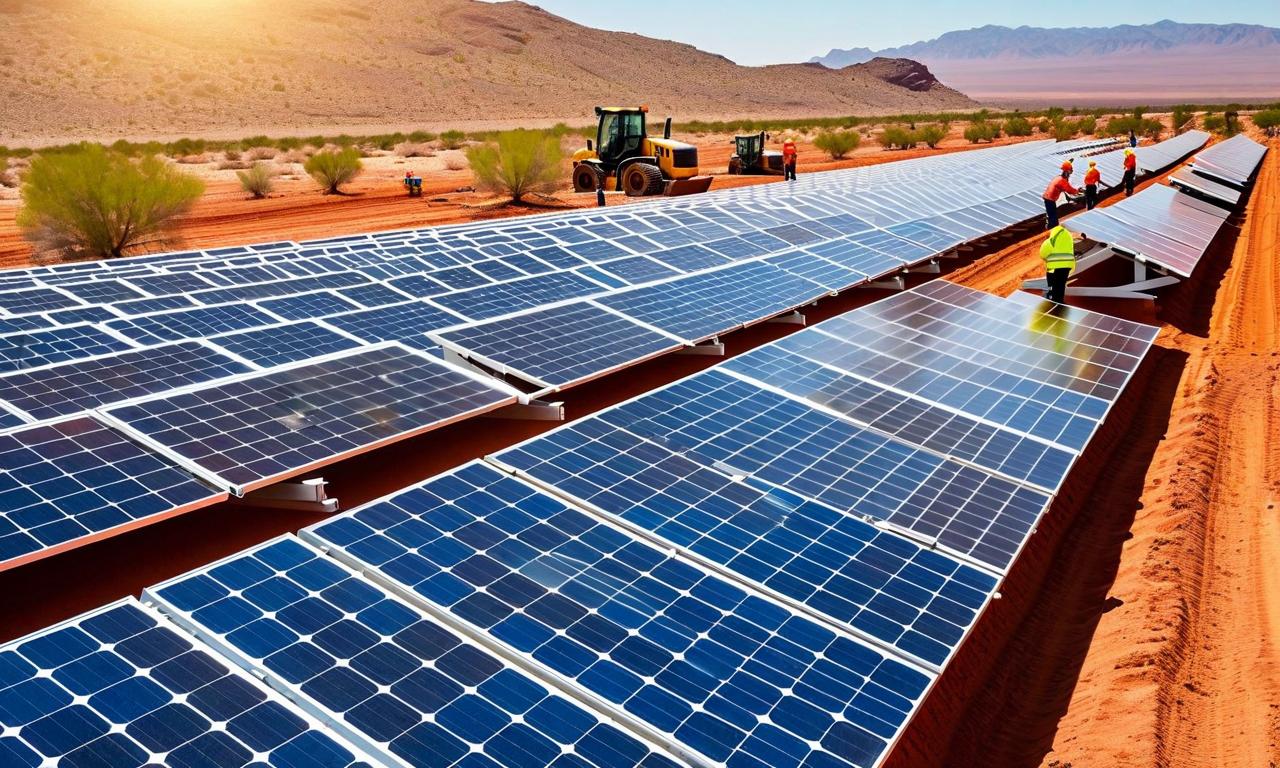

*this image is generated using AI for illustrative purposes only.
Solar module prices have surged by approximately one-third since late December, creating significant challenges for India's renewable energy sector. The price increase stems from rising silver and aluminium costs, a weaker rupee, and global supply chain disruptions following China's tightening of wafer quotas and rollback of a 9.00% value-added tax refund.
Sharp Rise in Component Costs
Photovoltaic cell prices have experienced a dramatic increase within weeks, as detailed below:
| Component: | Previous Price | Current Price | Change |
|---|---|---|---|
| Photovoltaic Cells: | 3.50 cents per watt peak | 5.50 cents per watt peak | +57% |
| Module Price Increase: | ₹2.00-3.00 crore per MW | ₹20.00 lakh additional per MW | Significant impact |
"The recent jump in cell prices highlights the structural vulnerability of India's solar supply chain," said Prashant Mathur, chief executive officer at Saatvik Green Energy Ltd. "As equipment costs rise, upcoming projects will face higher capital costs, and tariffs for new power purchase agreements are likely to harden after a prolonged period of deflation."
Impact on India's Solar Capacity Expansion
India's solar sector currently faces substantial capacity and target challenges:
| Parameter: | Capacity/Target |
|---|---|
| Solar Capacity Under Construction: | 93.00 GW |
| Current Installed Solar Capacity: | 135.81 GW |
| Solar Energy Target by 2030: | 300.00 GW |
| Overall Non-Fossil Fuel Target: | 500.00 GW |
| Green Power Without Long-term Agreements: | 43.00 GW |
| Investment Value at Risk: | ₹2.10 trillion |
The price surge poses additional risks for India's renewable energy sector, particularly as multiple states prefer long-term purchase agreements for stable coal-fired power. Power distribution companies are currently selling renewable energy on electricity exchanges at prices lower than their purchase costs due to oversupply during solar hours.
Manufacturing Capacity vs Import Dependence
Despite significant manufacturing infrastructure, India remains heavily dependent on imports for critical components. An executive at one of India's largest component manufacturers explained that domestic module manufacturers have raised prices by as much as ₹20.00 lakh per MW due to their reliance on imported cells and silver.
| Manufacturing Parameter: | Current Status |
|---|---|
| Solar Module Manufacturing Capacity: | Over 100.00 GW |
| Projected Capacity by 2025: | 125.00 GW |
| Cell Production Capacity: | 18.00 GW |
| Import Dependence: | Polysilicon, ingots, wafers |
Major Indian players include Adani Solar, ACME Solar, Avaada Electro, ReNew, Waaree Energies, and Saatvik Solar, while Chinese suppliers Longi, Jinko Solar, and Trina Solar dominate the supply chain.
Policy Challenges and Market Impact
Indian solar power developers must source components from an Approved List of Models and Manufacturers under government-supported schemes. A similar mandate for cells takes effect in June, with wafers potentially included by 2028 to boost local manufacturing.
"There is no provision in power purchase agreements to revise tariffs or allow compensation if component prices increase due to external factors such as actions by a supplying country," said Mohit Bhargava, former CEO of NTPC Green Energy Ltd. The impact on independent power producers depends on the rate of price changes, with significant increases leading to higher project costs and reduced profits.
Industry Outlook and Expectations
Ashish Agarwal, head of solar and storage at BluPine Energy, expects cell prices to drop as current movements reflect seasonal production dips in China ahead of the Chinese New Year. "This is a familiar, short-term pattern in global supply chains, and prices are expected to return to previous levels as production normalises," said Agarwal of the Actis-backed company with nearly 4.00 GW renewable capacity.
However, prolonged price pressure could slow project execution and lead to softer demand across the renewable sector, while module suppliers remain largely insulated as costs are passed through to developers.
 17
17





 Create Custom Screeners
  Access 200+ Pre-built Filters
  Use 50+ Readymade Screener





