India's Merchandise Exports Rise 1.86% in December, Overall Exports Up 4.33% in First Nine Months

1 min read     Updated on 15 Jan 2026, 03:25 PM
scanx
Reviewed by
Suketu GScanX News Team
Overview

India's merchandise exports grew 1.86% to $38.51 billion in December 2024, while overall exports increased 4.33% to $634.26 billion in the first nine months of the current financial year. Services exports led growth with a 6.46% increase, while key sectors like electronics (16.00%) and marine products (11.00%) showed strong performance. Exports to major markets including the US (9.75% growth) and China (36.68% growth) supported the positive trajectory, with India expected to cross $850.00 billion in total exports.
30016551

*this image is generated using AI for illustrative purposes only.

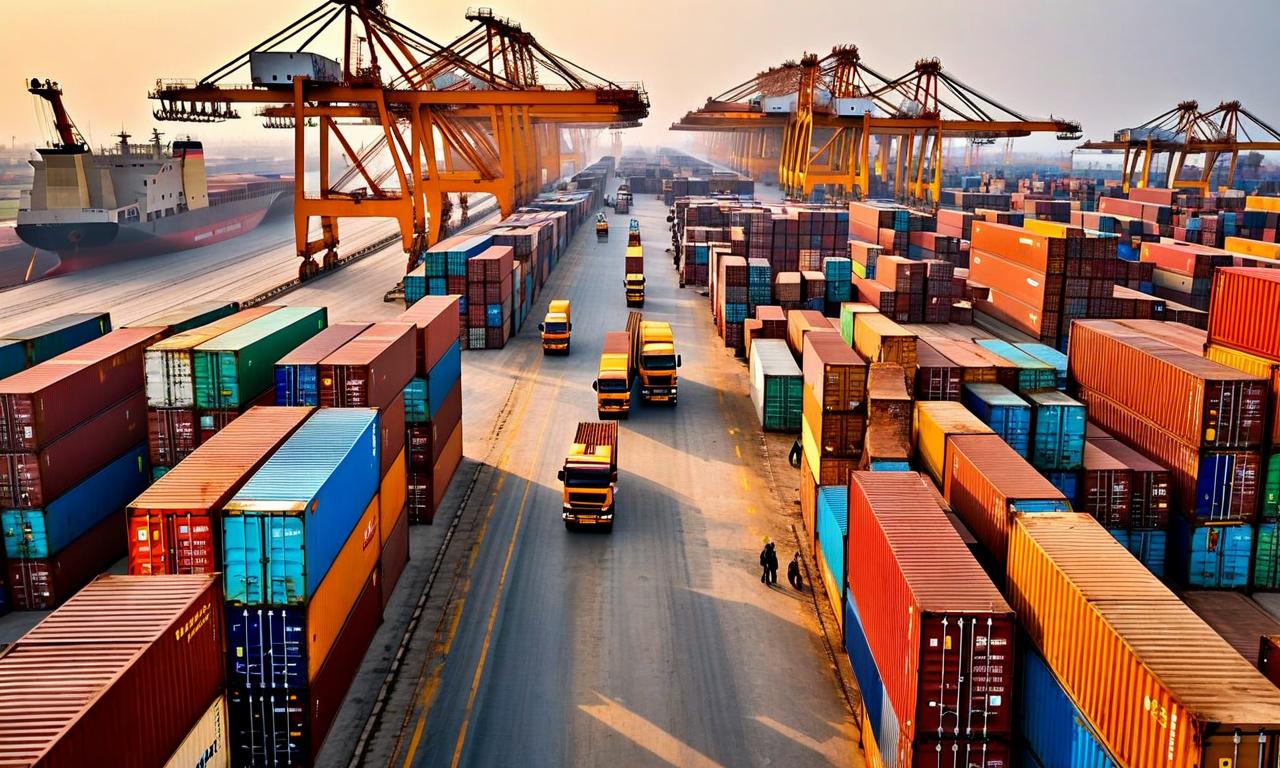
India's export performance showed steady growth momentum with merchandise exports rising 1.86% to $38.51 billion in December 2024, compared to $37.80 billion in December 2023, the Commerce Ministry announced on Thursday, January 15. This growth comes despite ongoing trade challenges in the global market.

Strong Nine-Month Performance

The country's overall export performance in the first nine months of the current financial year demonstrated robust growth across multiple segments:

Export Category April-December Growth Performance
Overall Exports 4.33% $634.26 billion vs $607.00 billion
Merchandise Exports 2.44% Steady growth trajectory
Services Exports 6.46% Strong outperformance

Sector-Wise Export Growth

Several key sectors recorded notable expansion during the period. Electronic goods exports surged 16.00%, while marine product exports increased 11.00%. The diversified growth across sectors indicates broad-based strength in India's export capabilities.

Regional Market Performance

India's export growth was supported by strong performance across key international markets:

Market Growth Rate Period
United States 9.75% First nine months
China 36.68% First nine months

Additionally, exports grew to several other important markets including the UAE, Malaysia, Hong Kong, and Spain, demonstrating India's expanding global trade footprint.

Services Export Dynamics

While services exports showed negative growth in December 2024, the Commerce Ministry attributed this to a high base effect, as December 2023 had recorded the highest-ever monthly services exports. Despite this monthly decline, services exports maintained strong growth of 6.46% for the April-December period.

Record Quarter Performance

The third quarter of the current financial year marked a significant milestone, with overall exports reaching a record $215.70 billion. The Commerce Ministry noted that unless there is a major change in trajectory, India is expected to cross $850.00 billion in total exports for the full year, highlighting the country's strong export momentum.

like19
dislike

India Steel Exports Jump 33% in April-December Period, Government Data Shows

2 min read     Updated on 12 Jan 2026, 04:34 PM
scanx
Reviewed by
Radhika SScanX News Team
Overview

India achieved a 33.3% growth in finished steel exports to 4.8 million metric tons during April-December, making it a net steel exporter with imports at 4.65 million metric tons. The country produced 117.6 million metric tons of finished steel and 123.9 million metric tons of crude steel, while consumption reached 119.3 million metric tons. The government imposed safeguard duties starting at 12% on steel imports to counter cheaper Chinese shipments, with rates declining over three years.

29761465

*this image is generated using AI for illustrative purposes only.

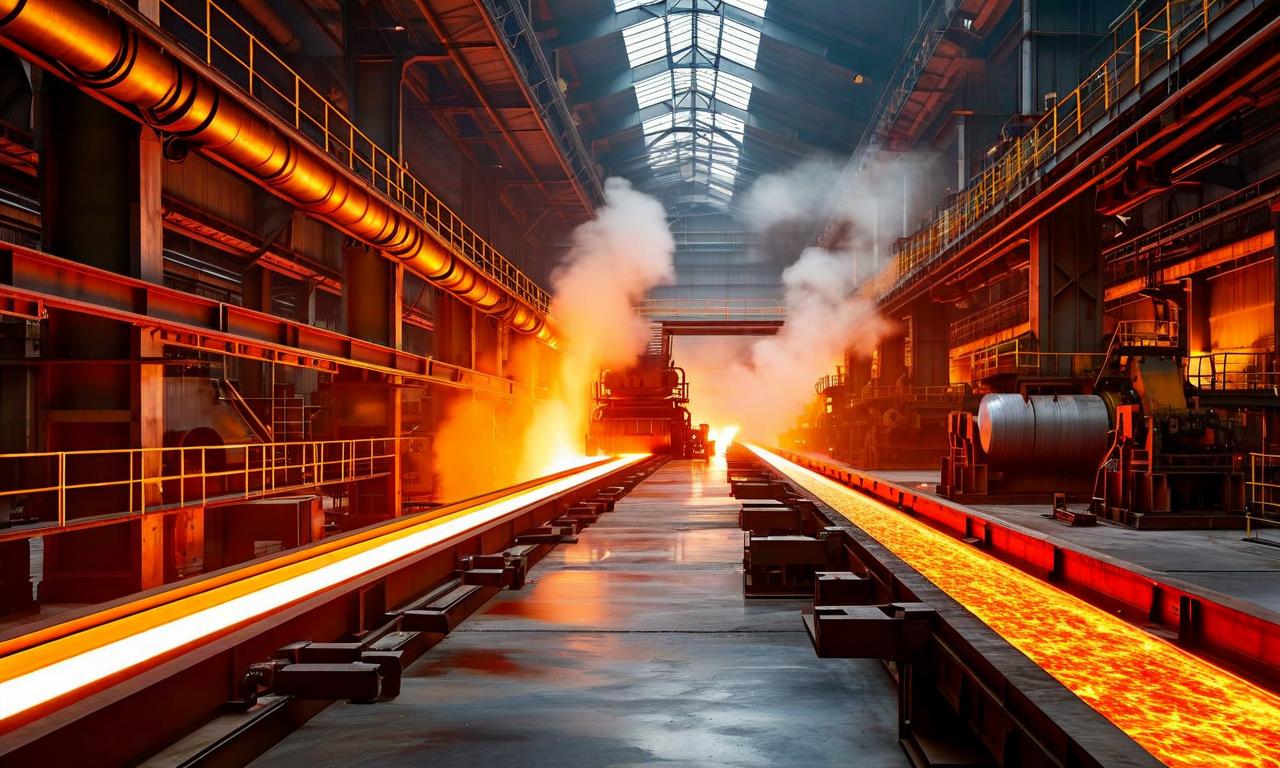
India has demonstrated strong performance in steel exports during the April-December period, with finished steel shipments reaching 4.8 million metric tons, marking a substantial 33.3% increase from the previous year, according to provisional government data. This growth has positioned the world's second-biggest crude steel producer as a net exporter of finished steel during the first nine months of the financial year.

Export-Import Balance

The trade dynamics reveal India's strengthening position in the global steel market. While the country exported 4.8 million metric tons of finished steel, imports stood at 4.65 million metric tons during the same period, creating a positive trade balance.

Trade Parameter: Volume (Million MT) Change (%)
Finished Steel Exports: 4.8 +33.3%
Finished Steel Imports: 4.65 -
Net Export Position: 0.15 -

Country-wise data on India's steel exports is expected to be released later in the month, which will provide more detailed insights into export destinations and market penetration.

Production and Consumption Metrics

India's domestic steel sector showed robust production capabilities during the April-December period. The country's steel production and consumption figures demonstrate the scale of its domestic market and manufacturing capacity.

Production Metric: Volume (Million MT)
Finished Steel Production: 117.6
Crude Steel Production: 123.9
Finished Steel Consumption: 119.3

The production figures indicate that India maintained strong manufacturing output while meeting substantial domestic demand, with consumption reaching 119.3 million metric tons.

Government Policy Response

In December, the government implemented protective measures to address concerns over cheaper steel imports, particularly from China. The administration imposed safeguard duties on certain steel products with a declining rate structure over three years.

Policy Implementation: Rate Structure
First Year Safeguard Duty: 12%
Second Year Rate: 11.5%
Third Year Rate: 11%

These measures aim to protect domestic steel manufacturers from unfair competition while allowing gradual market adjustment.

Market Price Developments

The steel sector witnessed price adjustments in January, with leading Indian steelmakers increasing prices for key products. Hot-rolled coils and cold-rolled coils saw price increases of up to ₹2,000.00 per metric ton, according to commodities consultancy BigMint. Hot-rolled coil prices ranged between ₹50,250.00 per metric ton to ₹51,250.00 per metric ton, reflecting market dynamics and input cost pressures.

like20
dislike
Explore Other Articles