
 NewsIndia's Data Centre Investment Flow: Infrastructure Layers Capture Most Capital Beyond Operators
India's Data Centre Investment Flow: Infrastructure Layers Capture Most Capital Beyond Operators


India's data centre boom represents an infrastructure investment cycle where capital flows primarily to supporting systems rather than operators. Major players like Reliance Jio, Adani Enterprises, and Bharti Airtel drive demand benefiting power utilities, cooling specialists, electrical equipment suppliers, and construction firms. Power infrastructure commands the largest capital share as a non-deferrable component, while cooling systems emerge as performance bottlenecks in AI-heavy environments.

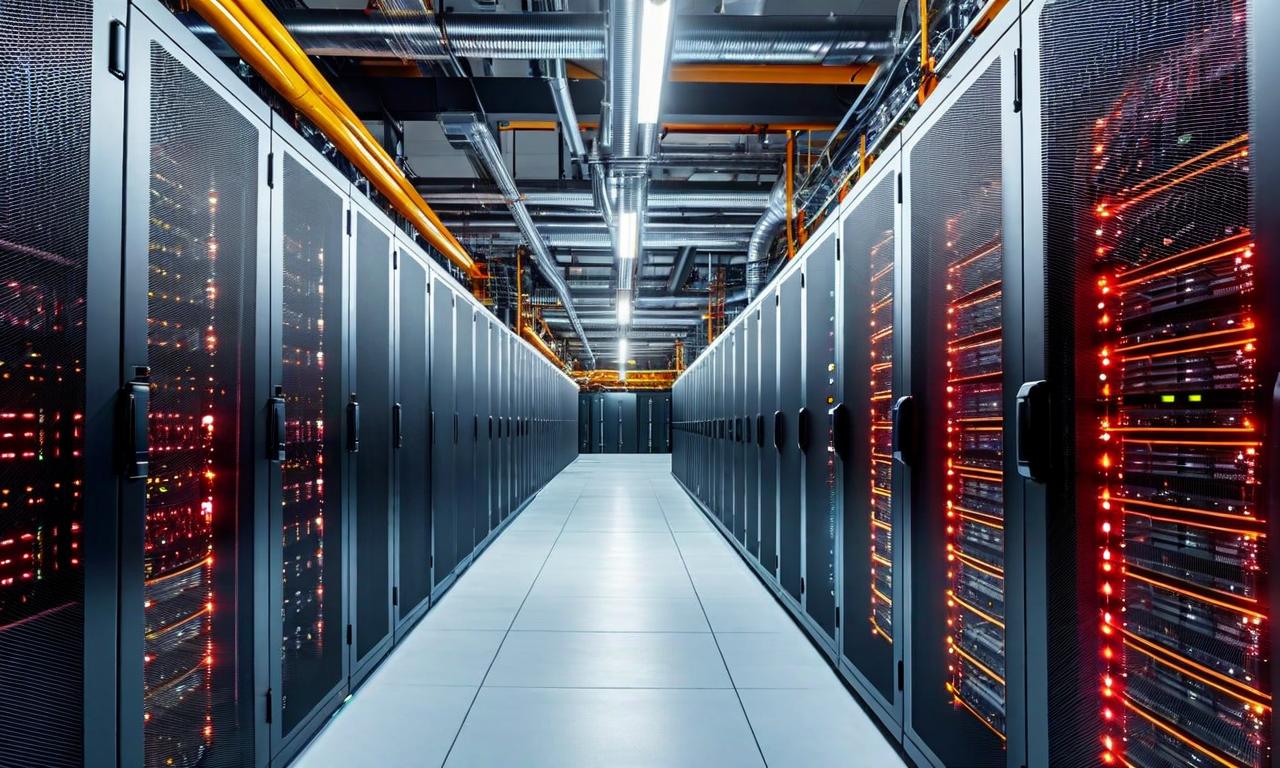

*this image is generated using AI for illustrative purposes only.
India's data centre expansion has captured significant attention with hyperscalers committing billions and major conglomerates positioning themselves as digital infrastructure platforms. However, the real investment opportunity lies not with data centre operators but in the underlying infrastructure systems that support these facilities.
Major platform players including Reliance Industries' Jio, Adani Enterprises, and Bharti Airtel are driving sustained multi-campus demand that extends capital flows into power systems, cooling infrastructure, construction, and electrical equipment at industrial scale. Beyond large conglomerates, operators such as Sify, Nxtra, Yotta, NxtGen, and NTT are clustering capacity around power-secure corridors rather than pursuing lowest-cost land options.
Capital Distribution Across Infrastructure Layers
Data centres function as layered industrial systems where most capital flows to supporting infrastructure before the first server becomes operational. The investment hierarchy reveals distinct beneficiary categories across the technology stack.
| Infrastructure Layer | Primary Beneficiaries | Investment Characteristics |
|---|---|---|
| Power Systems | Utilities, Electrical Equipment | Largest share, non-deferrable |
| Cooling Infrastructure | HVAC, Thermal Management | Performance-critical, AI-driven demand |
| Construction & EPC | Specialized Contractors | Execution-limited, reputation-sensitive |
| Security Systems | Physical Security, Automation | Steady, compliance-driven spend |
Power Infrastructure Dominates Investment Flow
Power systems represent the most dominant and inflexible component of data centre capital expenditure. As AI workloads intensify and downtime tolerance decreases, redundancy requirements multiply and upgrade cycles compress. This reality benefits listed utilities and electrical equipment suppliers operating upstream of utilization cycles.
India's largest platforms are building with power certainty as the primary consideration. Jio's data centre strategy integrates captive power and grid adjacency, while Adani's approach combines energy generation, transmission, and data centre development. Airtel prioritizes sites where power availability and redundancy can scale ahead of compute demand.
Key Power Infrastructure Beneficiaries:
- Utilities: NTPC, Tata Power, JSW Energy benefit from long-duration, always-on demand
- Backup Power: Cummins India, Kirloskar Oil Engines provide reliability-focused solutions
- Electrical Equipment: ABB India, Hitachi Energy India, Siemens India, CG Power supply essential substation equipment
Cooling Systems Emerge as Performance Bottleneck
Thermal management has evolved from a facilities concern to core infrastructure as AI-heavy environments create cooling demands that no longer scale predictably with compute capacity. This shift positions industrial HVAC and thermal management firms at the center of data centre investment flows.
| Company Category | Listed Examples | Specialization |
|---|---|---|
| Industrial HVAC | Voltas, Blue Star, Thermax | Precision cooling, energy-efficient chillers |
| Component Suppliers | KRN Heat Exchanger | Specialized thermal components |
| System Integrators | Various specialists | AI-ready thermal systems |
Construction and EPC: Execution-Limited Opportunity
Construction and engineering, procurement, and construction (EPC) services absorb meaningful capital shares but operate as execution-limited rather than volume-driven businesses. Data centre construction demands zero tolerance for failure, creating barriers to entry while rewarding established capabilities.
Firms such as Larsen & Toubro have developed dedicated data centre execution capabilities both as contractors and facility owners. Specialist EPC players like Sterling & Wilson Renewable Energy experience accelerating order inflows as credibility establishment leads to repeat business opportunities.
Supporting Infrastructure and Land Development
Security and building management systems, while representing smaller stack portions, provide non-negotiable functionality. Physical security, access control, surveillance, fire detection, and monitoring systems scale with footprint and regulatory requirements rather than utilization patterns. Listed exposure includes firms such as SIS and automation specialists like Honeywell Automation India.
Land and external infrastructure increasingly act as gating constraints despite not always representing the largest cost component. Data centres require power-ready, permitted sites with connectivity and water access. Developers including Anant Raj, DLF, Macrotech Developers, and REITs like Mindspace Business Parks REIT are repositioning as digital landlords with infrastructure-linked cash flows.
Investment Cycle Characteristics and Constraints
The data centre investment pattern represents a sustained infrastructure cycle rather than a one-time technology refresh. Redundancy expansion, density upgrades, regulatory changes, and AI workload evolution drive repeated reinvestment requirements.
Execution constraints including power availability, permitting timelines, water access, and skilled delivery capacity are tightening across several markets. When data centre demand outpaces grid capacity, approvals, and experienced EPC talent, capital concentrates toward fewer locations and proven suppliers.
Investment Implications:
- Infrastructure rewards scale, patience, and execution discipline
- Most durable exposure sits with companies receiving payment regardless of utilization rates
- Opportunity distribution favors scale, credibility, and constraint-delivery capability
India's data centre boom fundamentally represents an infrastructure cycle where the most significant investment opportunities exist beneath the server racks in the supporting systems that enable digital operations.
 17
17






 Access 50+ Readymade Screeners
  Use 200+ Custom Filters
  Get Full Market Insights





