
 NewsGovernment Raises Central Silk Board Approval Limit to ₹1 Crore to Accelerate Project Implementation
Government Raises Central Silk Board Approval Limit to ₹1 Crore to Accelerate Project Implementation


The Ministry of Textiles increased the Central Silk Board's approval limit from ₹50 lakh to ₹1 crore to expedite project clearances and reduce administrative delays. India's silk sector, employing 9.76 million people, produced 41,121 metric tonnes in FY25 and exported $246 million worth of silk products. The change addresses rising infrastructure and technology costs while maintaining budgetary oversight, with industry experts expecting improved competitiveness and export potential.

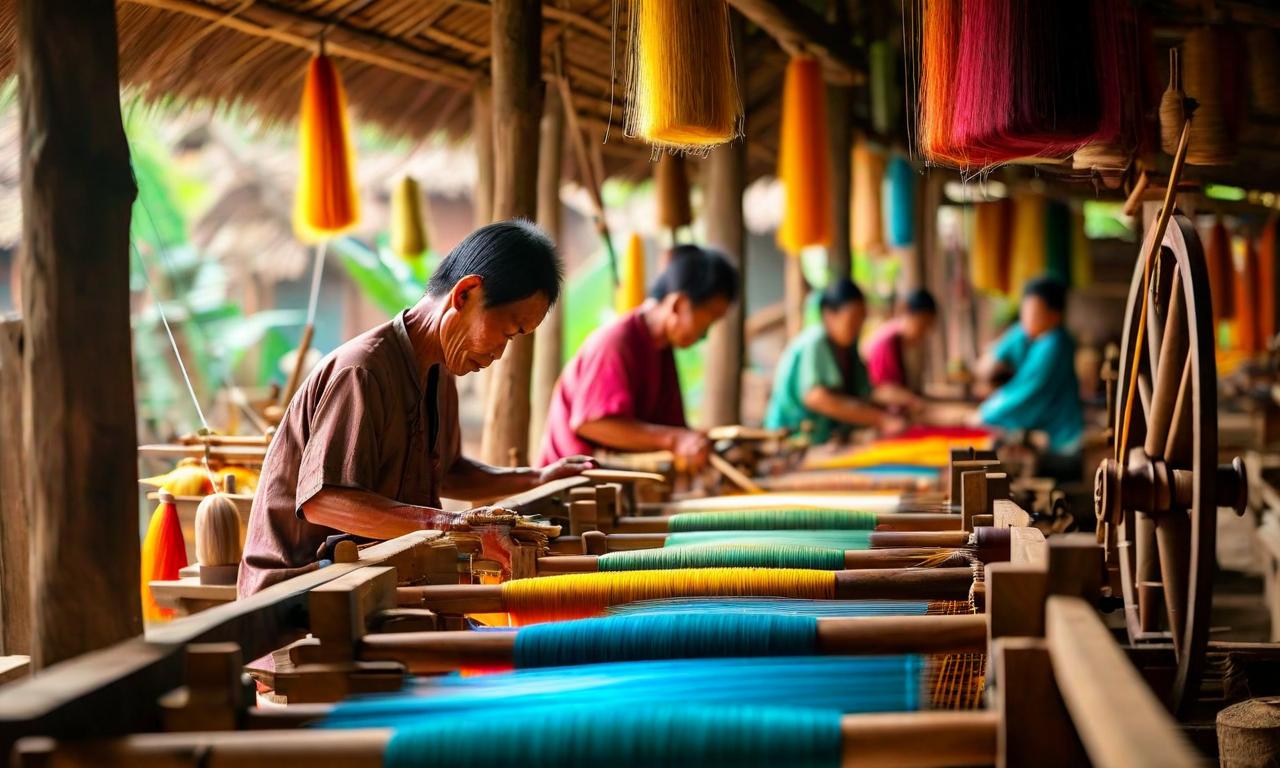

*this image is generated using AI for illustrative purposes only.
The Ministry of Textiles has raised the Central Silk Board's monetary approval ceiling to ₹1 crore from ₹50 lakh, enabling faster project clearances and reducing administrative delays that have hampered the silk sector's growth. The change was implemented through an amendment to Rule 22 of the Central Silk Board Rules, 1955, via a government notification issued on Friday.
Enhanced Approval Authority
The revised approval limit allows the Central Silk Board to clear higher-value proposals independently without requiring ministry-level sanctions. Previously, projects exceeding ₹50 lakh required approval from the Ministry of Textiles, creating bottlenecks that delayed implementation timelines.
| Parameter | Previous Limit | New Limit | Impact |
|---|---|---|---|
| Approval Ceiling | ₹50 lakh | ₹1 crore | 100% increase |
| Approval Authority | Ministry of Textiles | Central Silk Board | Decentralized |
| Processing Time | Extended delays | Faster clearance | Improved efficiency |
V. Balasubramaniyan, president of the Silk Association of India, confirmed that the decision will enable faster project approvals by the Central Silk Board. "The immediate impact will be that the board can now take decisions on its own, significantly reducing delays in project approvals and implementation, which is expected to be beneficial for the silk sector," he stated.
India's Silk Sector Performance
India maintains its position as the world's second-largest silk producer, with the sector employing 9.76 million people across rural and semi-urban areas. The country's silk production and export performance demonstrates steady growth.
| Metric | FY24 | FY25 | Growth |
|---|---|---|---|
| Silk Production | 38,913 metric tonnes | 41,121 metric tonnes | +5.67% |
| Export Value | Not specified | $246 million | - |
| Export Destinations | 30+ countries | 30+ countries | Stable |
Major silk-producing states include Andhra Pradesh, Assam, Bihar, Gujarat, Jammu and Kashmir, Karnataka, Chhattisgarh, Maharashtra, Tamil Nadu, Uttar Pradesh, and West Bengal. India exports various silk products including raw silk, natural silk yarn, fabrics, readymade garments, silk waste, and handloom products to markets such as the UAE, US, China, UK, Italy, Singapore, Australia, France, Hong Kong, and Canada.
Addressing Infrastructure and Technology Needs
Government officials indicated that the revision addresses the reality of increased project costs, particularly for infrastructure development, technology upgrades, and research initiatives. The previous ₹50 lakh limit had remained unchanged for decades despite rising expenses for seed development, disease control programs, modern reeling units, testing facilities, and digital systems.
One official explained that project sizes have expanded significantly while approval limits remained at outdated levels, creating administrative bottlenecks. The higher threshold enables quicker financial decisions while maintaining overall budgetary control.
Industry Impact and Export Potential
Industry representatives expect the measure to positively impact exports by improving quality, productivity, and consistency across the silk value chain. An industry executive noted that delayed approvals had previously hindered efforts to upgrade production and processing facilities.
"Upgrading reeling and processing units, improving seed quality or setting up testing facilities requires timely decisions. Faster approvals can help address quality gaps, which is critical for exports to demanding markets such as Europe and Japan," the executive stated.
Raja M. Shanmugam, former president of the Tirupur Exporters' Association, suggested that while immediate impact may be limited, smoother project implementation and faster decision-making could gradually improve competitiveness.
Administrative Efficiency Focus
Officials clarified that the changes do not introduce new schemes or increase financial allocations. Instead, the move aims to improve administrative efficiency and ensure existing programs are implemented without delays. The approach aligns with broader efforts to provide statutory boards greater operational flexibility while retaining financial oversight.
The enhanced approval authority is expected to benefit various stakeholders including silkworm rearers, reelers, weavers, researchers, and small industry clusters. Faster procurement of equipment and services should particularly support productivity improvement and quality enhancement programs in major silk-producing states such as Karnataka, Andhra Pradesh, Tamil Nadu, and Assam.
 17
17






 Access Market Heat-map & Insights
  Create, Save & Share your Screener
  Use 200+ Screening Filters





