
 NewsGovernment Mandates Improved Maintenance for Power Transmission Utilities After Tower Failures
Government Mandates Improved Maintenance for Power Transmission Utilities After Tower Failures


A government committee has directed 12 transmission utilities to improve maintenance practices following the failure of 75 extra high voltage transmission line towers. The directive affects companies like Adani Transmission, ReNew Transmission Ventures, Resonia Limited, Powergrid, and NTPC. The Central Electricity Authority's Standing Committee identified high-intensity winds due to climate change as the main cause, along with structural issues. Observed deficiencies include missing tower components, bolts, bent parts, and rust. Recommendations include increased line patrolling, immediate replacement of missing components, developing in-house design teams, and digitizing inventory management. Utilities must submit closure reports within three months, with special attention to vulnerable towers near river banks and in overlapping wind zones.

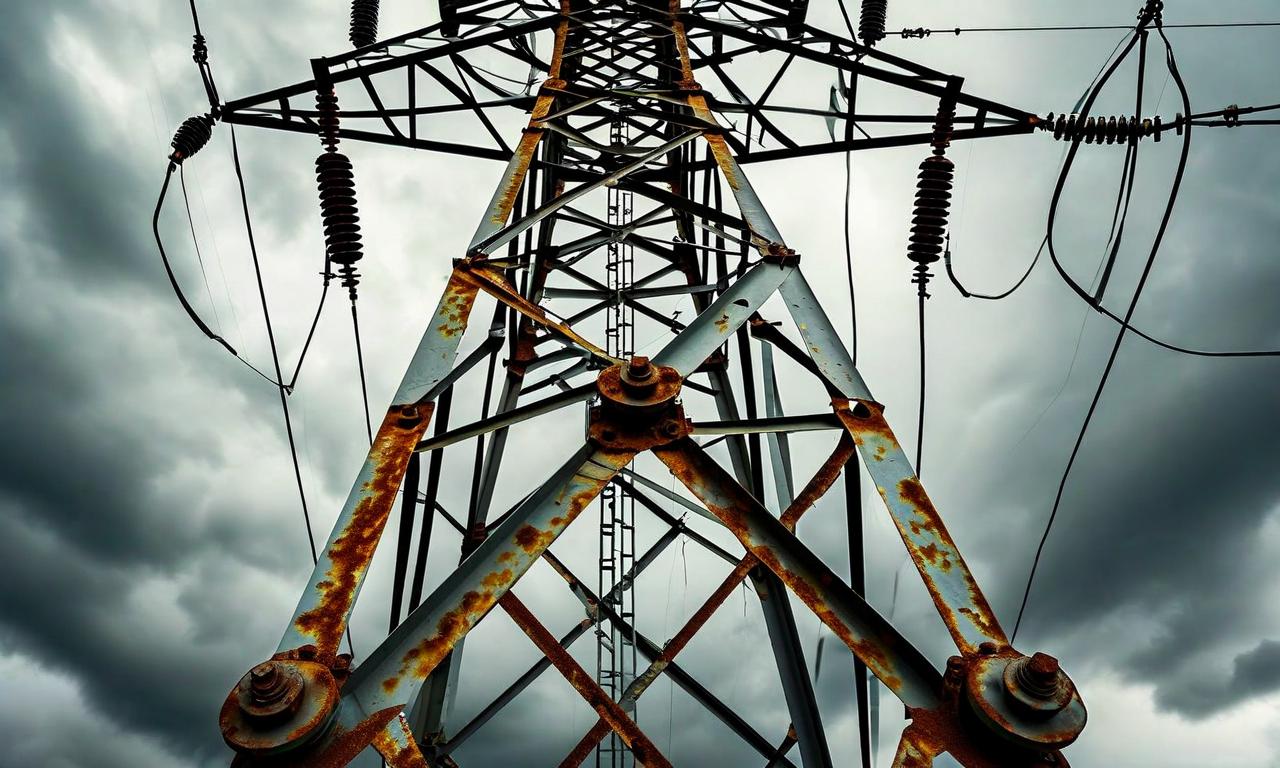

*this image is generated using AI for illustrative purposes only.
A government committee has issued directives to transmission utilities to enhance their maintenance practices following the failure of 75 extra high voltage transmission line towers. The mandate comes in response to a series of infrastructure failures that have raised concerns about the reliability of India's power transmission network.
Affected Utilities and Scale of the Issue
The directive impacts 12 transmission utilities operating 22 transmission lines across the country. Notable companies among those affected include:
- Adani Transmission
- ReNew Transmission Ventures
- Resonia Limited
- Powergrid
- NTPC
Root Causes and Observations
The Central Electricity Authority's Standing Committee of Experts has identified several factors contributing to the tower failures:
| Main Cause | Additional Factors |
|---|---|
| High-intensity wind due to climate change | Foundation damage |
| Tower structure issues | |
| Deformation in tower components |
It's worth noting that in many cases, utilities failed to provide supporting wind data to substantiate the claim of high-intensity winds.
Deficiencies Observed
During site visits, the committee observed various maintenance and structural issues:
- Missing tower members
- Missing bolts
- Bent components
- Rusted parts
Recommendations and Directives
To address these issues and prevent future failures, the Central Electricity Authority has issued several recommendations:
- Increase line patrolling frequency
- Immediate replacement of missing components
- Development of in-house design teams
- Digitization of inventory management
- Submission of closure reports within three months
The committee has also advised special attention to towers located near river banks and those in overlapping wind zones, as these are particularly vulnerable to environmental stresses.
Implications for the Power Sector
This directive underscores the growing challenges faced by India's power transmission sector in the face of changing climate conditions and the need for robust infrastructure. As utilities work to implement these recommendations, it may lead to increased operational costs in the short term but could result in improved reliability and reduced downtime in the long run.
The government's proactive stance in addressing these issues demonstrates a commitment to maintaining and improving the country's critical power infrastructure. However, the effectiveness of these measures will depend on the utilities' ability to implement them thoroughly and in a timely manner.
As the power sector continues to evolve, particularly with the integration of renewable energy sources, maintaining the integrity of the transmission network will be crucial for ensuring a stable and reliable power supply across the country.
 15
15






 Access Market Heat-map & Insights
  Create, Save & Share your Screener
  Use 200+ Screening Filters





