
 NewsFractional ownership and REITs democratising commercial real estate access, says Bharti Real Estate CEO
Fractional ownership and REITs democratising commercial real estate access, says Bharti Real Estate CEO


S.K. Sayal of Bharti Real Estate discusses how fractional ownership and REITs are democratising commercial real estate access for retail investors, while integrated business districts like Worldmark in Aerocity represent the market's evolution. Delhi-NCR shows robust leasing prospects through 2025-26, driven by IT, BFSI, and consulting sectors seeking high-quality integrated spaces.

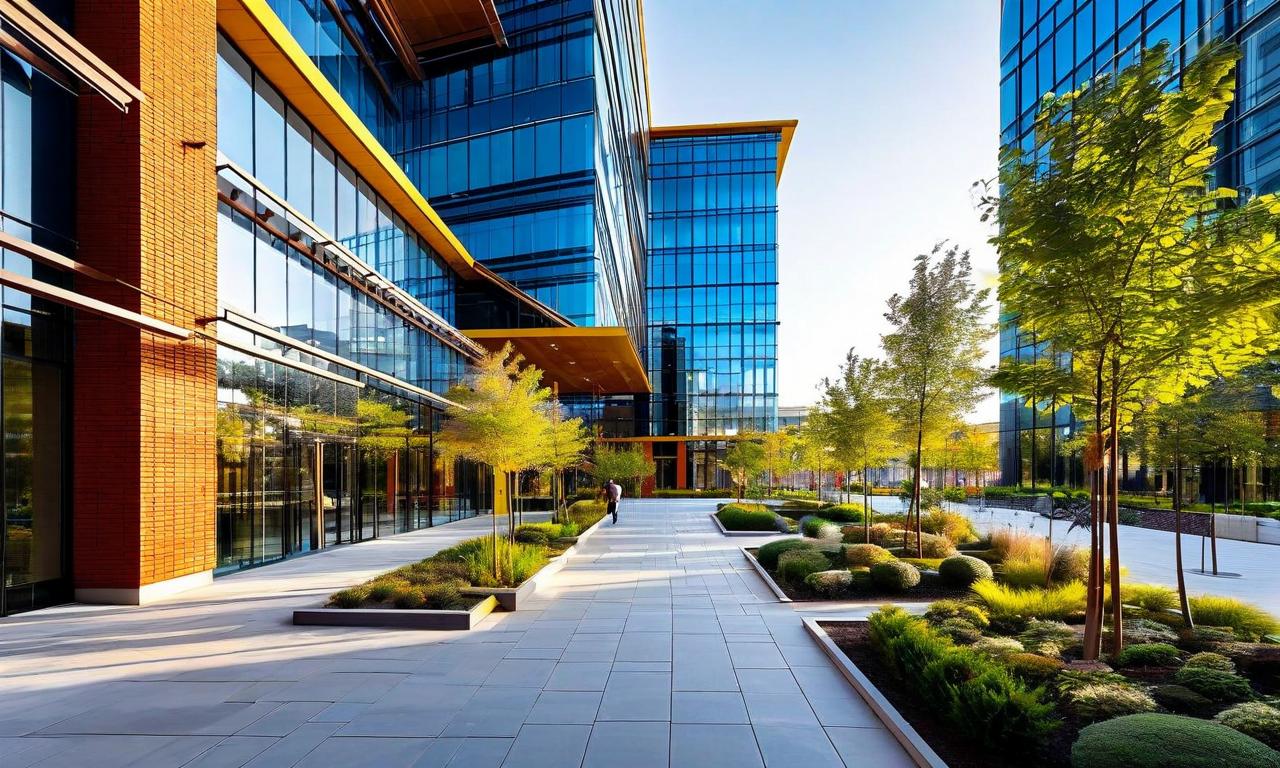

*this image is generated using AI for illustrative purposes only.
India's commercial real estate sector is witnessing a fundamental transformation as new investment structures democratise access to institutional-grade assets. S.K. Sayal, MD & CEO of Bharti Real Estate, explains how fractional ownership platforms and REITs are enabling retail and HNI investors to participate in high-quality commercial properties that were traditionally accessible only to large corporates and institutional funds.
Integrated Business Districts Drive Market Evolution
Sayal identifies a significant shift from traditional isolated office complexes to fully integrated global business districts. "We are transitioning from the traditional paradigm of isolated office complexes to fully integrated global business districts," he states, highlighting developments at Worldmark in Aerocity, New Delhi as demonstrating this potential.
The success factors for these districts include:
- Meticulously designed architecture and space planning
- Authentic multimodal connectivity and access
- Walk-to-work ecosystems enabling daily activities without vehicles
- Comprehensive softer infrastructure including hotels, restaurants, retail, and public spaces
- ESG compliance and robust digital infrastructure
Delhi-NCR Leasing Outlook Remains Strong
The CEO projects notably robust prospects for Delhi-NCR through 2025 and continuing through 2026, driven by definitive preference for high-quality offerings. Occupiers are progressively consolidating into distinguished developments within integrated districts that provide enhanced connectivity, wellness-oriented design, and advanced technological integration.
| Sector | Demand Driver |
|---|---|
| Primary Drivers | Global IT and ITeS |
| Incremental Demand | Global capability centres, BFSI institutions |
| Emerging Sectors | Consulting firms, manufacturing-related enterprises |
| Flexible Workspace | Rapid expansion within integrated ecosystems |
At Worldmark specifically, Sayal notes a highly diverse consumer range spanning financial services, automobiles, banking, technology, aerospace, aviation, and manufacturing sectors. These occupants prefer the location for its extensive, contiguous spaces within a globally recognised ecosystem suitable for long-term headquarters.
Fractional Ownership Transforms Investment Access
Regarding fractional ownership trends, Sayal views this development positively from a developer's perspective. "The increasing prevalence of regulated fractional ownership and REITs signify the evolution of India's commercial real estate investment sector," he explains. These models play a pivotal role in democratising access to institutional-grade real estate while expanding the investor base and enhancing market liquidity.
The trend emphasises transparency and asset performance, recognising disciplined development, proficient asset management, and stable income sources. While fractional ownership doesn't substitute for REITs or institutional capital, it effectively complements them when structured around stabilised, income-producing assets.
Investment Safeguards and Quality Metrics
For investors evaluating fractional commercial real estate opportunities, Sayal recommends focusing on underlying fundamentals rather than superficial yield figures. Critical assessment areas include:
| Assessment Category | Key Factors |
|---|---|
| Asset Quality | Construction standards, technical specifications, regulatory compliance |
| Lease Stability | Tenant creditworthiness, lease duration, escalation provisions |
| Governance Structure | Well-defined SPV structures, transparent reporting, independent trusteeship |
| Operational Status | Income-producing assets with ESG certification and professional management |
Strategic Investment Positioning
For the next 18-24 months, Sayal advises long-term investors to pursue a selective, quality-focused approach. In the office sector, emphasis should be on institutional-grade assets in established or emerging commercial districts with robust tenant covenants and extended lease durations.
Mixed-use developments present attractive risk-adjusted opportunities through income diversification across office, retail, and hospitality sectors. Across all asset classes, investors should prioritise cash flow clarity, ESG adherence, and professional asset management.
Long-term Market Confidence
Sayal's confidence in India's commercial real estate sector over the next decade stems from robust foundational fundamentals including steady economic growth, a youthful and competent labour force, increasing global enterprise integration, and ongoing infrastructure development. He notes India's transition from a cost-effective destination to a prominent strategic global business centre, with the sector progressing towards maturity through increased transparency, ESG adherence, and institutional ownership.
 17
17






 Access Market Heat-map & Insights
  Create, Save & Share your Screener
  Use 200+ Screening Filters





