
 NewsDiverse Renewable Energy Sources and Battery Storage Essential for Emission Reduction, Expert Says
Diverse Renewable Energy Sources and Battery Storage Essential for Emission Reduction, Expert Says


Experts emphasize the need for diverse renewable energy sources and battery storage to combat India's air pollution crisis, as thermal plants in NCR emit 281 kilotons of SO₂ annually. With renewable capacity growing from 35 GW to 200 GW since 2014, challenges remain due to lower plant load factors of 25% versus 70% for thermal plants. Peak power demand is projected to reach 335 GW by FY 2030, requiring a comprehensive strategy including solar, wind, green hydrogen, and enhanced storage solutions.

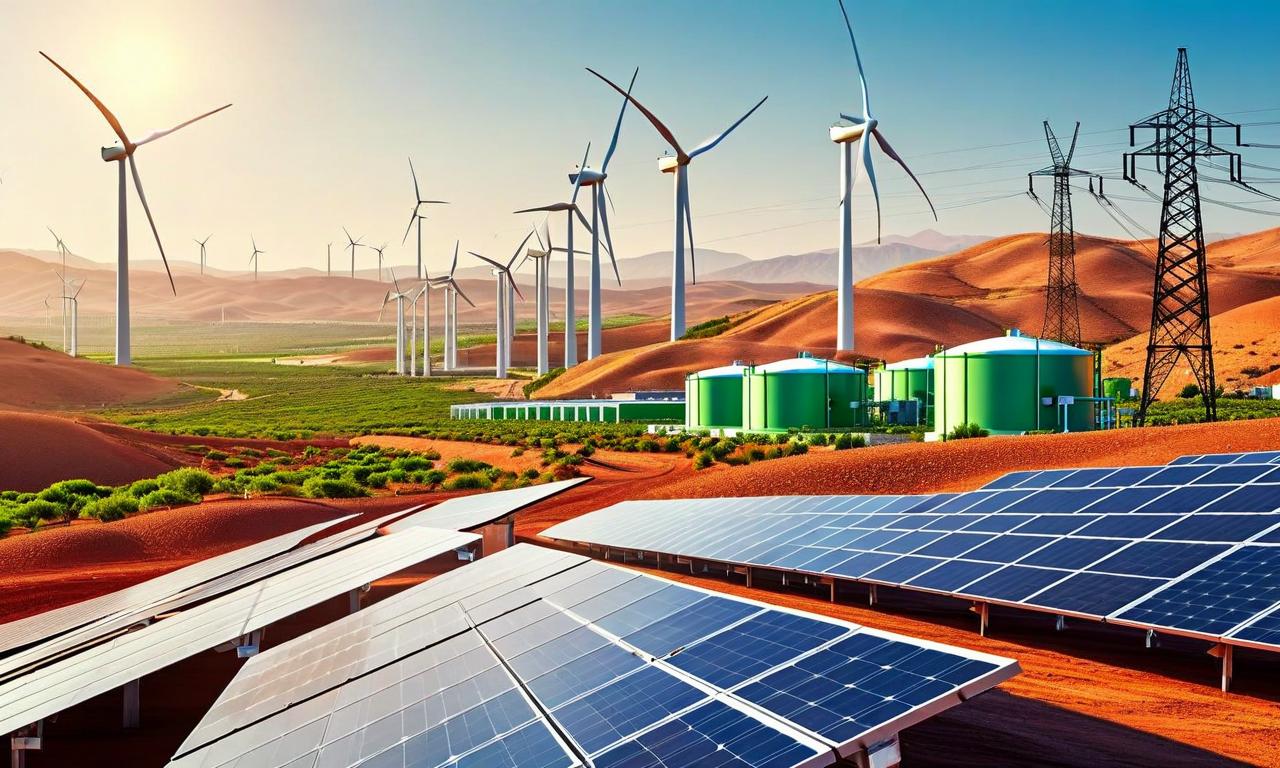

*this image is generated using AI for illustrative purposes only.
As India grapples with severe air pollution challenges, particularly in Delhi NCR where residents have endured poor air quality for three months, experts are calling for a comprehensive renewable energy strategy that includes diverse sources and robust battery storage systems. The Centre for Air Quality Management has identified that while transport contributes 41% of air pollution, thermal power plants remain a significant concern for long-term environmental health.
Thermal Power's Environmental Impact
A National Green Tribunal observation reveals the stark reality of thermal power emissions compared to other pollution sources. The data shows a significant disparity in environmental impact:
| Source | Annual SO₂ Emissions |
|---|---|
| Coal-fired thermal plants (NCR) | 281 kilotons |
| Crop burning (8.9 million tons stubble) | 17.8 kilotons |
Power Minister Manohar Lal Khattar addressed recent calls for Flue-gas desulphurisation (FGD) device installations, noting that comprehensive FGD implementation at government-owned thermal plants would cost ₹80,000 crores. Following stakeholder consultations, a middle-path approach emerged, proposing FGD installation at select thermal plants for ₹10,000-12,000 crores.
India's Renewable Energy Growth and Challenges
India's renewable energy sector has demonstrated remarkable expansion, with capacity increasing nearly six-fold from 35 GW in 2014 to over 200 GW in 2025. However, the effectiveness of renewable installations depends heavily on Plant Load Factor (PLF), which measures actual power production against installed capacity.
| Technology | Plant Load Factor |
|---|---|
| Thermal power plants | Over 70% |
| Solar energy | Around 25% |
| Wind energy | Around 25% |
Currently, renewable energy covers approximately 33% of power demand but remains subject to weather conditions, sunshine availability, and biomass supply consistency. This intermittency challenge underscores why 12 thermal power plants within 300 kilometers of the national capital remain operational despite air quality concerns.
Rising Power Demand and Future Projections
India's power consumption continues its upward trajectory, with peak demand rising from 136 GW in 2013-14 to around 250 GW in 2025, representing an average growth rate of 5.6%. The projections indicate substantial future requirements:
| Parameter | Current/Target Figures |
|---|---|
| Peak demand by FY 2030 | 335 GW (expected) |
| Renewable capacity target by 2030 | 500 GW |
| Current thermal capacity (June 2025) | 240 GW |
| Additional thermal capacity planned | 80 GW |
The increasing demand stems from industrialization growth, rising per capita incomes, electric vehicle adoption, and power-intensive data centers, potentially exceeding current estimates.
Comprehensive Renewable Energy Strategy
Experts and policymakers advocate for a diversified renewable energy portfolio combined with battery storage solutions to ensure reliable power supply while reducing thermal power dependence. The recommended approach includes:
- Solar power expansion with improved storage capabilities
- Wind energy development in suitable geographical areas
- Green hydrogen initiatives already promoted by government policies
- Hydel projects with estimated potential of 133 GW, including upcoming small hydel project schemes
- Alternative technologies such as geothermal energy, nuclear power, and waste-to-energy initiatives
A former Power Secretary emphasized that without reliable power supply, disruptions would lead to increased pollution through crude generator sets, many lacking pollution control devices. The expert suggested that carbon emissions from coal plants, stubble burning, and garbage burning can be offset through waste-to-energy and other renewable technologies, provided adequate storage solutions ensure consistent power availability.
 15
15






 Access Market Heat-map & Insights
  Create, Save & Share your Screener
  Use 200+ Screening Filters





