Budget Expected to Boost Renewable Energy Push Through Grid Strengthening and Storage Incentives

3 min read     Updated on 20 Jan 2026, 02:22 PM
scanx
Reviewed by
Shriram SScanX News Team
Overview

India's renewable energy capacity reached 258 GW by November 2025 with 23% YoY growth, led by solar expansion to 136 GW. ICRA projects RE generation share will rise to 35% by FY2030 from current 22.1%, requiring 40 GW annual additions. However, transmission connectivity issues and 40-45 GW unsigned PPA capacity pose challenges. The budget is expected to support BESS projects, grid strengthening, and manufacturing incentives while continuing enhanced allocations for PM Surya Ghar (₹20,000 crores) and PM-Kusum (₹2,600 crores) schemes.

30444753

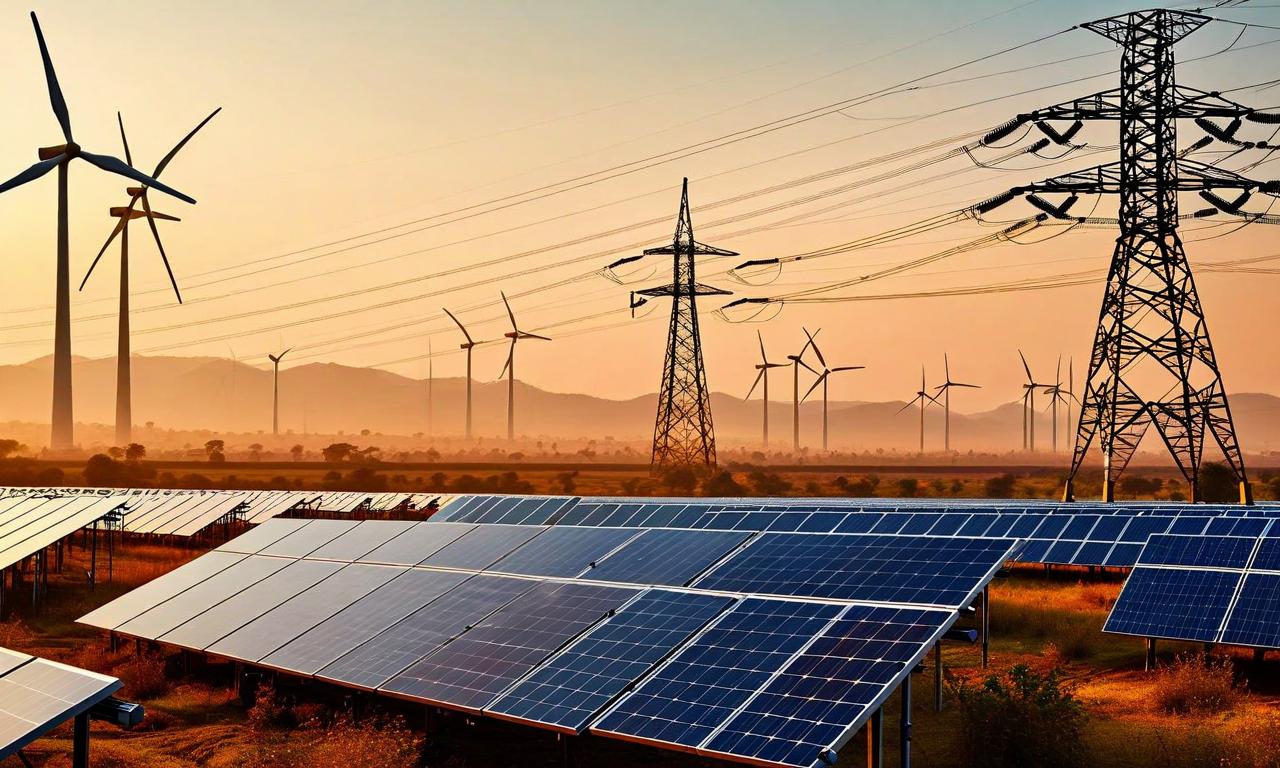
*this image is generated using AI for illustrative purposes only.

India's renewable energy sector has demonstrated remarkable growth momentum, with capacity reaching nearly 258 GW by November 2025, representing a substantial 23% year-on-year increase. This expansion has been primarily driven by solar power capacity additions, which have grown to 136 GW, positioning the country closer to its ambitious target of 500 GW renewable capacity by 2030.

Growth Trajectory and Future Projections

The renewable energy landscape shows promising long-term prospects despite near-term challenges. While FY2026 is expected to witness muted electricity demand growth of around 1.50-2.00% due to early and extended monsoon conditions, medium-term projections remain robust.

Parameter Current Status FY2030 Target
RE Generation Share 22.10% (FY2025) 35.00%
Total RE Capacity 258 GW 400+ GW
Required Annual Addition - 40 GW (FY2026-FY2030)
Medium-term Demand Growth - 5.00-5.50% annually

ICRA estimates indicate that achieving the estimated renewable energy capacity of over 400 GW by 2030 would require an annualised capacity addition of 40 GW during FY2026-FY2030, representing a significant scaling challenge.

Project Pipeline and Implementation Challenges

The renewable energy sector faces notable headwinds in project execution and connectivity infrastructure. After substantial capacity awards of 47.30 GW in FY2024 and 40.60 GW in FY2025, bidding activity has declined sharply in the current year.

Fiscal Year Capacity Awarded
FY2024 47.30 GW
FY2025 40.60 GW
FY2026 (8 months) 5.80 GW
Unsigned PPA Capacity 40-45 GW

The unsigned power purchase agreement capacity remains sizeable at approximately 40-45 GW, based on industry assessments. This backlog reflects underlying concerns about available transmission connectivity for the renewable energy sector.

Grid Infrastructure and Storage Requirements

Transmission connectivity challenges have emerged as a significant drag on sector growth. Grid curtailments have occurred in Rajasthan for solar assets during peak solar hours due to grid stability requirements, raising cash flow concerns for generating companies. The increasing share of renewables in India's generation mix emphasises the critical need for strengthening grid resilience and storage capacities.

Battery Energy Storage Systems continue to be crucial for large-scale storage infrastructure supporting India's renewable expansion. The upcoming budget is expected to provide continued policy support and budgetary allocation for BESS and pumped hydro projects, including viability gap funding to create a supportive ecosystem.

Manufacturing and Policy Support Initiatives

The budget is anticipated to reinforce self-reliance by extending manufacturing incentives for grid-scale batteries and promoting backward integration for solar module manufacturing. With steady reduction in dependence on imported solar components, incentives for ingot and wafer manufacturing could surge completely backward-integrated domestic capacities for solar modules.

Scheme FY2025 Allocation FY2026 Allocation Growth
PM Surya Ghar ₹11,111 crores (RE) ₹20,000 crores +80%
PM-Kusum ₹1,500 crores ₹2,600 crores +73%

India's FY2026 budget provided substantial support for clean energy adoption, with major allocation increases for both PM Surya Ghar and PM-Kusum schemes. Funding for PM Surya Ghar, aimed at accelerating rooftop solar uptake, rose to ₹20,000 crores, representing an 80% increase over FY2025 revised estimates.

Distribution Sector Reforms

Continued reforms in the distribution segment remain critical for sector sustainability. Enhanced funding under the Revamped Distribution Sector Scheme and sustained emphasis on smart metering are expected to improve billing efficiency, reduce aggregate technical and commercial losses, strengthen demand forecasting, and improve distribution company cash flows. The focus has shifted towards executable, financially robust, and grid-ready solutions for building a sustainable and resilient energy future.

like18
dislike

India's Clean Energy Sector Achieves Record 44.5 GW Capacity Addition Despite Grid and Storage Challenges

3 min read     Updated on 31 Dec 2025, 08:43 PM
scanx
Reviewed by
Naman SScanX News Team
Overview

India's renewable energy sector achieved record capacity additions of 44.5 GW till November 2025, marking a shift to energy acceleration phase. However, critical bottlenecks emerged in energy storage deployment, with only 490 MWh installed capacity by June 2025 against projected requirements of 82.37 GWh by 2026-27. The sector demonstrated manufacturing depth and policy evolution toward hybrid projects, but grid infrastructure and transmission challenges persist, requiring system-level integration focus for sustaining growth momentum.

28739583

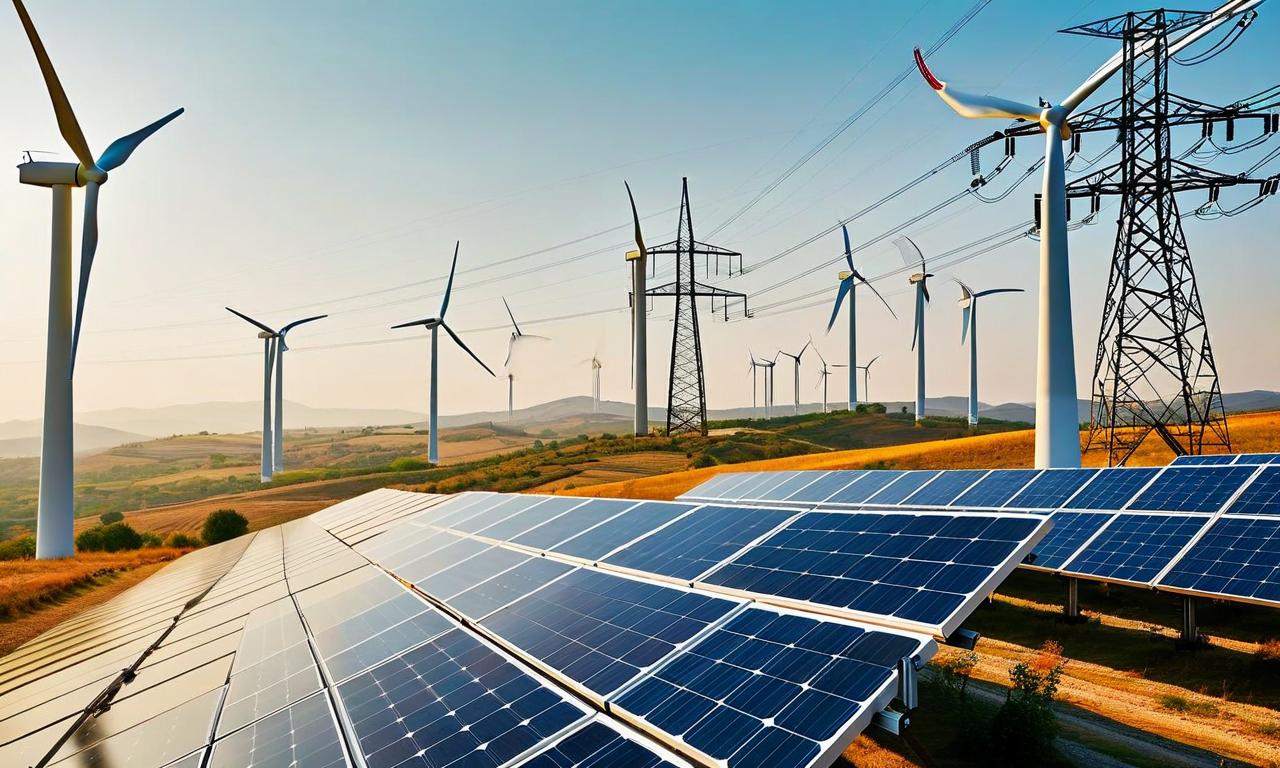
*this image is generated using AI for illustrative purposes only.

India's renewable energy sector crossed a psychological and structural milestone in 2025, achieving record capacity additions of 44.5 GW till November 2025. This performance nearly doubled annual additions and marked a decisive shift from "energy transition" to "energy acceleration." However, despite non-fossil capacity surging ahead of schedule, industry leaders warn that grid readiness, storage deployment, and system-level planning are struggling to keep pace.

Critical Storage Gap Emerges

The energy storage sector presents the most significant challenge to India's renewable acceleration. Current deployment figures reveal a concerning gap between capacity and requirements:

Storage Metrics: Current Status Projected Requirements
Installed Capacity (June 2025): 490 MWh -
H1 2025 Additions: 48.4 MWh -
Year-on-Year Change: -74% decline -
NEP 2023 Target (2026-27): - 82.37 GWh
NEP 2023 Target (2031-32): - 411.4 GWh

According to Mercom India Research, the cumulative installed energy storage capacity reached just 490 MWh by June 2025. The National Electricity Plan 2023 by the Central Electricity Authority estimates storage requirements driven by both pumped storage projects and battery energy storage systems. This stark mismatch highlights the urgency for faster project deployment and stronger policy and investment support.

Manufacturing Depth Drives Acceleration

Sunil Rathi, Executive Director at Waaree Group, identified 2025 as representing a clear break from incremental progress. "India has moved beyond transition into an accelerated phase of renewable growth," he noted, emphasizing structural shifts over headline numbers.

Domestic solar module and cell manufacturing evolved from capacity announcements to consistent, quality-driven output, enabling predictable execution of large project pipelines. The policy framework shifted focus from adding gigawatts to delivering reliable power, with growing emphasis on hybrid, round-the-clock and storage-linked tenders that value dispatchability and grid performance over installed capacity alone.

Capital flows became more disciplined, moving from speculative interest to execution-oriented deployment with stable bidding pipelines and clearer transmission planning supporting faster commissioning and scale replication.

Grid Infrastructure Challenges Persist

Despite progress in capacity addition, grid stability remains a critical bottleneck. Rathi cautioned that "renewable capacity is still running slightly ahead of grid readiness" in 2025. While policy and market design began recognizing storage as a system-level requirement, deployment has not matched the pace of solar additions.

Rajesh Kumar Singh, CEO of Jyoti Structures Ltd, highlighted transmission-side challenges:

  • Right-of-way issues causing project delays
  • Forest clearance bottlenecks
  • Misalignment between generation and evacuation capacity
  • Large solar players holding back capacity additions due to evacuation constraints

Singh emphasized that streamlining solutions to these challenges will help better align grid capacity additions with renewable power generation growth.

Bioenergy Achieves Commercial Scale

Among renewable segments, bioenergy, particularly ethanol, demonstrated significant progress in moving from policy intent to nationwide execution. Sangeeta Srivastava, Executive Director at Godavari Biorefineries Ltd, highlighted the successful implementation of 20% ethanol blending across large parts of the country as a critical inflection point.

Ethanol production capacity now exceeds blending demand, shifting the sector from scarcity to surplus and opening pathways toward higher blends. Unlike green hydrogen or large-scale storage, ethanol demonstrated operating stability, supply-chain readiness and consistent offtake, reflecting a maturing bioenergy ecosystem embedded in India's energy security strategy.

System Integration Becomes Priority

Industry experts agreed that sustaining acceleration between 2026 and 2030 will depend less on capacity addition speed and more on system performance. Laxit Awla, CEO of SAEL Industries, noted that "the policy direction has shifted from intent signalling to throughput building."

Key requirements for maintaining momentum include:

  • Faster project approvals
  • Deeper transmission and storage integration
  • Standardized financing frameworks for hybrid projects
  • Reforms enabling discoms to procure flexibility rather than just energy

Srivastava described India's clean energy model as "deployment-resilient but system-fragile," noting vulnerabilities to capital cost pressures in next-generation technologies such as storage and green hydrogen. The sector has demonstrated resilience through strengthened domestic manufacturing spanning solar modules, wind turbines, transmission equipment and nuclear components, reducing exposure to supply chain volatility and geopolitical disruptions.

like17
dislike
Explore Other Articles