

Andhra Pradesh Showcases 'Speed of Doing Business' Strategy to Global Investors at Davos


Andhra Pradesh government showcased its reformed 'speed of doing business' approach at the World Economic Forum, emphasizing rapid clearances and regulatory streamlining. IT Minister Nara Lokesh highlighted achievements like reducing environmental clearances from three weeks to four hours. The strategy has attracted Google's $15 billion investment cleared within one year, along with expansion commitments from Cognizant, ReNew, and validation from consulting firm Kearney. The state focuses on attracting investments in AI, data centres, manufacturing, and renewable energy under its Swarnandhra 2047 roadmap.

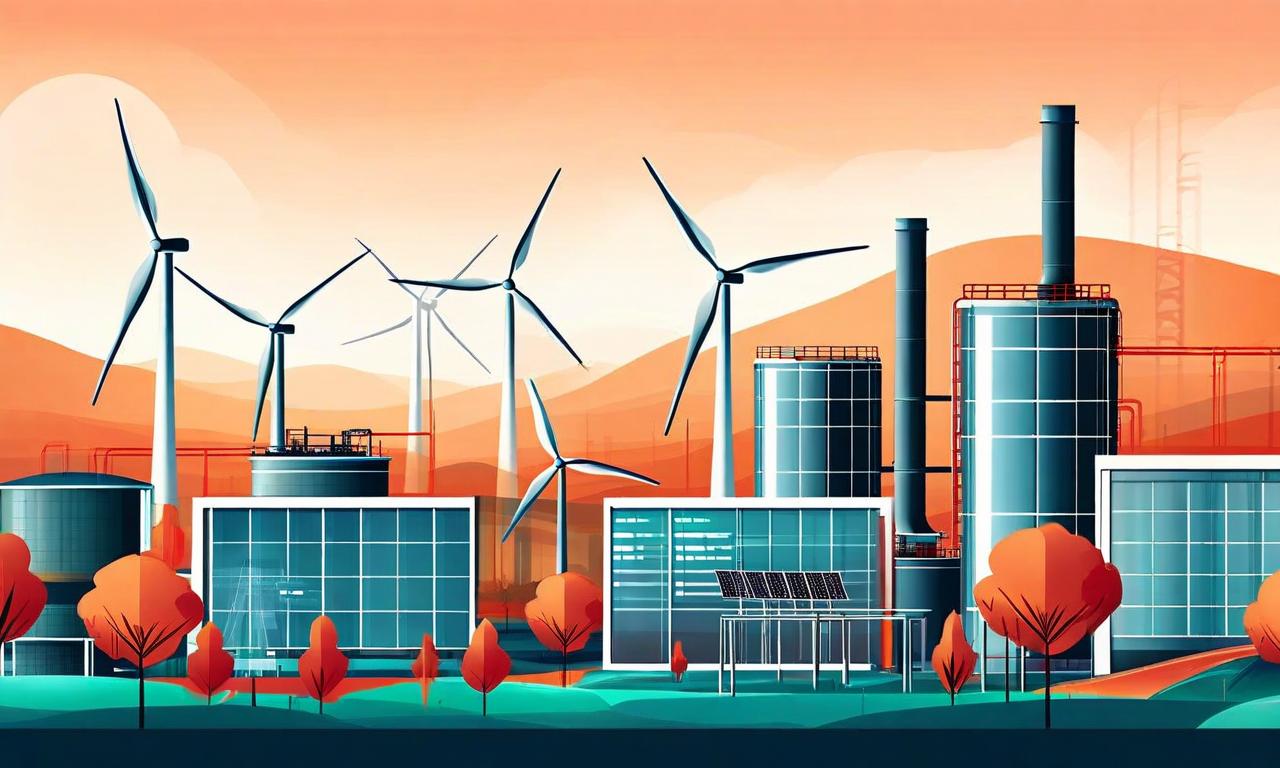

*this image is generated using AI for illustrative purposes only.
The Andhra Pradesh government made a compelling case for its reformed business approach at the World Economic Forum, emphasizing rapid clearances and regulatory streamlining to attract global investments across technology and manufacturing sectors.
Strategic Shift to Speed-Focused Governance
Speaking at a CNBC-TV18 panel at the state's pavilion, IT Minister Nara Lokesh outlined Andhra Pradesh's transition from focusing on ease of doing business to what he termed the "speed of doing business." The government has implemented aggressive timeline reductions and comprehensive regulatory reviews to accelerate project execution.
| Reform Area | Traditional Timeline | New Achievement |
|---|---|---|
| Environmental Clearance | 3 weeks | 4 hours |
| Decision-Making Process | Multiple departments | Institutionalized faster approvals |
| Regulatory Review | Standard procedures | Questioning necessity of permissions |
Lokesh emphasized that the government is challenging service-level agreements across all departments and questioning whether certain permissions are even required, aiming to institutionalize faster decision-making across the bureaucracy.
Major Investment Commitments
The reformed approach has already yielded significant results, with several global companies announcing substantial investments in the state. Google's recent commitment represents one of the most notable successes of this strategy.
| Company | Investment Details | Key Factors |
|---|---|---|
| $15 billion project with 1 GW+ data centre capacity | Cleared within one year | |
| Cognizant | Expansion in Visakhapatnam | Multi-decade AI shift preparation |
| ReNew | Solar manufacturing facility | Faster approvals and responsiveness |
Sanjay Gupta, President for Asia-Pacific at Google, confirmed that the company's $15 billion investment in Andhra Pradesh was among its fastest large-scale projects in the region. The project includes over 1 GW of data centre capacity and subsea cable infrastructure, demonstrating the state's capability to handle complex technology infrastructure projects.
Industry Validation and Future Prospects
Multiple industry leaders validated Andhra Pradesh's approach during the forum discussions. Jatin Dalal, Global CFO of Cognizant, identified Visakhapatnam as a strategic location for the company's expansion plans, citing talent availability, cost competitiveness, and policy predictability as key considerations for the industry's preparation for an AI-driven transformation.
Consulting firm Kearney provided broader context for the state's strategy. Suketu Gandhi, the firm's Global Chair for Strategic Operations, emphasized that countries combining rapid decision-making with execution at scale would attract disproportionate investment shares as global supply chains undergo restructuring.
Long-term Development Framework
The state government has anchored its investment strategy around three core pillars under its Swarnandhra 2047 roadmap:
- Job creation through targeted industrial development
- Cluster-based development for sector-specific growth
- Long-term policy continuity ensuring investor confidence
Lokesh stated that Andhra Pradesh aims to position itself as a scalable model for industrial and technology-led growth in India, focusing particularly on data centres, artificial intelligence, manufacturing, and renewable energy sectors.
Renewable Energy and Manufacturing Focus
ReNew's Chairman and CEO Sumant Sinha highlighted how the state's responsiveness and faster approvals influenced the company's decision to commit to a solar manufacturing facility and explore additional projects. This demonstrates the strategy's effectiveness across diverse sectors beyond technology infrastructure.
The comprehensive approach addresses global companies' needs for speed, transparency, and partnership-oriented governance, positioning Andhra Pradesh as a preferred destination for large-scale investments in emerging technology sectors.
 17
17








 Create Custom Screeners
  Access 200+ Pre-built Filters
  Use 50+ Readymade Screener





