

US Government Shutdown Enters Sixth Day as Political Deadlock Persists


The U.S. government shutdown has reached its sixth day, with Republicans and Democrats at a stalemate over federal operations. President Trump announced ongoing layoffs, while Democrats push for health insurance subsidy renewals. The administration plans permanent job cuts for government workers and has withheld $4.9 billion in foreign aid spending. House Democratic leader Hakeem Jeffries reported no ongoing talks with Republican leaders. A Senate vote failed to advance a Republican bill to reopen the government. The shutdown occurs against a backdrop of slowed hiring, elevated inflation, and affected business confidence, raising concerns about broader economic implications.

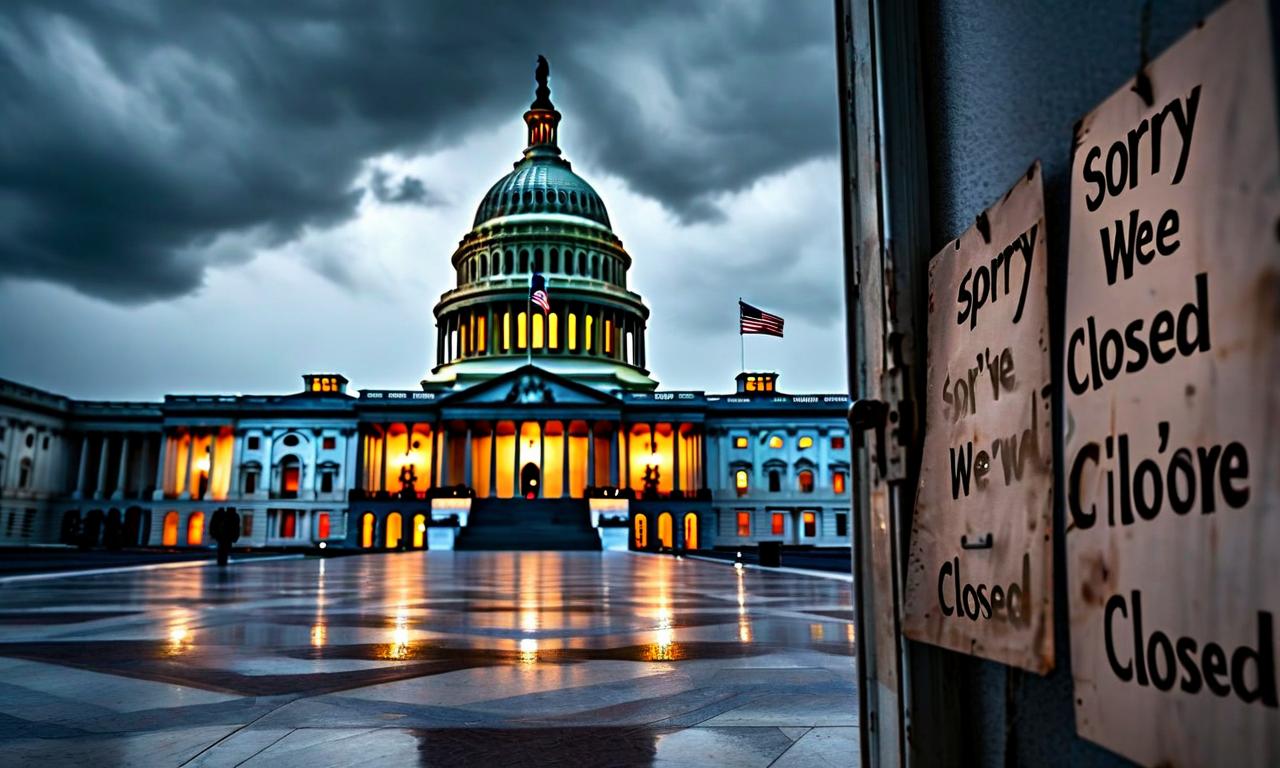

*this image is generated using AI for illustrative purposes only.
The United States government shutdown has stretched into its sixth day, with Republicans and Democrats at an impasse over federal operations. The prolonged closure is occurring against a backdrop of economic uncertainty, impacting various sectors and sparking concerns about its broader implications.
Key Developments
- President Trump announced ongoing layoffs, attributing job losses to the Democrats.
- Democrats are pushing for the renewal of health insurance subsidies for millions of households.
- Trump aims to maintain existing spending levels.
- The Trump administration plans to impose permanent job cuts on thousands of government workers.
- Funding for infrastructure and energy projects in Democratic areas has been put on hold.
- The administration sent Congress $4.9 billion in pocket rescissions on foreign aid, withholding spending without congressional input.
Political Standoff
House Democratic leader Hakeem Jeffries reported no talks with Republican leaders since their White House meeting, indicating a continued breakdown in negotiations. A Senate vote on Friday failed to advance a Republican bill to reopen the government, further solidifying the deadlock.
Legislative Outlook
House Speaker Mike Johnson announced the House would close for legislative business next week. Senate leaders have indicated that the shutdown will continue unless Democrats alter their position, suggesting a protracted closure ahead.
Economic Impact
The shutdown occurs amid growing economic concerns:
| Economic Indicators | Current Status |
|---|---|
| Hiring | Slowed |
| Inflation | Elevated |
| Business Confidence | Affected |
The combination of slowed hiring and elevated inflation is creating a challenging economic environment, potentially exacerbating the effects of the government shutdown on overall business confidence.
As the political stalemate continues, the impact on federal workers, government services, and the broader economy remains a significant concern. Both parties appear entrenched in their positions, with no clear resolution in sight as the shutdown enters its second week.
 20
20







 Create Custom Screeners
  Access 200+ Pre-built Filters
  Use 50+ Readymade Screener





