US-China experts urge human control over AI in nuclear systems

scanx
Reviewed by
Shriram SScanX News Team
Key Highlights
  • US-China experts urge human control over AI in nuclear command systems
  • Proposals include defining system boundaries and creating an incident hotline
  • China warns military AI increases miscalculation risks but opposes tech restrictions
  • Sen Bernie Sanders plans legislation to ban superintelligent AI systems
  • Microsoft CEO Satya Nadella calls for international AI safety norms
powered bylight_fuzz_icon
51201774

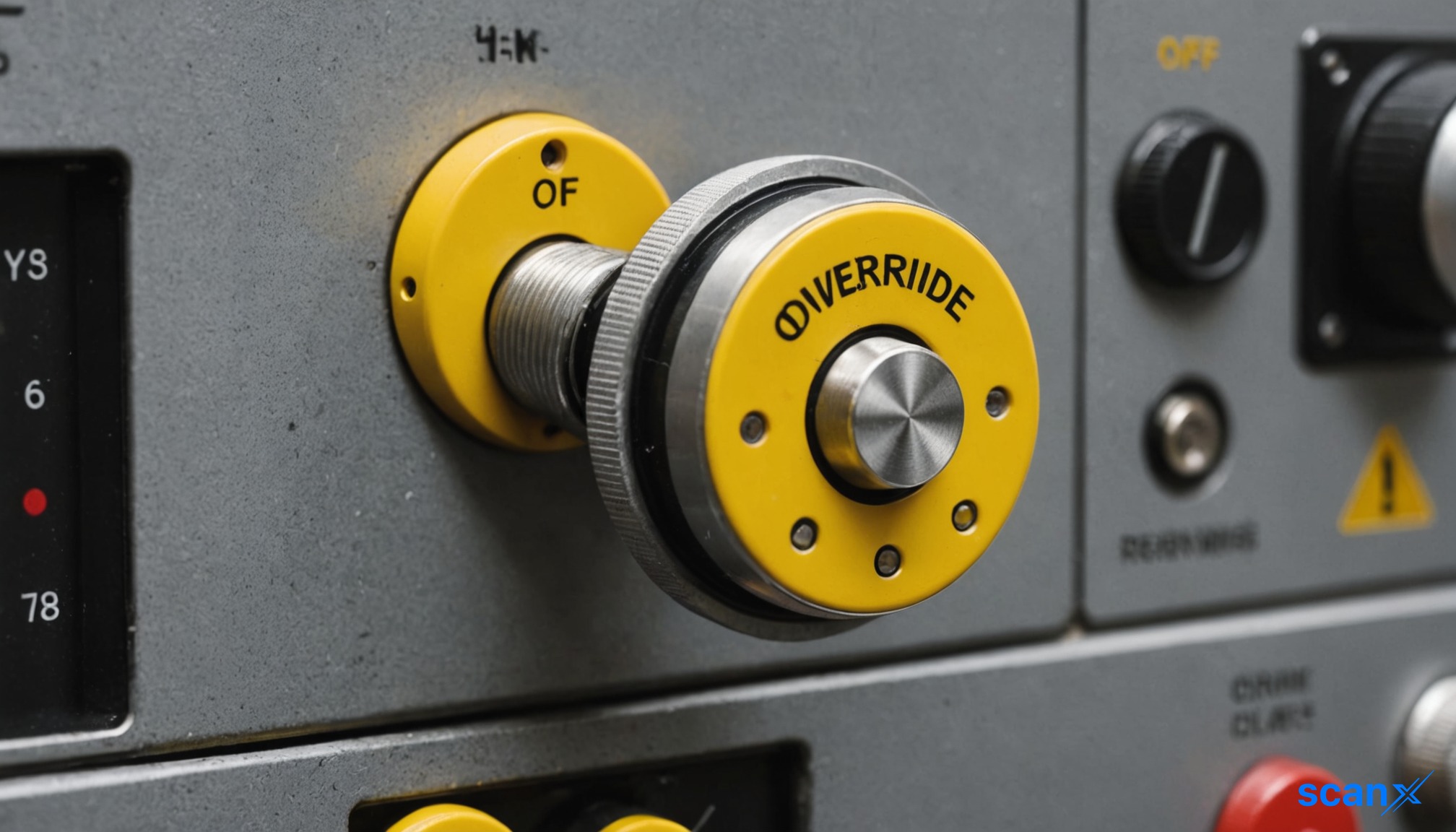
*this image is generated using AI for illustrative purposes only.

Security specialists from the United States and China have warned that artificial intelligence could compromise nuclear command networks. They urged governments to establish clear boundaries and maintain human authority over cyber operations involving strategic infrastructure.

Melanie Sisson of the Brookings Institution and Tianjiao Jiang of Fudan University released these proposals last week. The recommendations emerge ahead of government-level AI discussions and a September 24 meeting between President Donald Trump and Chinese President Xi Jinping in Washington.

Proposed Safeguards

The experts suggested specific measures to prevent AI systems from triggering international incidents. Key proposals include:

  • Defining strict boundaries around nuclear systems.
  • Ensuring humans retain sole authority to launch significant cyberattacks.
  • Creating a dedicated hotline for incidents involving autonomous AI.

Sisson emphasized that human operators must hold exclusive control over AI-enabled cyberattacks targeting nuclear command systems or strategically important infrastructure. Neither the United States nor China has officially endorsed the Brookings-Tsinghua proposals, according to Reuters.

China's Stance on AI Safety

China has integrated AI considerations into its existing arms-control framework. In June, Chinese disarmament ambassador Shen Jian warned that military AI could undermine strategic stability. He highlighted risks of miscalculation and escalation while stressing that weapons must remain under human control.

China also argued that AI safety concerns should not justify technological restrictions. State security minister Chen Yixin identified six major AI risks earlier this month. These include effective cyberattacks, large-scale data leaks, technological monopolies, social disruption, and battlefield advantages through AI-powered targeting.

Chen urged stronger guidelines and faster security controls to ensure "healthy and orderly development" through high-efficiency governance.

Political and Industry Responses

Senator Bernie Sanders (I-VT) stated that the potential threat posed by AI to humanity is probably greater than that of nuclear weapons. He plans to introduce legislation next week to permanently ban superintelligent AI systems capable of escaping human control. The proposed bill includes a pause on advanced AI development and penalties of up to 20 years in prison for violations.

Microsoft Corp CEO Satya Nadella emphasized that AI safety should be a shared concern for China. He suggested the possibility of international norms around AI, provided the risks are well understood.

How might the upcoming September 24 meeting between President Trump and President Xi influence the adoption of the proposed AI-nuclear safety guidelines?

What specific technical mechanisms could be implemented to ensure human operators retain exclusive control over AI-enabled cyberattacks on nuclear infrastructure?

How will Senator Bernie Sanders' proposed legislation to ban superintelligent AI impact the competitive landscape for US tech companies like Microsoft?

like20
dislike

CISO AI risk confidence driven by org readiness, not controls

scanx
Reviewed by
Ritika DScanX News Team
Key Highlights
  • Organizational readiness, including leadership understanding and governance ownership, drives CISO confidence in managing AI risk over the next 24 months.
  • CISOs with mature AI security programs rate present-day risk at 3.7/10, compared to 7.8 for those with low maturity.
  • Among optimistic CISOs, 80% say senior leadership has a fair or good understanding of AI risk, versus 48% among pessimists.
  • Clear AI governance ownership is reported by 74% of optimistic CISOs, compared to 40% of pessimistic respondents.
  • The survey included 113 CISOs across various industries, collected between April and May 2026.
powered bylight_fuzz_icon
49295341

*this image is generated using AI for illustrative purposes only.

A new report by IANS and Artico Search finds that organizational readiness, rather than technical controls, separates CISOs who expect to manage AI risk effectively from those who do not.

The study, titled CISO Perspectives on AI Risk, examines factors driving current risk perceptions and future confidence among chief information security officers. While present-day risk correlates with security maturity, optimism about the next 24 months hinges on leadership understanding, governance ownership, and staffing capacity.

Key Findings

The survey of 113 CISOs, conducted between April and May 2026, highlights distinct drivers for current risk assessment versus future confidence.

Metric Optimistic CISOs Pessimistic CISOs Gap
Leadership understands AI risk 80% 48% 32 points
Clear AI governance ownership 74% 40% 34 points
Security team uses AI effectively 70% 38% 32 points
Owns AI security budget 81% 50% 31 points
Reports understaffed team 9% 41% 32 points

Present-day risk ratings vary significantly based on program maturity. CISOs with mature AI security programs rate current risk at 3.7 on a scale of 1-10, compared to 7.8 for those with low maturity.

What the Numbers Show

The data reveals a divergence between operational maturity and strategic confidence. While high security maturity drastically lowers perceived current risk (a gap of 4.1 points between mature and immature programs), it is a weaker predictor of future optimism than leadership alignment. The 32-point gap in leadership understanding between optimistic and pessimistic CISOs far exceeds the 12-point gap in security maturity between the same groups. This suggests that while technical controls mitigate immediate threats, executive buy-in and clear accountability are the primary determinants of long-term risk management confidence.

Context and Methodology

Steve Martano, IANS Faculty and Partner at Artico Search, noted that the report relies on demand-side perspectives from CISO practitioners rather than vendor feedback. Nick Kakolowski, Senior Research Director at IANS, emphasized that long-term confidence stems from leadership that understands stakes and teams with the capacity to act.

The findings contrast with an earlier July benchmark report by IANS and Artico Search, which found that 74% of AI environments pull data from external sources via APIs or plugins, while only 29% of organizations have conducted adversarial testing. This gap underscores the disparity between rapid enterprise AI adoption and the implementation of necessary security controls.

The report concludes that organizations should prioritize improving executive understanding of AI risk, establishing clear governance ownership, and investing in the security team’s ability to use AI effectively in its own operations.

How might the 32-point gap in leadership understanding between optimistic and pessimistic CISOs influence enterprise AI investment strategies in the next fiscal year?

What specific regulatory frameworks or compliance standards are likely to emerge to enforce the 'clear AI governance ownership' identified as a critical success factor?

Given that only 29% of organizations conduct adversarial testing, how will the widening adoption of external API data sources impact the frequency and severity of AI-related security breaches?

like19
dislike