

TSMC's October Revenue Growth Slows Amid Tech Sector Challenges and AI Demand


Taiwan Semiconductor Manufacturing Co. (TSMC) reported a 16.9% revenue growth in October, its slowest pace in recent months. This deceleration comes despite strong AI-driven demand, with major tech companies planning to collectively spend over $400 billion on AI infrastructure by 2026. TSMC faces supply-demand challenges as it works to meet high demand for advanced chips from clients like Nvidia, AMD, Qualcomm, and Apple. Despite the slowdown, TSMC executives remain optimistic about AI-driven growth prospects.

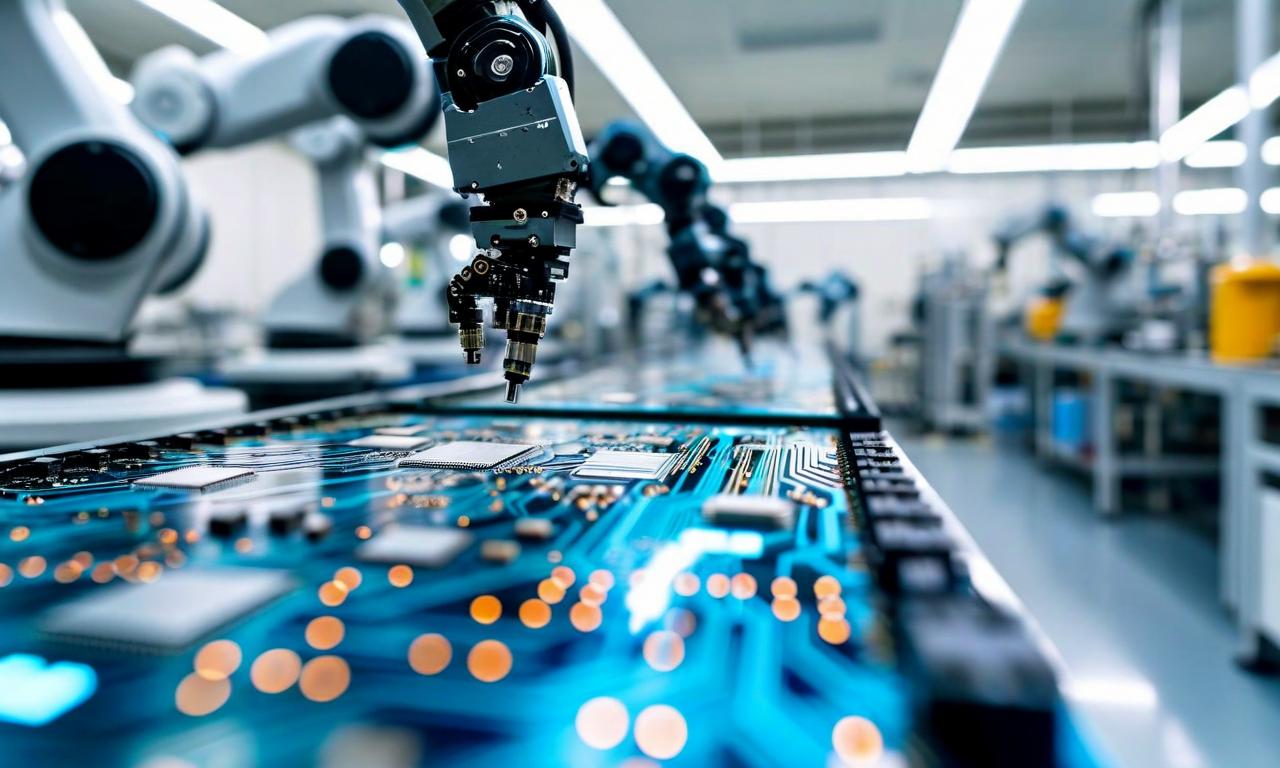

*this image is generated using AI for illustrative purposes only.
Taiwan Semiconductor Manufacturing Co. (TSMC), the world's largest contract chipmaker, reported a notable slowdown in its revenue growth for October, reflecting broader challenges in the tech sector while still benefiting from the ongoing artificial intelligence (AI) boom.
Revenue Growth Deceleration
TSMC's October revenue growth came in at 16.9%, marking its slowest pace in recent months. This deceleration comes against a backdrop of analyst expectations for a 27.4% sales increase in the current quarter, highlighting a potential moderation in the company's growth trajectory.
Tech Sector Headwinds
The slower growth at TSMC coincides with broader challenges in the global tech sector:
- Global tech stocks are experiencing a selloff
- Concerns over high valuations and potential market corrections are rising
Despite these headwinds, the AI sector continues to drive significant investment and demand for advanced semiconductors.
AI Demand Remains Strong
While TSMC's growth has moderated, the AI sector continues to show robust demand:
| Company | Planned AI Infrastructure Spending (2026) |
|---|---|
| Meta | Part of $400+ billion collective spend |
| Alphabet | Part of $400+ billion collective spend |
| Amazon | Part of $400+ billion collective spend |
| Microsoft | Part of $400+ billion collective spend |
This collective spending represents a 21% increase from 2025, underscoring the continued importance of AI in driving semiconductor demand.
Supply-Demand Dynamics
TSMC's position as the primary chipmaker for major tech companies puts it at the center of ongoing supply-demand challenges:
- Nvidia CEO Jensen Huang met with TSMC CEO C.C. Wei to request additional chip supplies
- TSMC's capacity remains tight as it works to bridge the supply-demand gap
- The company serves as the primary chipmaker for Nvidia, AMD, Qualcomm, and Apple
Outlook
Despite the slowdown in October's revenue growth, TSMC executives remain optimistic about AI-driven growth. The company's ongoing efforts to increase capacity and meet the high demand for advanced chips suggest that while growth may be moderating, the underlying demand drivers remain strong.
As the tech sector navigates through current market challenges, TSMC's performance will likely remain a key indicator of both industry-wide trends and the ongoing impact of AI on the semiconductor market.
 17
17


 Create Custom Screeners
  Access 200+ Pre-built Filters
  Use 50+ Readymade Screener





