

US Forces Chase Venezuelan Oil Tanker Away Amid Intensified Blockade Operations


The US has intensified its Venezuela blockade operations with the Coast Guard chasing the sanctioned tanker Bella 1, which fled to the Atlantic Ocean after being encountered near Barbados. The White House ordered military forces to focus on oil quarantine operations for two months, deploying over 15,000 troops and naval assets in the largest Caribbean military presence in decades, effectively disrupting Venezuela's oil exports and forcing the country to fill storage tanks.

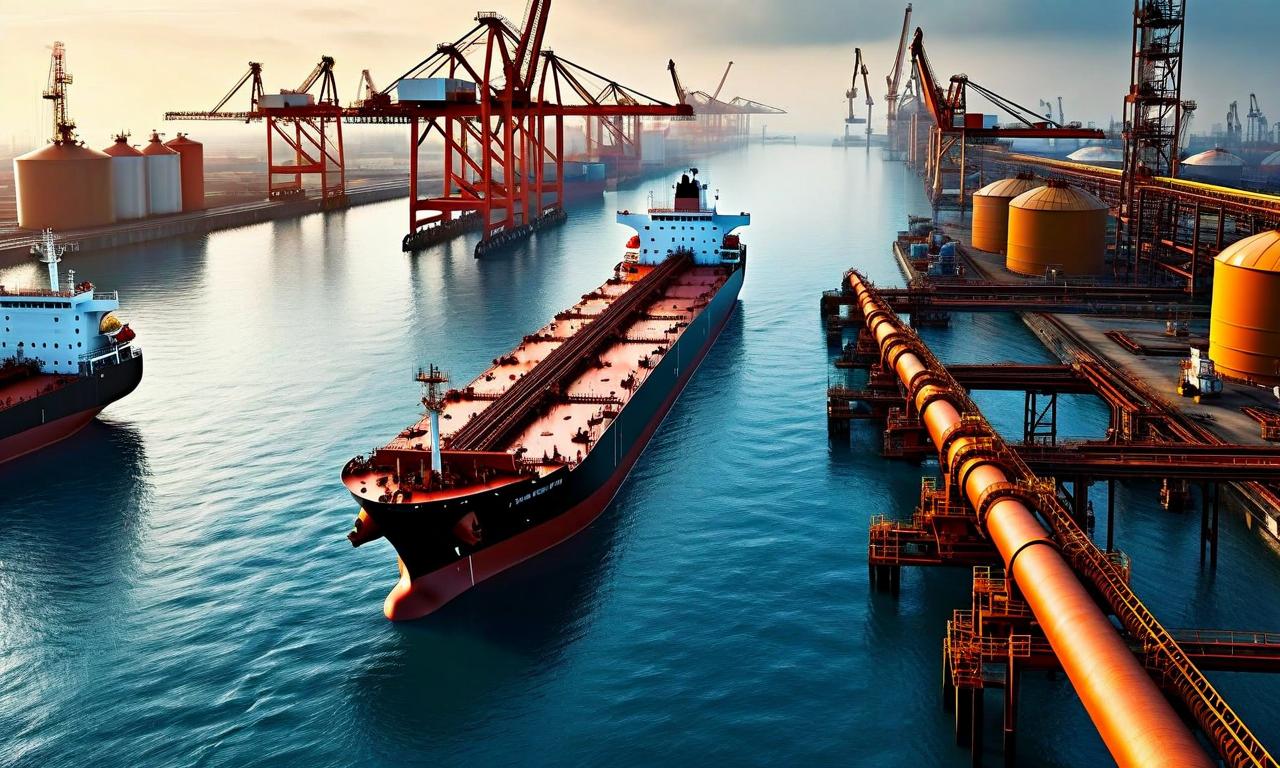

*this image is generated using AI for illustrative purposes only.
The White House has ordered US military forces to focus almost exclusively on enforcing a "quarantine" of Venezuelan oil for at least the next two months, marking a significant escalation in economic pressure tactics against the South American nation. Recent developments show the blockade's immediate impact as a sanctioned oil tanker fled US forces and retreated into the Atlantic Ocean.
Latest Tanker Chase Operation
The US Coast Guard encountered the sanctioned vessel Bella 1 amid bad weather near Barbados on Sunday, instructing the tanker to move to calmer waters for safe boarding. Instead, the ship sailed toward the Atlantic Ocean, with US officials expecting it won't return. The tanker was not carrying oil at the time of its retreat.
| Vessel Details | Information |
|---|---|
| Tanker Name | Bella 1 |
| Status | Sanctioned vessel |
| Location Encountered | Near Barbados |
| Current Status | Fled to Atlantic Ocean |
| Cargo Status | Empty at time of encounter |
A US official confirmed the Coast Guard has not abandoned pursuit of the tanker, noting there remains a judicial seizure order against the vessel. The crew's decision to flee demonstrates how the US blockade is effectively disrupting Venezuela's oil exports, which normally go primarily to China.
Military Quarantine Strategy
A US official revealed that Washington is currently prioritizing economic rather than military means to pressure Caracas. "While military options still exist, the focus is to first use economic pressure by enforcing sanctions to reach the outcome the White House is looking for," the official stated, speaking on condition of anonymity.
The strategic shift represents a move from Trump's earlier announced "blockade" to what officials now term a "quarantine" - language that echoes the Cuban missile crisis approach. The emphasis on quarantining Venezuelan oil rather than escalating with broader military strikes signals the US is seeking to pressure President Nicolas Maduro by squeezing government finances before considering more forceful measures.
Expanded Coast Guard Operations
The latest weekend operations represent the most concerted effort to date to disrupt crucial oil revenues funding Maduro's government. US forces boarded the non-sanctioned ship Centuries, owned by a Hong Kong-based entity, while separately pursuing Bella 1. Another very large crude carrier, the Skipper, was intercepted on December 10th.
| Recent Vessel Actions | Details |
|---|---|
| Bella 1 | Pursued, fled to Atlantic |
| Centuries | Boarded by US forces |
| Skipper | Intercepted December 10th |
| Previous Tankers | Two intercepted earlier this month |
Massive Caribbean Military Deployment
The Pentagon has assembled a substantial military presence in the Caribbean to support the quarantine operations, representing the largest US military deployment to the region in decades. The deployment includes more than 15,000 troops, an aircraft carrier, 11 other warships, and over a dozen F-35 aircraft.
| Military Assets | Quantity |
|---|---|
| Total Troops | 15,000+ |
| Aircraft Carrier | USS Gerald R. Ford |
| Other Warships | 11 |
| F-35 Aircraft | 12+ |
Trump, during a Christmas Eve call with military service members aboard the USS Gerald R. Ford, described the Caribbean as "an interesting place" to be deployed, reiterating the US was "going after the land" after weeks of strikes on alleged drug boats at sea.
Economic Impact and Storage Crisis
Unable to export most of its oil, Venezuela is rapidly filling up storage tanks and idle tankers, raising the likelihood that it will soon have to start shutting oil wells. The blockade is beginning to limit hard currency in an already battered economy, though Maduro has so far withstood the pressure.
Trump warned Maduro not to challenge the US and vowed to keep oil seized from supertankers. While declining to explicitly state if he seeks to oust the Venezuelan leader, Homeland Security Secretary Kristi Noem told Fox News that Maduro "needs to be gone." Secretary of State Marco Rubio called Maduro's cooperation with narco-traffickers and terrorists "intolerable."
International Response
Venezuela's UN Ambassador Samuel Moncada responded, stating: "The threat is not Venezuela. The threat is the US government." UN experts have condemned the blockade, characterizing such use of force as "illegal armed aggression."
The Trump administration has designated Maduro's government a foreign terrorist organization over alleged links to drug cartels and informed the United Nations of its intention to impose and enforce sanctions "to the maximum extent" to deprive Maduro of resources.
 19
19






 Access Market Heat-map & Insights
  Create, Save & Share your Screener
  Use 200+ Screening Filters





