Nvidia CEO Warns of Tight AI Race Between US and China, Urges Global Tech Engagement

1 min read     Updated on 09 Oct 2025, 06:36 PM
scanx
Reviewed by
Anirudha BScanX News Team
AI Summary

Nvidia CEO Jensen Huang states that the US is not significantly ahead of China in AI development. He notes that both countries are competitive in infrastructure and AI models, with China having an advantage in energy production. Despite US trade restrictions, Chinese tech companies continue to innovate. Huang warns against isolating US technology and urges American companies to accelerate AI adoption. Nvidia's shares rose over 2% in premarket trading following US approval of semiconductor exports to UAE.

powered bylight_fuzz_icon
21560789

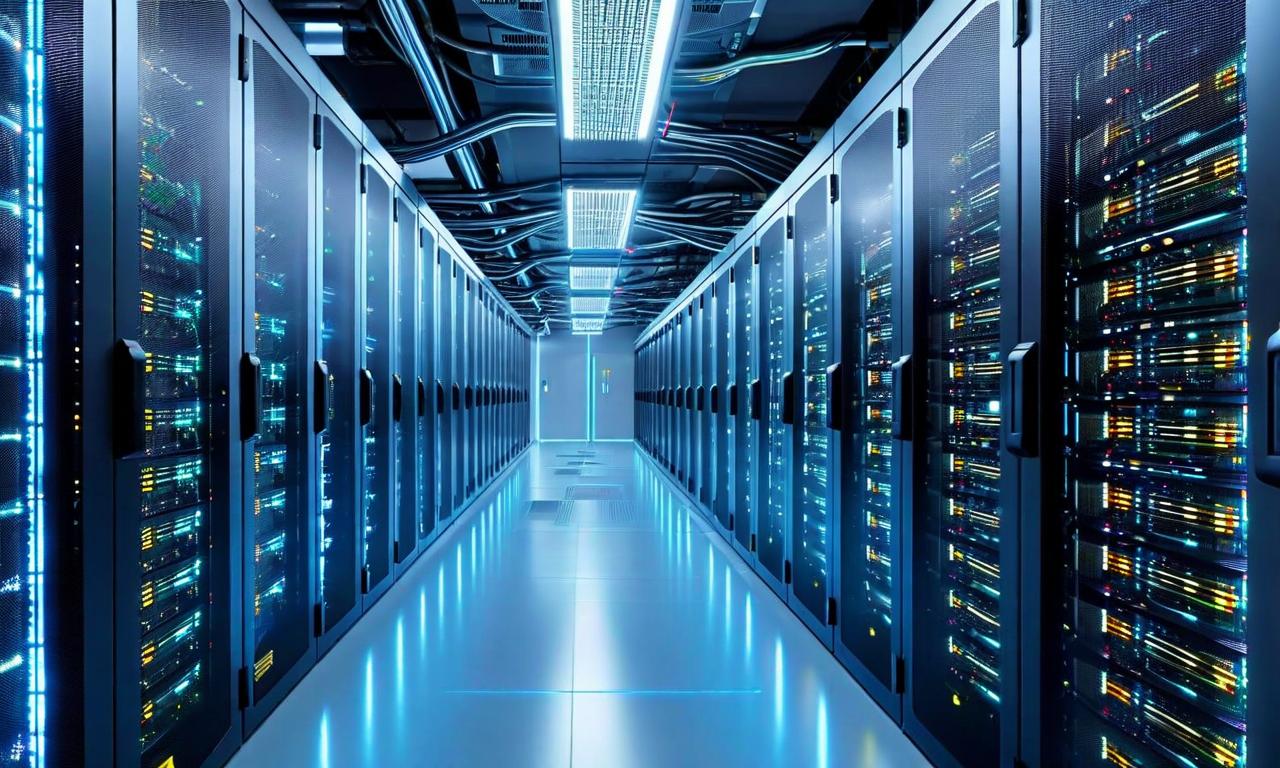
*this image is generated using AI for illustrative purposes only.

Nvidia's CEO Jensen Huang has issued a stark assessment of the global artificial intelligence (AI) landscape, asserting that the United States is not significantly ahead of China in the AI race. Huang's comments highlight the intensifying competition between the two economic powerhouses and underscore the critical importance of global technological engagement.

US-China AI Capabilities: A Close Contest

According to Huang, the US and China are nearly equal in several key areas crucial for AI development:

Area US China Notes
Infrastructure On par On par Both countries have substantial AI infrastructure
AI Models Competitive Competitive China progressing through open-source models from tech giants
Energy Production Lower Higher China produced more than twice the electricity of the US

Huang emphasized China's advantage in energy production, a critical factor for AI operations, noting that China generated more than double the electricity produced by the US.

Chinese Tech Resilience and Innovation

Despite facing US trade restrictions, Chinese tech companies have demonstrated remarkable resilience:

  • Huawei continues to develop its Ascend chips
  • Alibaba and Baidu are utilizing internally designed processors
  • Open-source AI models from companies like Alibaba, Baidu, and DeepSeek are driving progress

Regulatory Environment and AI Adoption

Huang pointed out that China's lighter regulatory approach has accelerated AI adoption:

  • China is targeting 70% AI penetration by 2027
  • The regulatory environment in China is more conducive to rapid AI implementation

Call for Accelerated US AI Adoption

In light of these developments, Huang urged American companies to speed up their AI adoption efforts. He cautioned against isolating US technology, warning that such a move could undermine global influence:

"Serving only 20% of the world would mean losing the AI race," Huang stated, emphasizing the importance of maintaining a global technological presence.

Market Response

Following the US approval of semiconductor exports worth several billion dollars to the United Arab Emirates, Nvidia's shares responded positively:

  • Premarket trading saw Nvidia shares up over 2%
  • Share price reached $189.11 in premarket trading

As the AI race intensifies, Huang's insights underscore the delicate balance between national interests and the need for global technological cooperation. The coming years will likely see continued scrutiny of AI development and its geopolitical implications.

like15
dislike

Nvidia Covers H-1B Visa Fee and Partners with OpenAI for Data Center Expansion

1 min read     Updated on 08 Oct 2025, 10:42 AM
scanx
Reviewed by
Anirudha BScanX News Team
AI Summary

Nvidia announced two major developments: covering new H-1B visa fees for employees and a partnership with OpenAI worth up to $100 million. The company will sponsor H-1B visas and cover all costs, including the new $100,000 fee. Nvidia and OpenAI's partnership focuses on expanding data centers, with plans to deploy Nvidia systems requiring at least 10 gigawatts of power. The initial 1 gigawatt deployment is set for H2 2026 on Nvidia's Vera Rubin platform.

powered bylight_fuzz_icon
21435305

*this image is generated using AI for illustrative purposes only.

Nvidia, the leading graphics processing unit (GPU) manufacturer, has made two significant announcements: a commitment to cover new H-1B visa fees for employees and a groundbreaking partnership with OpenAI valued at up to $100 million.

H-1B Visa Fee Coverage

Nvidia will continue sponsoring H-1B visas and cover all related costs, including the new $100,000 fee imposed on applications under a recent executive order. CEO Jensen Huang communicated this decision in an internal memo to reassure employees amid concerns among tech workers on H-1B visas, many from India and China. Huang emphasized that legal immigration remains essential for U.S. technology leadership and noted that half of the world's AI researchers are Chinese.

The new fee applies to new H-1B recipients but not to existing holders or applications submitted before September 21. Nvidia, with a market capitalization of $4.50 trillion, is a leading H-1B sponsor with approximately 1,500 visa approvals. California consistently ranks first nationally for H-1B visa applications since 2018.

OpenAI Partnership

In a separate development, Nvidia and OpenAI, a prominent artificial intelligence research laboratory, have announced a partnership valued at up to $100 million. This collaboration marks a significant shift in their business relationship and sets the stage for substantial data center expansion.

Key Highlights of the Partnership

Aspect Details
Investment Up to $100 million from Nvidia
Business Relationship First direct partnership between Nvidia and OpenAI
Focus Expanding data centers
Power Requirement At least 10 gigawatts for Nvidia systems
Initial Deployment 1 gigawatt of Nvidia systems in H2 2026
Platform Nvidia's Vera Rubin

Strategic Implications

This partnership represents a pivotal moment for both companies:

  1. Direct Procurement: OpenAI will now purchase directly from Nvidia, bypassing cloud service providers. This direct channel could potentially lead to cost efficiencies and closer collaboration on technology development.

  2. Massive Infrastructure Expansion: The plan to build and operate Nvidia systems requiring at least 10 gigawatts of power underscores the scale of OpenAI's ambitions in AI research and development.

  3. Long-term Vision: With the first gigawatt of Nvidia systems scheduled for deployment in the second half of 2026, both companies are clearly planning for the long-term future of AI infrastructure.

Industry Impact

Nvidia CEO Jensen Huang described the partnership as 'incremental' to the company's existing work. This statement suggests that while significant, this deal aligns with Nvidia's ongoing strategy in the AI sector.

The collaboration also hints at OpenAI's future direction. Nvidia's commitment to help OpenAI build AI infrastructure for eventual operation of their own cloud services indicates that OpenAI may be looking to reduce its dependence on third-party cloud providers in the long run.

Conclusion

Nvidia's dual announcements demonstrate the company's commitment to both its workforce and technological advancement in the AI industry. The decision to cover H-1B visa fees showcases Nvidia's support for international talent, while the partnership with OpenAI reinforces its position as a leader in AI infrastructure. These developments are likely to have far-reaching implications for the AI ecosystem and could potentially spark new innovations in the field.

like20
dislike