

Germany and India Finalize $8 Billion Submarine Manufacturing Agreement


Germany and India are completing negotiations on an $8 billion submarine manufacturing agreement that represents New Delhi's largest defense deal. The partnership between Thyssenkrupp Marine Systems and Mazagon Dock Shipbuilders includes unprecedented technology transfer for submarine production. The deal will enhance India's naval capabilities in the Indian Ocean region while reducing dependence on Russian military equipment.

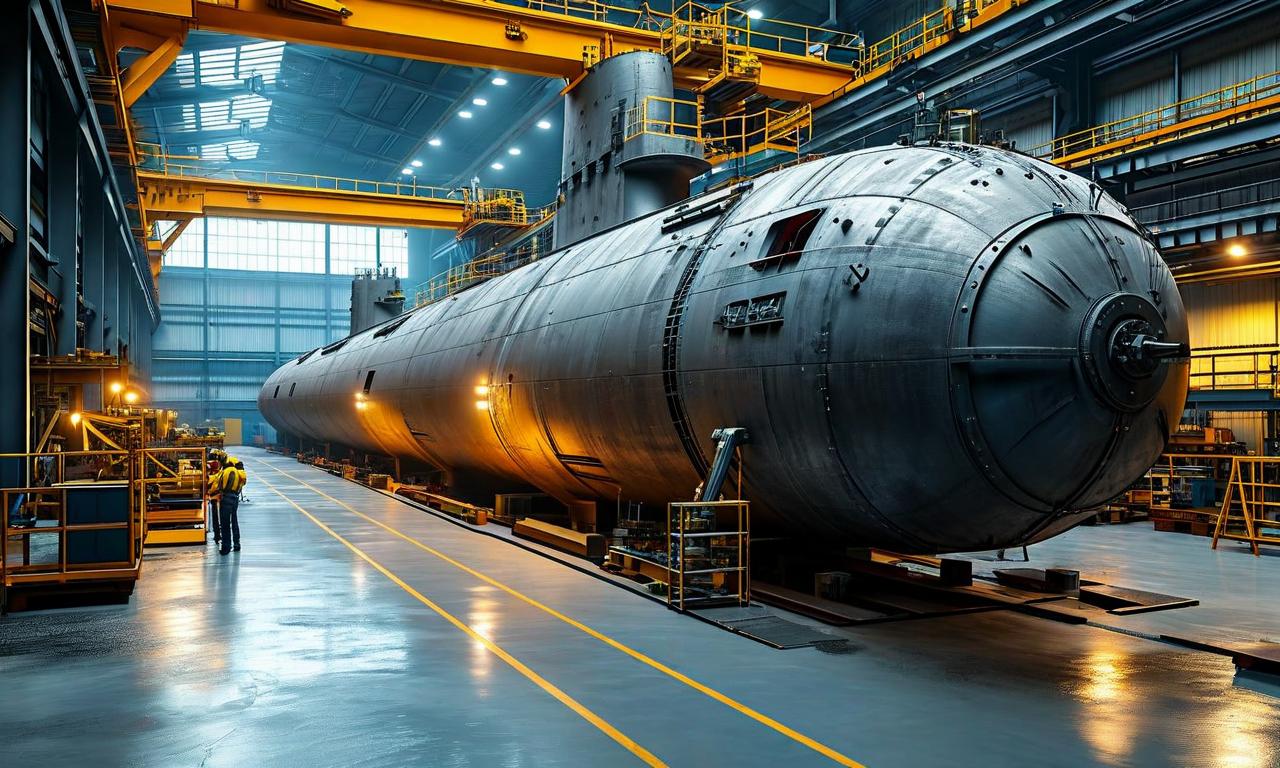

*this image is generated using AI for illustrative purposes only.
Germany and India are finalizing a submarine manufacturing agreement worth at least $8 billion, marking New Delhi's largest-ever defense deal. The partnership represents a significant milestone in bilateral defense cooperation, with negotiations taking place ahead of Chancellor Friedrich Merz's scheduled visit to India.
Partnership Details and Technology Transfer
The agreement establishes a collaboration between Germany's Thyssenkrupp Marine Systems GmbH and Indian state-owned Mazagon Dock Shipbuilders Ltd. for submarine manufacturing. This deal marks the first time Germany will include technology transfer for submarine production with India, representing a major advancement in defense technology sharing.
| Partnership Details: | Information |
|---|---|
| Deal Value: | At least $8 billion |
| German Partner: | Thyssenkrupp Marine Systems GmbH |
| Indian Partner: | Mazagon Dock Shipbuilders Ltd. |
| Technology Transfer: | Included for submarine production |
| Significance: | India's largest-ever defense agreement |
Impact on India's Naval Fleet
India's navy currently operates approximately a dozen aging Russian submarines and six new French-made models. If the German deal proceeds, India plans to scrap its existing plans to purchase three additional French submarines. The new submarines will be equipped with air-independent propulsion systems, which increase the vessels' endurance and allow them to remain submerged longer than conventional diesel-electric propulsion systems.
Strategic Implications and Regional Context
The new submarines will enhance India's ability to patrol the vast waters of the Indian Ocean region as China continues to assert its presence in these strategic waters. The agreement reflects Germany's broader strategy to reduce India's dependence on Russia for weapons, particularly following the Russian invasion of Ukraine, which prompted Germany's defense industry to accelerate production.
Diplomatic and Economic Cooperation
Chancellor Merz will conduct his maiden visit to India, meeting with Prime Minister Narendra Modi for talks in the western Indian state of Gujarat before traveling to Bengaluru to visit German companies. The two countries are expected to increase cooperation in pharmaceuticals and defense sectors. Merz also plans to use his discussions with Modi to accelerate broader negotiations between the European Union and India on a free-trade agreement. This marks Merz's first international trip with a large delegation of German CEOs.
India's Defense Manufacturing Strategy
This agreement aligns with India's broader defense manufacturing strategy. The Modi government blocked imports of most defense platforms, including fighter jets, helicopters, artillery, and warships to encourage foreign weapons manufacturers to establish production facilities in India. Despite these measures, India remains the second-largest importer of military hardware globally, sourcing most equipment from Russia, according to the Stockholm International Peace Research Institute.
 17
17






 Access Market Heat-map & Insights
  Create, Save & Share your Screener
  Use 200+ Screening Filters





