

Steel Companies Face Q3 Earnings Pressure as Non-Ferrous Metals Shine


Steel companies face 9-21% EBITDA decline in Q3 due to 4.5% drop in domestic HRC prices to ₹47,200 per tonne and higher coking coal costs. The expiry of provisional safeguard duty led to elevated imports and pricing pressure. Non-ferrous metal producers are expected to outperform with strong commodity price rallies, including 43% surge in silver and 20% increase in copper prices.

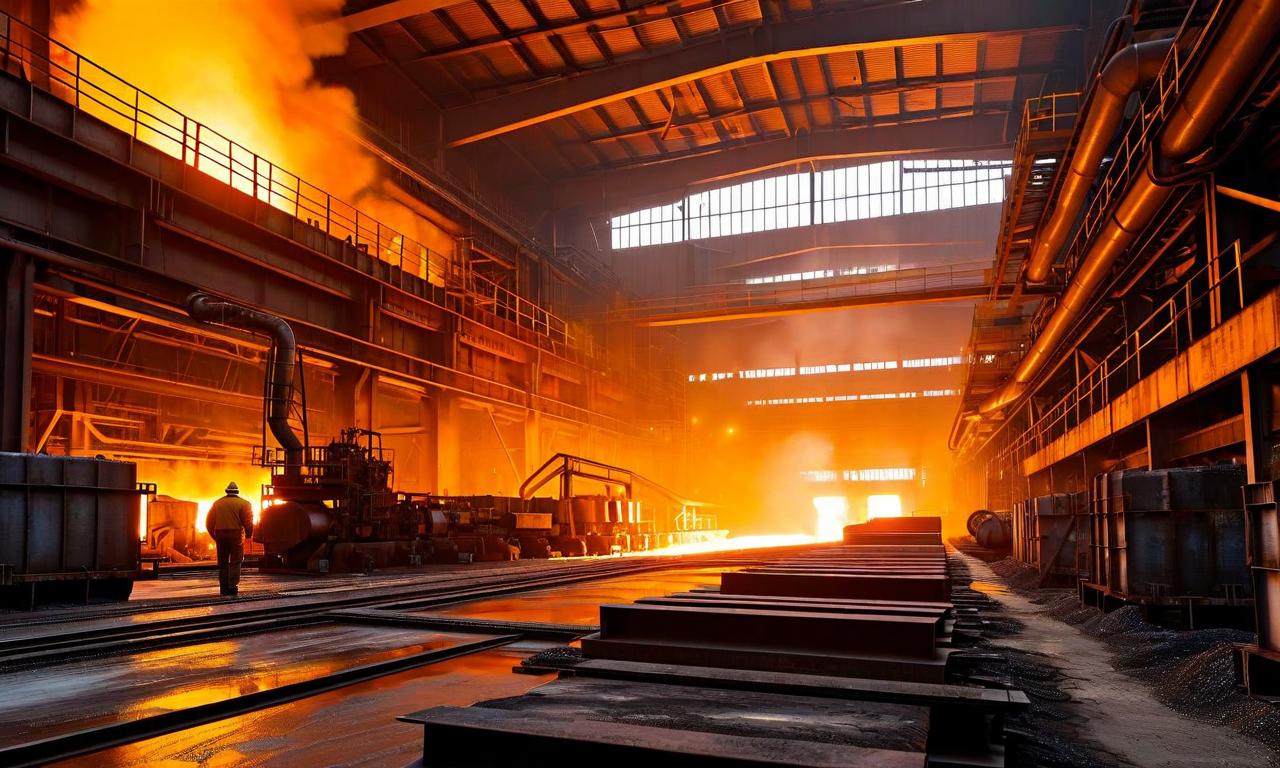

*this image is generated using AI for illustrative purposes only.
Steel companies are bracing for a challenging December quarter with sequential decline in profitability expected due to a combination of softening domestic prices and rising input costs. While steelmakers benefited from operating leverage and lower iron ore prices, these gains were more than offset by higher coking coal costs and weaker price realisations. In contrast, non-ferrous metal producers are positioned to deliver improved earnings on the back of a strong rebound in commodity prices.
Steel Sector Faces Multiple Headwinds
The steel industry's profitability is projected to face significant pressure in Q3, with EBITDA expected to drop between 9-21% across major companies. The primary challenge stems from the steep fall in domestic hot-rolled coil (HRC) prices following the expiry of the provisional safeguard duty in November, which remained absent throughout the December quarter.
| Steel Price Metrics: | December Quarter Performance |
|---|---|
| Domestic HRC Prices: | ₹47,200 per tonne (down 4.5% sequentially) |
| Primary Rebar Prices: | Remained flat |
| Expected Realisation Drop: | ₹1,500-2,000 per tonne |
| Sector EBITDA Decline: | 9% sequentially |
According to Motilal Oswal Financial Services, the duty lapse led to elevated imports, creating additional pressure on domestic realisations. Nuvama Institutional Equities projects an even steeper EBITDA decline of 10-21% for steelmakers under its coverage.
Rising Input Costs Add to Challenges
On the cost front, ferrous companies faced additional pressure from rising coking coal prices. Premium hard coking coal costs increased by $3-5 per tonne, with prices averaging around $210 per tonne during the quarter. This cost inflation further compressed margins for steel producers already grappling with weaker realisations.
Policy Support Provides Future Relief
The outlook for steel producers is expected to improve in coming quarters following the reintroduction of safeguard duty on steel imports on December 31. The three-year staggered safeguard duty structure, starting at 12% in the first year, is anticipated to enhance pricing power for domestic steel companies.
Axis Securities noted that the staggered safeguard duty announcement will provide support to steel prices, with steel mills already raising prices ahead of the seasonal construction demand.
Non-Ferrous Metals Outshine Steel
Non-ferrous metal producers are expected to deliver strong Q3 performance, supported by a significant rally in global commodity prices. The sector benefited from substantial price increases across key metals during the December quarter.
| Metal Price Performance: | Sequential Growth (USD Terms) |
|---|---|
| Zinc Prices: | +14% |
| Silver Prices: | +43% |
| Aluminium Prices: | +10% |
| Copper Prices (LME): | Nearly +20% to $12,500 per tonne |
Copper prices at the London Metal Exchange experienced particularly strong momentum, driven by expectations of fresh US tariffs on refined metals and supply disruptions across key mining regions including Chile, Peru, and Indonesia.
Strong Financial Outlook for Non-Ferrous Sector
Motilal Oswal Financial Services projects robust sequential growth for non-ferrous companies under its coverage, driven by higher realisations and improved volumes. The brokerage expects revenue growth of 5%, EBITDA expansion of 12%, and net profit increase of 18% for the sector.
The contrasting performance between steel and non-ferrous metals highlights the sector-specific dynamics at play, with global commodity price movements and domestic policy measures creating divergent earnings trajectories for the December quarter.
 16
16






 Create Custom Screeners
  Access 200+ Pre-built Filters
  Use 50+ Readymade Screener





