

Vicor stock rises 15% after granting VPD license to AI OEM


- Vicor stock rose 15.09% to $211.66 after granting a VPD patent license to a new AI OEM
- The deal allows sourcing from unlicensed suppliers while incentivizing direct Vicor procurement
- Broader markets rallied with Nasdaq up 1.58% and S&P 500 up 1.04%
- Analyst consensus remains Buy with an average price target of $381.67

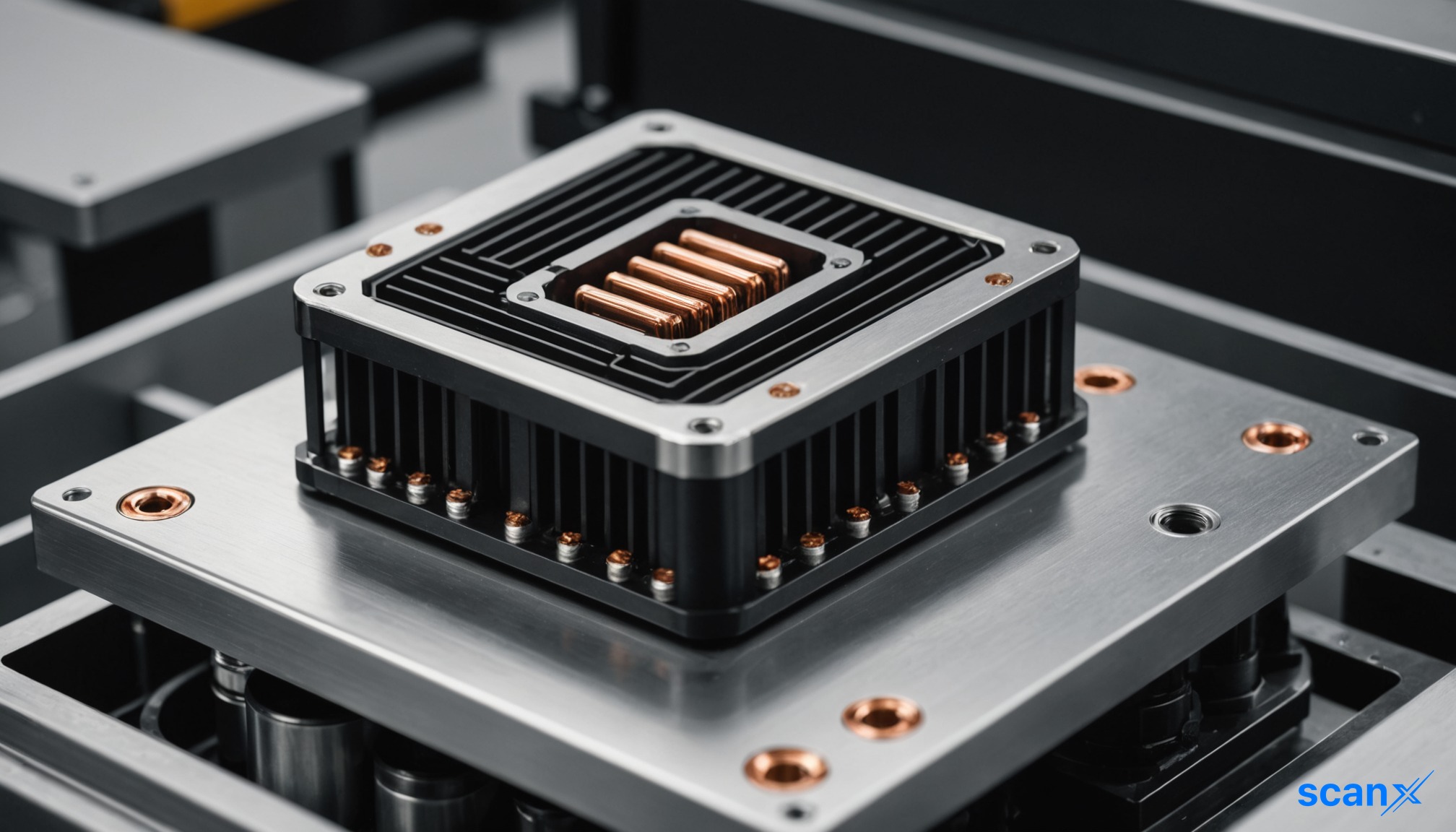

*this image is generated using AI for illustrative purposes only.
Vicor Corp (NASDAQ: VICR) shares rose 15.09% to $211.66 on Thursday following the announcement of a new licensing agreement for its Vertical Power Delivery (VPD) technology.
The stock gain occurred during a broader market rally, with the Nasdaq Composite rising 1.58% and the S&P 500 gaining 1.04%. Vicor’s advance was driven by the specific catalyst of securing a new original equipment manufacturer (OEM) licensee, adding to its year-to-date momentum that has seen the stock rise more than 300% over the past 12 months.
Licensing Structure and Supply Chain
Vicor granted a non-exclusive VPD patent license to an unnamed OEM. This agreement permits the licensee to procure VPD modules from unlicensed global suppliers, provided those modules utilize multi-cell Voltage Regulators (VR) or Integrated Voltage Regulators (IVRs) stacked in a multi-layer system.
This structure offers supply chain redundancy and multi-source flexibility for hyperscalers and OEMs. Licensees retain the option to procure high-performance VPD modules directly from Vicor. These modules use high current density and high gain MCM™ current multipliers manufactured as ChiPs™ (Converters housed in Package™) at Vicor’s U.S.-based fab.
Procuring these specific components from Vicor may earn licensees substantial discounts on licensing royalties for commodity VPD modules sourced from unlicensed suppliers. Early adopters may also qualify for lower royalty rates under a structured licensing practice.
Technology Overview
VPD systems address the "last inch problem" associated with Lateral Power Delivery (LPD). The technology enables high-performance AI compute and network processors to be fueled at high current density from a low voltage source. Systems consist of a "multi-cell converter" and a VPD network.
MCMs used in Vicor-manufactured solutions are described as substantially more efficient, thinner, and mechanically and thermally adept compared to alternatives. The underlying innovations are protected by foundational patents resulting from a decade of research conducted by Vicor in the U.S.
Market Context and Technicals
Thursday’s rally pushed Vicor back above several important trend levels. The stock is trading 11.2% above its 20-day simple moving average and 2.6% above its 200-day SMA. However, it remains 17.1% below its 100-day SMA and sits just below its 50-day SMA.
Technical indicators suggest improving upside momentum, with the MACD above its signal line and a positive histogram. Traders are watching resistance near $232.50, with support around $178.50.
| Metric | Value |
|---|---|
| Stock Price Change | +15.09% |
| Closing Price | $211.66 |
| 12-Month Return | >300% |
| Resistance Level | $232.50 |
| Support Level | $178.50 |
Analyst Outlook and ETF Exposure
Vicor carries a Buy consensus rating with an average price forecast of $381.67. Needham maintained a Buy rating with a $320 target in July. Craig-Hallum raised its forecast to $450 in June, while Roth Capital raised its forecast to $375.
The stock is held by the Main Thematic Innovation ETF (NASDAQ: TMAT) with a 2.05% weighting and the VegaShares AI Thermal, Cooling & Power Management ETF (NASDAQ: COOL) with a 4.62% weighting.
What the Numbers Show
The licensing model creates a dual-revenue dynamic. While the primary immediate action is the granting of rights to use unlicensed suppliers, the structure incentivizes direct procurement from Vicor through royalty discounts. This suggests a strategy to secure high-margin component sales (ChiPs™) while expanding market penetration through broader IP licensing. The significant stock surge (15%) relative to the broader market (Nasdaq +1.58%) indicates investors view this licensing expansion as a key value driver beyond general market sentiment.

Which specific hyperscaler or OEM is likely the unnamed licensee, and how might this partnership influence competitive dynamics with rival power delivery providers like Monolithic Power Systems?
How will the dual-revenue model of IP licensing combined with high-margin ChiPs™ component sales impact Vicor's long-term gross margins and earnings visibility?
Given Vicor's 300%+ year-to-date gain, what are the primary risks if the stock fails to break the $232.50 resistance level, and could this signal a technical correction despite the positive catalyst?
 18
18








 Access Market Heat-map & Insights
  Create, Save & Share your Screener
  Use 200+ Screening Filters





