

Perpetua Resources opens antimony processing plant with U.S. Army and INL


Perpetua Resources, the U.S. Army, and the Idaho National Laboratory opened a modular pilot plant in Idaho Falls on July 29, 2026. The facility processes antimony trisulfide from Perpetua's Stibnite Gold Project to secure a domestic supply chain for defense munitions. This move counters reliance on China and Russia, which dominate global production, especially after China halted specialized exports in 2021.


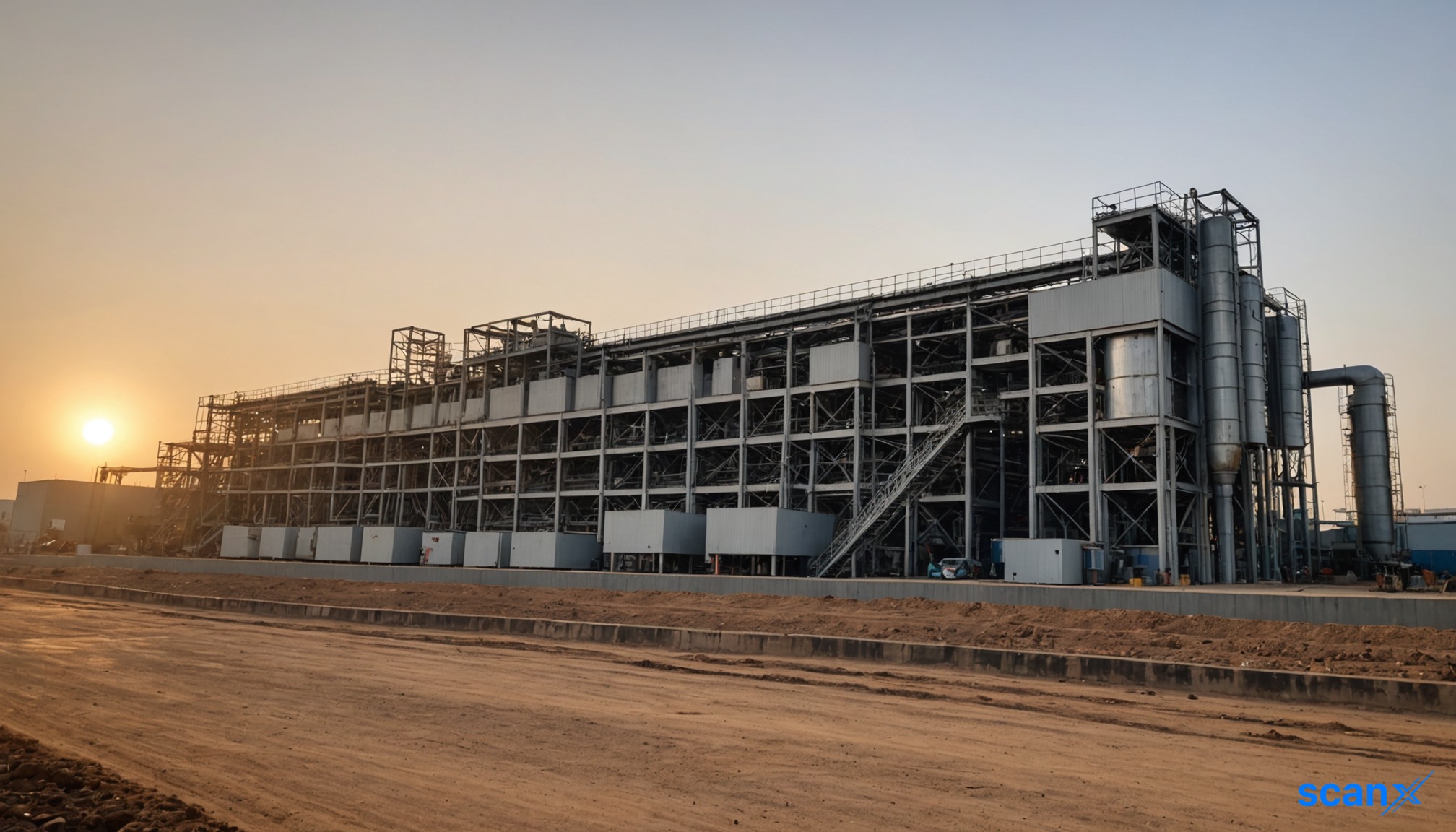
*this image is generated using AI for illustrative purposes only.
Perpetua Resources opened a modular mineral pilot plant at the Idaho National Laboratory (INL) in Idaho Falls on July 29, 2026, marking a significant step toward securing a domestic supply chain for antimony. The facility was launched in collaboration with the U.S. Army and INL to process high-quality antimony trisulfide, a critical mineral essential for national security. This development directly addresses the United States' heavy reliance on foreign sources, particularly following China's cessation of specialized antimony trisulfide exports to the U.S. in 2021.
The ribbon-cutting ceremony was attended by Idaho Governor Brad Little, Lieutenant Governor Scott Bedke, U.S. Representative Mike Simpson, INL Laboratory Director John Wagner, and Perpetua President and CEO Jon Cherry. The event underscored the strategic partnership between industry, government, and scientific institutions to rebuild domestic critical mineral production capabilities.
Strategic Context and Supply Chain Security
Antimony is vital for defense munitions, battery technologies, solar glass, and flame retardants. In recent years, global production has been dominated by China and Russia. The cessation of specialized antimony trisulfide exports by China in 2021 highlighted vulnerabilities in the U.S. supply chain, as this specific form is required for more than 300 types of ammunition. In response, the U.S. Department of War and Perpetua Resources entered into a strategic effort to advance domestic production. Perpetua's Stibnite Gold Project in central Idaho holds the only identified domestic reserve of antimony, positioning it as a key asset for large-scale domestic sourcing alongside gold production.
Facility Capabilities and Collaboration
The pilot plant is designed to utilize antimony samples from the Stibnite Gold Project to demonstrate end-to-end processing capabilities for military-grade materials. The facility represents the culmination of a multi-year collaboration between the U.S. Army, via the Defense Ordnance Technology Consortium (DOTC), and Perpetua Resources. The goal is to advance a fully domestic "ground-to-round" antimony supply chain.
| Stakeholder | Role / Contribution |
|---|---|
| Perpetua Resources | Provides antimony samples from Stibnite Gold Project; leads project development |
| U.S. Army | Collaborates via Defense Ordnance Technology Consortium (DOTC) |
| Idaho National Laboratory | Provides advanced materials expertise and hosts the pilot plant |
Jon Cherry, President & CEO of Perpetua Resources, stated that the milestone demonstrates the potential of combined industry, government, and scientific innovation. He noted that as construction advances at the Stibnite Gold Project, the pilot plant extends momentum downstream by establishing capabilities for military-grade antimony materials. Cherry emphasized that these investments lay the foundation for a secure supply chain that strengthens national security while creating long-term economic opportunities.
Future Outlook and Scalability
Beyond immediate antimony processing, the pilot plant aims to train a skilled workforce and strengthen technical capabilities needed for commercial-scale production. The facility also has the potential to support future processing of additional critical minerals, creating a scalable platform to enhance U.S. supply chain resiliency. This modular approach allows for flexibility in adapting to evolving defense and industrial requirements while reducing dependence on geopolitical rivals for critical inputs.

What is the projected timeline for scaling the pilot plant's modular technology to commercial-grade production levels at the Stibnite Gold Project?
How might this domestic antimony capability influence global pricing dynamics or incentivize other nations to diversify their critical mineral supply chains?
What specific regulatory hurdles or environmental impact assessments remain before the Stibnite Gold Project can begin full-scale extraction and processing?
 18
18





 Create Custom Screeners
  Access 200+ Pre-built Filters
  Use 50+ Readymade Screener





