Arvind Ltd sets September 4 deadline for dividend tax docs

2 min read     Updated on 19 Aug 2026, 02:33 PM
scanx
Reviewed by
Shriram SScanX News Team
AI Summary

Arvind Limited has outlined the TDS norms for its proposed ₹4.50 per share final dividend for FY26. Shareholders must submit tax-related documents by September 4, 2026, to avoid higher withholding rates. The standard rate for residents is 10%, while non-residents may pay up to 30% depending on jurisdiction.

powered bylight_fuzz_icon
48675809

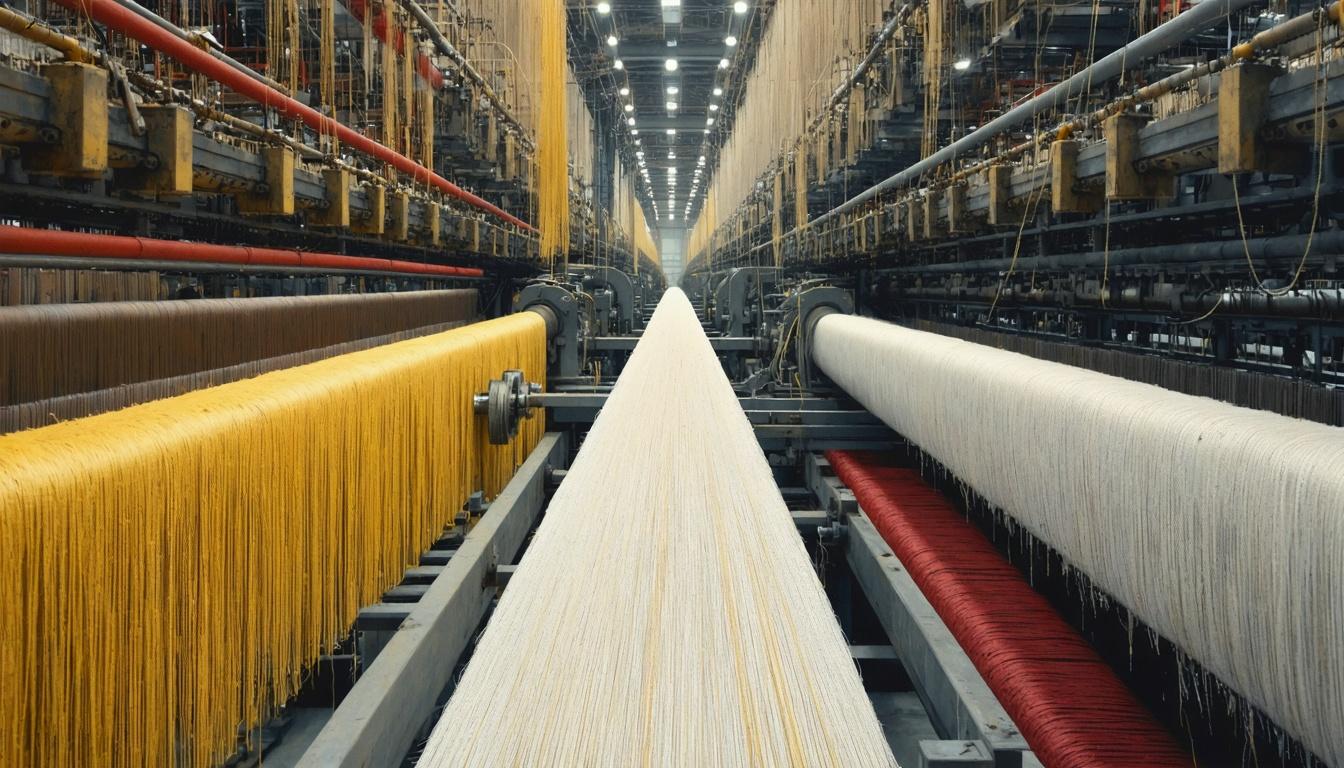
*this image is generated using AI for illustrative purposes only.

Arvind Limited has communicated to its shareholders regarding the tax deduction at source (TDS) procedures for the final dividend recommended for FY26. The Board of Directors, in a meeting held on May 15, 2026, proposed a final dividend of ₹4.50 per equity share, subject to shareholder approval at the upcoming Annual General Meeting.

The company is required to withhold taxes on dividend payments effective from April 1, 2026, in accordance with the Income-tax Act, 2025. The withholding tax rate varies based on the shareholder's residential status and the documentation provided. Shareholders must submit requisite forms and certificates by September 4, 2026, to ensure the correct tax rate is applied. Any documents received after this deadline will not be considered for determining the withholding rate.

Tax Deduction Framework

The standard withholding tax rate for resident shareholders with valid PAN is 10%. However, this rises to 20% if the PAN is invalid or not updated with the Depository Participant or Registrar and Transfer Agent (RTA). Resident individual shareholders receiving dividend income not exceeding ₹10,000 during the tax year 2026-27 are exempt from tax deduction.

Non-resident shareholders face varying rates depending on their category and treaty benefits:

Shareholder Category: Withholding Tax Rate: Key Requirement
FIIs / FPIs 20% or treaty rate Digital Form 41 and Tax Residency Certificate
Other Non-residents 20% or treaty rate Form 41 and self-declaration
Notified Jurisdictional Area 30% NA
Sovereign Wealth Funds NIL Government notification proof

Documentation Requirements

To avail lower or nil tax rates, specific entities must submit self-declarations along with supporting evidence. For instance, Category I and II Alternative Investment Funds (AIFs) must provide a registration certificate and a declaration confirming exemption under Schedule V to Section 11 of the Act. Similarly, entities like LIC, GIC, and Business Trusts must submit evidence that Section 393(1) of the Act applies to them.

Shareholders are advised to update their KYC details, including PAN, email ID, and bank account information, with MUFG Intime India Private Limited (formerly Link Intime India Private Limited). Those holding shares in dematerialized form should update these details with their respective Depository Participants to facilitate seamless communication and remittance.

Compliance Notes

The company emphasized that failure to link PAN with Aadhaar will result in the PAN being deemed invalid, leading to a higher withholding tax rate of 20%. Additionally, if withholding tax is deducted at a higher rate due to incomplete documentation, shareholders may file their income tax returns to claim a refund, but no claims can be made against the company for taxes already deducted.

Investors can upload the required documents, such as Form 121, Tax Residency Certificates, and lower tax certificates, via the designated online portal before the September 4 deadline. The company reserves the right to verify all submitted documents independently and reject them if discrepancies or incompleteness are found.

Historical Stock Returns for Arvind

1 Day5 Days1 Month6 Months1 Year5 Years
-1.87%-8.98%-2.66%+36.97%+76.18%+449.34%

How might the strict September 4 documentation deadline impact the liquidity and trading volume of Arvind Limited shares in the weeks leading up to the AGM?

What are the potential implications for Arvind's foreign investor base if treaty benefits are delayed due to processing backlogs at the RTA level?

Could the complexity of the new TDS framework under the Income-tax Act, 2025, lead to a higher rate of dividend waivers or reinvestment requests from retail investors?

Arvind Q1FY27 PAT up 47% to ₹80 crore; releases earnings call transcript

4 min read     Updated on 19 Aug 2026, 02:19 PM
scanx
Reviewed by
Riya DScanX News Team
AI Summary

Arvind Limited reported strong Q1FY27 results with revenue up 25% to ₹2,501 crore and PAT up 47% to ₹80 crore, driven by robust textile demand and the Dalco-GFT acquisition. The company also disclosed the transcript of its August 13, 2026 earnings call as per SEBI regulations.

powered bylight_fuzz_icon
48096497

*this image is generated using AI for illustrative purposes only.

Arvind Limited reported record quarterly financial results for the quarter ended June 30, 2026, with consolidated revenue rising 25% to ₹2,501 crore and EBITDA growing 39% to ₹258 crore. Profit after tax (PAT) increased 47% to ₹80 crore, reflecting robust demand across core textile businesses and the impact of its largest-ever acquisition, Dalco-GFT. Management has provided detailed guidance for FY27, expecting overall company growth in the early teens, potentially doubling turnover in about five years.

The company's EBITDA margin expanded by approximately 100 basis points to 10.3%. While the textile division faced input cost pressures, the Advanced Materials Business (AMB) delivered significant growth, contributing ₹650 crore in revenue and ₹97 crore in EBITDA with a margin of 15%.

Financial performance overview

The table below summarises Arvind's key financial metrics for Q1FY27 compared to Q1FY26.

Metric: Q1FY26 Q1FY27 YoY change
Revenue: ₹2,006 crore ₹2,501 crore +25%
EBITDA: ₹186 crore ₹258 crore +39%
EBITDA margin: 9.3% 10.3% +104 bps
PAT: ₹55 crore ₹80 crore +47%

Excluding the impact of the Dalco-GFT acquisition, organic revenue grew 17% to ₹2,344 crore, while EBITDA rose 26% to ₹234 crore. The acquisition, which represents Arvind's majority stake (~61%) in the US-based technical textile firm, contributed ₹157 crore in revenue and ₹24 crore in EBITDA during the first 1.8 months of operations.

Business segment highlights

Volume growth remained a key driver across segments. Denim fabric volumes reached 17.5 million metres, the highest in sixteen quarters, up 34% year-on-year. Woven fabric volumes stood at 31.2 million metres, a 7% increase, while garmenting volumes crossed 11 million pieces for the first time, recording 13% growth.

The AMB segment saw broad-based expansion. Management expects the Advanced Materials business (India) to achieve high teens to 20% revenue growth for the full year, with EBITDA margins growing higher than revenue due to operational efficiencies. Globally, the Human Protection segment benefited from normalised defence procurement in India and easing tariff pressures in the US. The Composites business gained momentum from renewable energy and mobility applications. The Industrial segment achieved early double-digit growth due to higher capacity utilisation, with expansion projects on track for execution in Q2.

Dalco-GFT is expected to grow 9-10% this year due to integration efforts and then push into mid-teens next year with higher CapEx. Combined AMD plus Dalco margins are anticipated to be in the 15-17% range, returning to 16%+ as pricing catches up to raw material costs.

Textile revenues grew 13% to ₹1,735 crore, driven by a 37% surge in denim revenue and 9% growth in woven fabrics. However, textile EBITDA margins contracted to 8.0% from 8.4% in Q1FY26 due to a sharp rise in raw material costs, which added approximately ₹19 crore in variable costs.

For the Garmenting division, management aims for 15% growth in FY27, expecting to come close to this target. Margins are anticipated to reach low double-digits in 18 to 24 months, or by the middle of next year, as new plants scale up. Fabric growth is projected at high single digits.

Balance sheet and capital allocation

Arvind recently completed a ₹500 crore Qualified Institutions Placement (QIP), which was significantly over-subscribed by marquee institutional investors. The proceeds are being utilised for debt reduction and balance sheet strengthening. The company spent approximately ₹98 crore on capital expenditure during the quarter and plans further investments of ₹450-500 crore in FY27.

Closing net debt stood at ₹2,158 crore as on June 30, 2026, an increase from ₹1,172 crore at the end of March 2026, largely due to debt taken to fund the Dalco-GFT acquisition. Net debt is expected to settle INR500 crores below its current level after applying QIP proceeds, bringing the India business debt back to historic levels. Dalco's debt will be repaid over five years. The company also recorded ₹10.7 crore in depreciation from intangible asset amortisation and ₹10.6 crore in incremental finance costs from a $110 million loan related to the acquisition.

What the Numbers Show

The consolidation of Dalco-GFT introduced new cost dynamics alongside revenue growth. While the acquired entity delivered a healthy 15.1% EBITDA margin in its partial quarter (projected at 16.3% for a full quarter), it also added ₹10.7 crore in depreciation from intangible asset amortisation and ₹10.6 crore in incremental finance costs from a $110 million loan. Exceptional items of ~₹23 crore (net of tax) related to one-time transaction expenses were also recorded. This indicates that while the acquisition boosts topline scale immediately, the net profit impact is partially offset by upfront integration costs and higher interest outlays. Additionally, higher procurement of raw materials in anticipation of price escalation led to elevated working capital levels. The management's 18-24 month timeline for garment margin improvement further underscores that near-term profitability gains in that segment will be gradual.

Regulatory Disclosure

Pursuant to Regulation 30 of the SEBI (Listing Obligations and Disclosure Requirements) Regulations, 2015, Arvind Limited released the transcript of the post-results conference call with analysts and investors held on August 13, 2026. The disclosure was filed with both the BSE Limited and the National Stock Exchange of India Limited on August 19, 2026.

Historical Stock Returns for Arvind

1 Day5 Days1 Month6 Months1 Year5 Years
-1.87%-8.98%-2.66%+36.97%+76.18%+449.34%

How will the integration of Dalco-GFT's US-based operations impact Arvind's exposure to potential changes in US trade policies or tariff structures?

Given the projected 18-24 month timeline for garmenting margin improvement, what specific operational milestones must be achieved to ensure the low double-digit margin target is met?

With net debt rising significantly due to the acquisition, how does management plan to balance the ₹450-500 crore CapEx plan for FY27 with the goal of reducing India business debt to historic levels?

More News on Arvind

1 Year Returns:+76.18%