News Stocks Solar Stocks Including Waaree Energies and Premier Energies Decline Up to 35% Amid Sector Challenges
Solar Stocks Including Waaree Energies and Premier Energies Decline Up to 35% Amid Sector Challenges


Solar stocks including Premier Energies and Waaree Energies have declined 31% and 27% respectively over three months due to multiple sector challenges. Global oversupply has created pricing pressure, with Indian manufacturing capacity at 125 GW against 40 GW demand. U.S. trade restrictions including 50% tariffs have impacted 90% of India's module export revenue. Infrastructure bottlenecks led to 4 GW power curtailment in Rajasthan alone, causing Rs. 2.30-2.50 billion in losses, while equipment costs have doubled with transformers rising from Rs. 140 million to Rs. 300 million per unit.
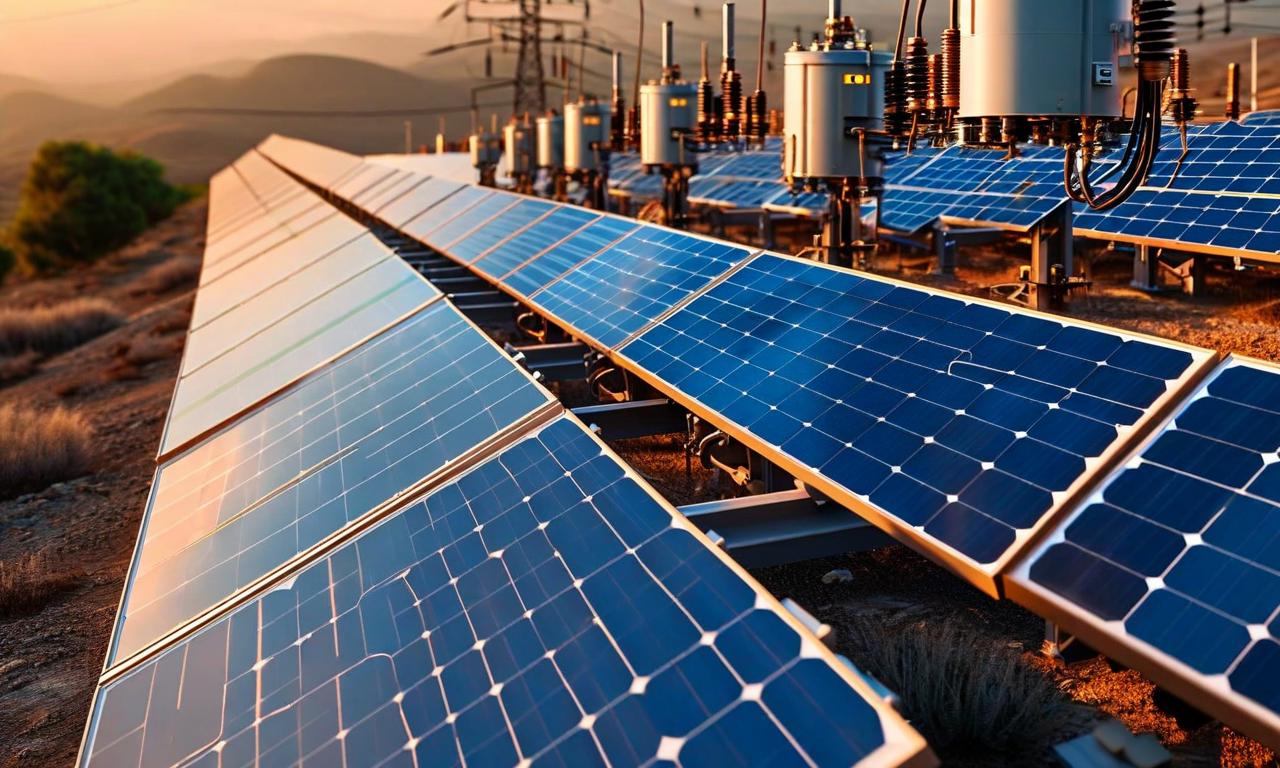

*this image is generated using AI for illustrative purposes only.
India's solar sector, once among the strongest performers in equity markets, has entered a phase of sharp correction. Major solar stocks have experienced significant declines over the past three months, raising concerns among investors about whether the downturn represents temporary market volatility or structural challenges facing the industry.
Stock Performance Analysis
The correction has been particularly pronounced among leading solar companies. Premier Energies has fallen 31% over the last three months, while Waaree Energies has declined 27% during the same period. This correction reflects broader market re-rating of solar stocks after strong rallies in earlier years, with valuations having previously factored in aggressive capacity expansion and smooth domestic execution.
| Company | Three-Month Decline |
|---|---|
| Premier Energies: | 31% |
| Waaree Energies: | 27% |
Global Oversupply Pressures
One of the primary challenges facing solar companies is the growing mismatch between supply and demand globally. Photovoltaic manufacturing capacity, especially in China, has expanded far faster than installation demand, leading to excess inventory and aggressive price undercutting that has dragged down module and cell prices worldwide.
The oversupply situation is particularly acute in India, where manufacturing capacity has exceeded 125 GW while demand stands at 40 GW, creating an inventory surplus of 29 GW. This environment makes it difficult for manufacturers to maintain pricing power, particularly in export markets, and limits their ability to pass on higher costs, resulting in margin compression.
| Parameter | Capacity/Demand |
|---|---|
| Manufacturing Capacity: | 125 GW |
| Current Demand: | 40 GW |
| Inventory Surplus: | 29 GW |
Trade Restrictions and Policy Changes
Trade-related uncertainties have added significant stress to the sector. The U.S. has imposed a 50% tariff on solar panels from India, impacting 90% of India's module export revenue. Additionally, U.S. authorities have continued tightening anti-dumping measures on solar imports, increasing compliance costs and limiting export opportunities for manufacturers.
China's policy changes are also creating market disruption. Chinese authorities have decided to cancel value-added tax export rebates for photovoltaic products from April 1, 2026, reducing them from 9% to 6%, and will gradually eliminate rebates for battery products by January 2027. This move aims to curb excessive price wars and address overcapacity in the sector.
Infrastructure and Grid Challenges
Structural weaknesses in energy storage and grid infrastructure have compounded sector difficulties. Between March and August 2025, Rajasthan alone witnessed nearly 4 GW of solar and wind power curtailment due to transmission delays and corridor congestion. Developers incurred estimated financial losses of Rs. 2.30 billion to Rs. 2.50 billion during this period.
Other major renewable states including Gujarat, Maharashtra, and Tamil Nadu reported 10%–30% curtailment during peak solar generation hours. In Rajasthan, delays of over 18 months in a key transmission strengthening project constrained the evacuation of 8.10 GW of renewable power from designated energy zones.
| State | Curtailment Impact |
|---|---|
| Rajasthan: | 4 GW curtailment, Rs. 2.30-2.50 billion losses |
| Gujarat, Maharashtra, Tamil Nadu: | 10%-30% peak hour curtailment |
| Constrained Evacuation: | 8.10 GW renewable power |
Rising Equipment Costs
Cost inflation has created additional pressure on the sector. Equipment prices have surged dramatically, with transformer costs more than doubling from approximately Rs. 140 million to Rs. 300 million per unit. Gas-insulated switchgear bay costs have increased from about Rs. 60 million to Rs. 150 million. These sharp increases have raised capital requirements and delayed transmission projects critical for renewable integration.
| Equipment | Previous Cost | Current Cost |
|---|---|---|
| Transformers: | Rs. 140 million | Rs. 300 million |
| Gas-insulated Switchgear: | Rs. 60 million | Rs. 150 million |
The convergence of global oversupply, trade disruptions, infrastructure gaps, and policy uncertainties has created a challenging environment for solar stocks. While India's renewable energy ambitions remain intact, the path forward has become more complex and capital-intensive, suggesting continued volatility until these structural issues are addressed.
 15
15