

TSM remains indispensable backbone despite Intel push


Analysts assert that Taiwan Semiconductor Manufacturing Co. Ltd. remains the 'indispensable backbone' of the global AI supply chain despite U.S. efforts to elevate Intel Corp. as a national champion. The industry is shifting toward a dual-sourcing model rather than replacing TSM, with both companies seeing significant stock gains in 2026.


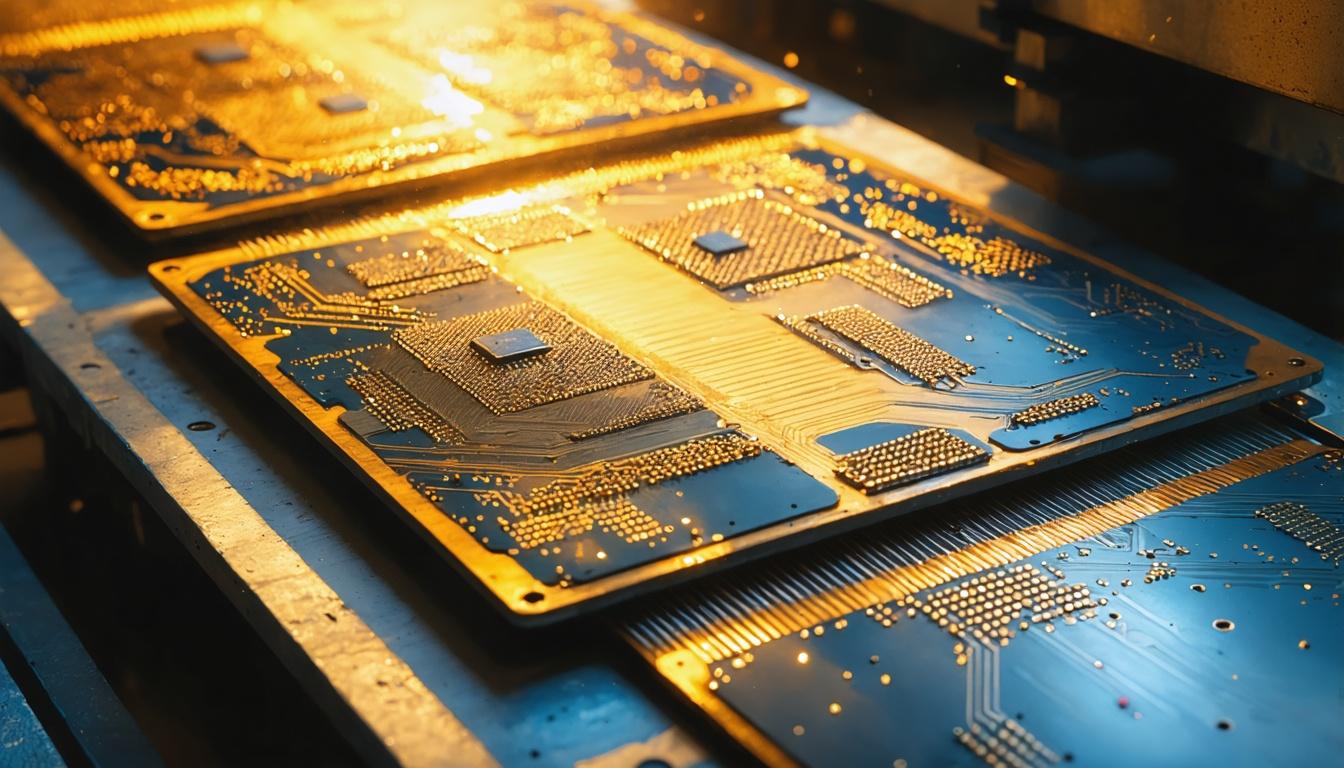
*this image is generated using AI for illustrative purposes only.
President Donald Trump’s aggressive push to elevate Intel Corp. as the champion of American chipmaking has driven a significant rally in the company’s stock, but analysts argue the resulting "security-first" era does not threaten the status of Taiwan Semiconductor Manufacturing Co. Ltd. Despite production deals with Apple Inc. and a $43 billion government stake in Intel, experts emphasize a shift toward a dual-sourcing supply chain. This dynamic leaves TSM retaining its crown as the "indispensable backbone" of global artificial intelligence, maintaining its position as a crucial investment.
Strategic Shift to Dual-Sourcing
Technology strategist Luke Lango, publisher of Innovation Investor, holds positions in both chipmakers, reflecting a pragmatic view of the geopolitical landscape. Lango reports a 357.20% gain on TSM, bought at $96.42 on Nov. 13, 2023, and a 162.04% profit on Intel, purchased at $50.24 on Feb. 9, 2026. He notes that while Intel’s 18A-P risk production node represents real technological progress, Apple’s targeted 15 to 20 million units on Intel’s architecture is a fraction of TSM’s global volume.
"This is not a secular decline for TSM; it’s the beginning of a healthy dual-sourcing dynamic driven by geopolitical necessity," Lango stated. "I’m bullish on both. Intel is the high-beta national champion trade; TSM remains the indispensable backbone of the entire AI supply chain. You don’t sell your picks and shovels because someone just opened a second mine."
Structural Industry Changes
Dean Chen, an analyst at the Bitunix exchange, echoes the assessment that Intel’s re-rating signals a move from an "efficiency-first model toward a security-first model." However, Chen stresses this does not equate to a rapid migration away from Taiwan. He argues the transition is from a single-source model to a dual-source model, where large technology companies seek resilience against geopolitical risk through selective capacity allocation to U.S.-based manufacturing.
Chen highlights that TSM’s competitive advantages extend beyond leading-edge processes. Its manufacturing scale, production yields, and deeply integrated advanced packaging capabilities remain extremely difficult for Intel to replicate overnight. The consensus is that the global AI boom is too massive for a single foundry, securing TSM’s entrenched position.
Government Support and Valuation Risks
The U.S. government’s 9.9% passive stake in Intel, representing roughly $43 billion in unrealized gains, marks a paradigm shift in American industrial policy. Lango describes this as "Acquisition Americana," suggesting the government will not let a national infrastructure asset go bankrupt. This ownership creates a "confidence floor" under Intel’s stock.
However, both analysts warn that Intel’s massive year-to-date rally brings immediate valuation risks. "The risk isn’t that the story is fake; it’s that the market is now pricing perfection on a turnaround that is still losing money at the foundry level," Lango cautioned.
2026 Stock Performance
Both semiconductor stocks have posted substantial gains in 2026, reflecting the sector's volatility and growth potential.
| Metric | TSM | INTC |
|---|---|---|
| Year-to-Date Gain | 47.15% | 256.78% |
| Monthly Gain | 8.98% | 9.85% |
| Annual Gain | 100.30% | 483.81% |
Benzinga’s Edge Stock Rankings indicate that TSM maintains a strong price trend in the short, medium, and long terms with a solid quality score. Intel also maintains a strong price trend across all three timeframes.

How will Intel's 18A-P node performance compare to TSM's upcoming iterations as production scales in 2027?
Will other major tech companies follow Apple's lead in allocating specific volume to Intel to diversify their supply chains?
Can Intel achieve profitability at the foundry level before current market valuations correct?
 19
19





 Create Custom Screeners
  Access 200+ Pre-built Filters
  Use 50+ Readymade Screener





