India's Appliance Sector: Navigating Slower Growth Amid Higher Capex


India's large appliance manufacturing sector expects revenue growth to slow to 5-6% this fiscal year, down from 16% last year. Factors include weak early monsoon demand for cooling products and a high base effect. A 10-percentage-point GST reduction on air-conditioners and large-screen TVs is expected to boost growth to 11-13% in the latter half. Operating margins may contract by 20-40 basis points due to rising raw material costs and market competition. Despite challenges, the sector plans to increase capital expenditure by 60% to ₹2,400 crore, with nearly half allocated to the air conditioner segment. The industry maintains strong financial stability with high interest coverage and net cash accrual-to-debt ratios.
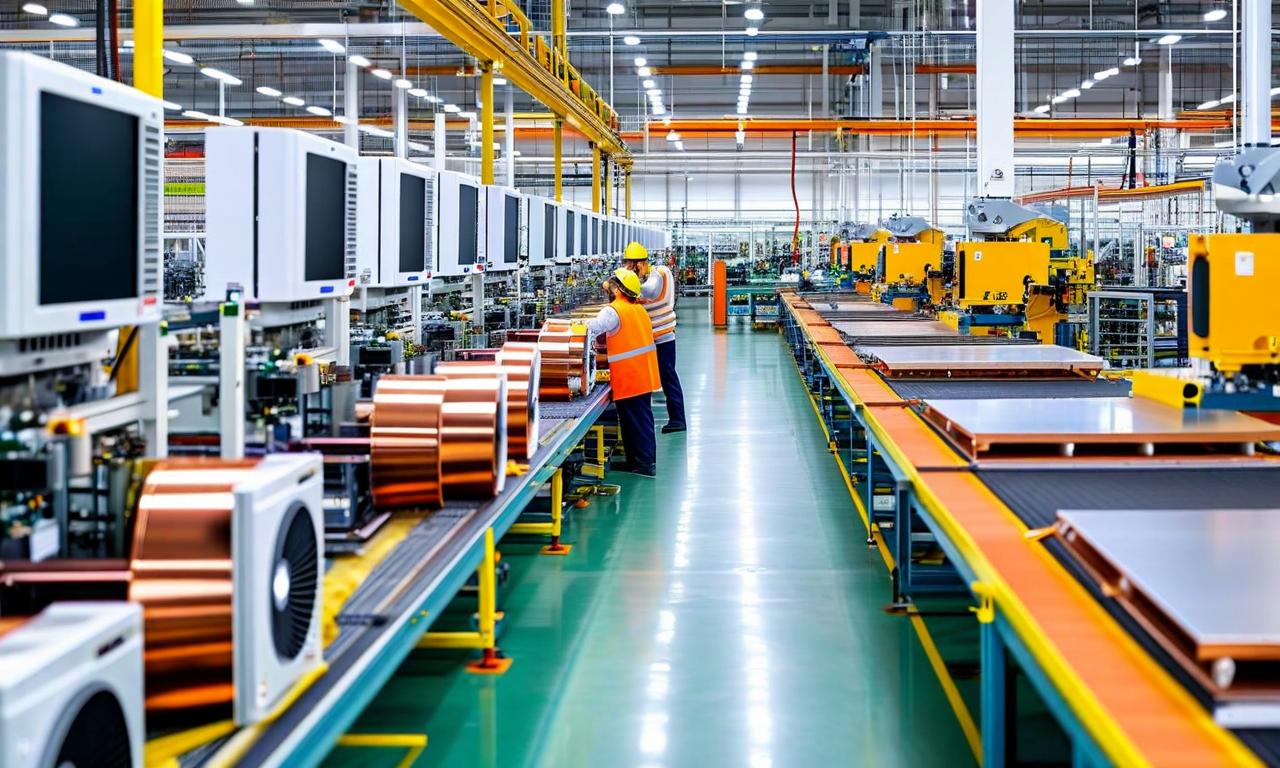
*this image is generated using AI for illustrative purposes only.
India's large appliance manufacturing sector is poised for a significant shift in its growth trajectory and operational dynamics, according to recent industry projections. The sector, which has been a barometer for consumer spending and technological adoption, is facing a complex mix of challenges and opportunities.
Growth Moderation and Market Dynamics
The appliance industry is expected to experience a notable deceleration in revenue growth this fiscal year. Projections indicate a growth rate of 5-6%, a substantial drop from the robust 16% expansion witnessed in the previous year. This slowdown is attributed to two primary factors:
- Weaker demand for cooling products during the early monsoon season
- A high base effect from the previous year's strong performance
Despite this overall moderation, the sector is anticipating a more vigorous second half, driven by a significant policy change:
- A 10-percentage-point reduction in GST on air-conditioners and large-screen TVs
- This tax cut is expected to fuel 11-13% growth in the latter half of the fiscal year
- Consumers could see savings of ₹3,000-6,000 per unit, potentially encouraging upgrades to premium models
Financial Outlook and Operational Challenges
The industry's financial health is facing some headwinds:
- Operating margins are projected to contract by 20-40 basis points, settling at 7.1-7.2%
- This compression is due to rising raw material costs, particularly in steel, aluminium, and copper
- Intense price competition in the market is also contributing to margin pressure
Capital Expenditure and Segment-wise Performance
Despite the margin challenges, the sector is showing confidence through increased capital expenditure:
| Aspect | Details |
|---|---|
| Overall Capex | ₹2,400 crore (60% increase) |
| Air Conditioner Segment | Nearly half of total capex |
| Reason for AC Focus | New BIS norms for imported compressors (effective April 2026) |
| Refrigerator Segment | Expecting low double-digit growth in second half |
| Washing Machine Segment | Projected 7-8% growth |
Financial Stability
Despite the operational challenges, the sector's financial foundation remains robust:
- Interest coverage ratio: Above 20 times
- Net cash accrual-to-debt ratio: Approximately 2.5-2.6 times
These metrics suggest that despite the growth moderation and margin pressures, the large appliance manufacturers in India maintain a strong financial position, allowing them to invest in future growth and navigate the current market challenges.
The appliance manufacturing sector in India is at a crucial juncture. While facing short-term growth moderation, it's simultaneously preparing for future demand through strategic investments. The interplay between policy changes, consumer behavior, and industry adaptation will be critical in shaping the sector's performance in the coming quarters.
 15
15